SEO Strategies
AI Content Generators for Rich SEO Articles

Creating content that ranks in search engines used to be a slow, manual grind of keyword research, outlines, drafting, and editing. Today, AI content generators have completely rewritten the playbook, allowing brands to build massive authority in record time. For instance, case studies show companies like Causal App scaling to 1 million monthly visitors in under a year using AI content generation, while others have achieved a staggering 20x organic traffic growth in just 2 months.
However, simply churning out basic text is no longer enough to win in modern search. To stand out, you need to produce rich, interactive articles that satisfy both search algorithms and real human readers. Successful teams use a hybrid approach; combining AI tools with human editing has been shown to deliver a 30% increase in content output alongside noticeable lifts in page views, whereas completely unedited AI text often struggles to earn backlinks and keep readers engaged.
In this guide, we will explore how to leverage the best AI SEO content generators to build a high-performing content engine. We will cover the top tools on the market, look at how to structure rich articles that convert, and show you how adding interactive features like built-in AI chat can turn passive readers into active customers. Let's dive into how these advanced generators are reshaping the SEO landscape and how you can use them to scale your organic growth.
TL;DR
- AI content generators accelerate search-optimized drafting by automating keyword research, structure, and competitor analysis.
- Successful SEO strategies combine AI efficiency with human editing to maximize page views and earn high-quality backlinks.
- Leading AI optimization tools like Rankability, Clearscope, and Surfer ensure drafts align with top-ranking search patterns.
- Integrating interactive features like AI chat directly inside articles dramatically boosts user engagement and monetization.
What an AI SEO Content Generator Actually Does (Hint: It's Not Just Writing)

To understand how these tools drive growth, we first need to look past the basic "write me an article" prompt. A true AI SEO content generator does far more than spit out blocks of readable text; it acts as a digital research assistant, strategist, and copywriter rolled into one.
At its core, modern content automation begins long before the first sentence is drafted. These platforms analyze search engine results pages (SERPs) in real time to understand search intent. By identifying the specific questions users are asking and the subtopics they expect to see, the AI maps out a comprehensive outline. This research phase ensures the generated content has the depth required to satisfy both search engine algorithms and human readers.
Automating Competitor Analysis and Keyword Integration
Instead of manually combing through competitor articles to find content gaps, the generator automates this competitive analysis. It scans top-ranking pages to pinpoint semantic keywords, optimal word counts, and structural patterns. Once writing begins, the AI naturally integrates these target keywords throughout the headings and body copy. This eliminates the old, clunky process of keyword stuffing, replacing it with contextual placement that feels organic to the reader while signaling high relevance to search crawlers.
But simply generating a well-optimized block of text is no longer enough to win the top spots. To truly stand out, we need to look at the specific features that transform standard AI drafts into rich, highly engaging articles.
SEO automation is a workflow, not just a writer — Modern AI content generators succeed because they automate the entire research, competitor analysis, and keyword integration process before drafting even begins.
Beyond Plain Text: The Anatomy of a Rich, Rankable AI Article
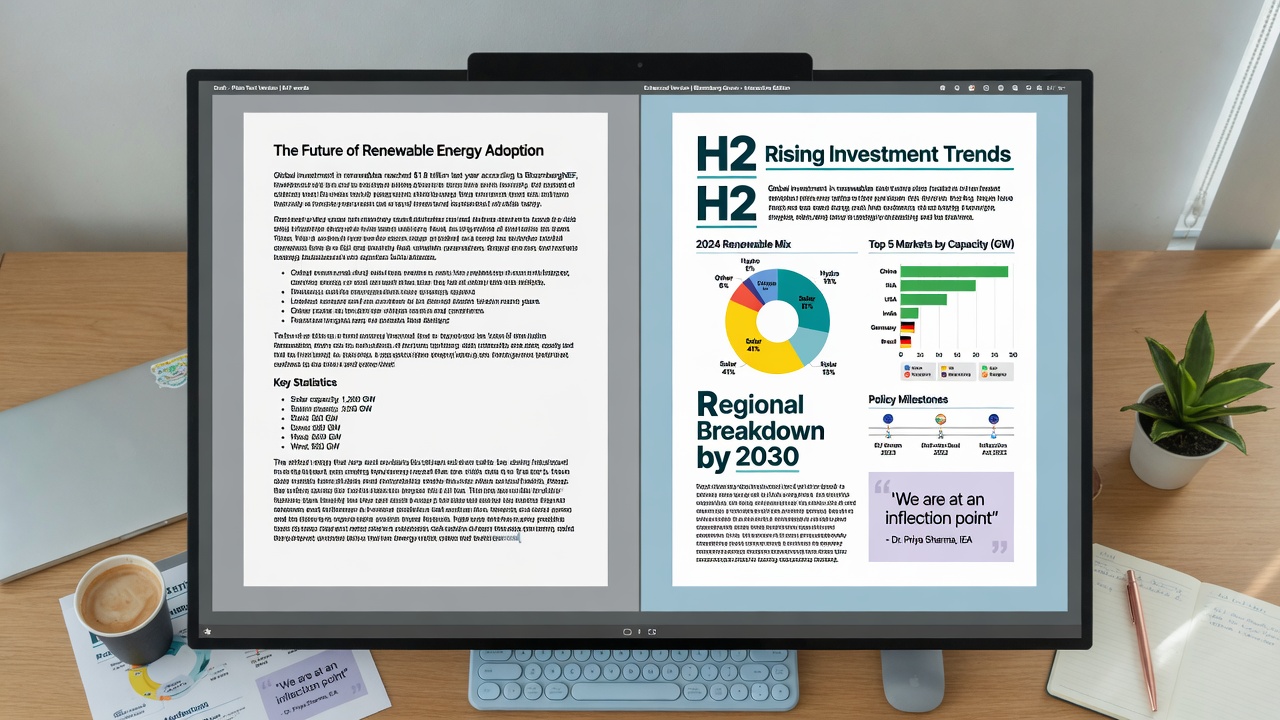
This transformation starts with moving beyond the "wall of text." Modern search engines and, more importantly, human readers demand structured, multi-dimensional content. A sophisticated AI SEO content generator doesn't just string sentences together; it designs a comprehensive resource from the ground up.
Visual and Structural Richness
To keep users engaged, an article needs visual breathing room. Top-tier automation tools automatically construct formatted comparison tables, bulleted lists, and callout boxes that break up dense information. Behind the scenes, they also generate the necessary schema markup. This structured data makes your content instantly readable to search engine crawlers, earning you valuable real estate like featured snippets directly on search results pages.
Deep Context and Smart Internal Linking
True authority is built on depth. Instead of skimming the surface, advanced generators analyze search intent to build comprehensive, long-form structures that address secondary questions and niche angles. But a rich article shouldn't exist in a vacuum. Effective tools automatically identify relevant anchor text to insert natural internal links. This weaves the new piece into your existing content ecosystem, distributing page authority and guiding readers deeper into your site. To execute this strategy effectively, however, you need the right technology stack.
Rich features drive engagement — Modern AI SEO generators must go beyond plain text by automatically embedding tables, structured schema, and strategic internal links to satisfy both search crawlers and human readers.
Choosing Your Stack: The Top AI SEO Content Tools

Building a modern SEO engine means selecting tools that don't just spit out generic paragraphs, but actively analyze search intent and competitor landscapes. If you are looking at the heavyweights of content optimization, three names consistently lead the industry. Based on a price-to-value analysis as of late 2025, Rankability, Clearscope, and Surfer rank as the top AI SEO content optimization tools.
The Heavyweights of Content Grading
These platforms excel at analyzing real-time SERP data, giving editors clear guidelines on word counts, keyword density, and structural elements needed to rank. While they share the goal of maximizing search visibility, they serve slightly different workflows:
- Surfer SEO: Best for deep technical audits and highly detailed semantic keyword mapping.
- Clearscope: Renowned for its intuitive, writer-friendly interface and highly accurate content grading.
- Rankability: Offers a robust, value-first balance of SERP analysis and content optimization.
Specialized Automation for Publish-Ready Assets
While grading tools help optimize drafts, the landscape is shifting toward platforms that generate complete, publish-ready assets from the start. For teams focused on rapid, high-volume publishing, specialized tools are streamlining the entire pipeline. For instance, tools like the eesel AI blog writer specialize in publish-ready SEO blog posts with complete assets, starting at $99/month for 100 blogs. This shifts the editor's role from writing and formatting to simply reviewing and approving. But selecting the right software is only half the battle; the real proof lies in how these automated workflows translate into actual search traffic.
Tool alignment is key — Choose Rankability, Clearscope, or Surfer for grading and optimizing human-led pieces, or specialized tools like eesel AI to automate complete, asset-rich blog posts at scale.
From Theory to Traffic: Real-World AI Content Success Stories

To understand the true impact of this shift, we only need to look at the brands already putting automated workflows to work. The promise of AI-driven SEO isn't just theoretical; early adopters are achieving traffic milestones that previously took years of manual labor and massive budgets. By automating the heavy lifting of research, outlining, and drafting, these tools allow companies to focus on strategy and rapid scaling.
Take the case of AirOps, an AI platform that has demonstrated how quickly high-quality, automated SEO-rich content can move the needle. By leveraging structured AI workflows, they helped a client achieve an astounding 20x organic traffic growth in just 2 months. This isn't an isolated fluke. Causal App achieved a similar trajectory by scaling to 1 million monthly visitors in under a year using AI content generation via Byword.
These rapid audience scaling stories industry-wide show that when AI content is structured correctly—incorporating competitive search intent and rich elements—search engines respond favorably. However, the most successful brands don't just "publish and pray." They treat AI as a high-powered engine, pairing it with human oversight to ensure the final output remains engaging, accurate, and aligned with user expectations. This balance of automation and human intuition is where the magic really happens.
Velocity drives visibility — Implementing structured AI content generators can compress years of organic growth into months, provided the automation focuses on search intent and rich content formats.
The Hybrid Advantage: Why Human Editors Are the Secret to AI SEO Success
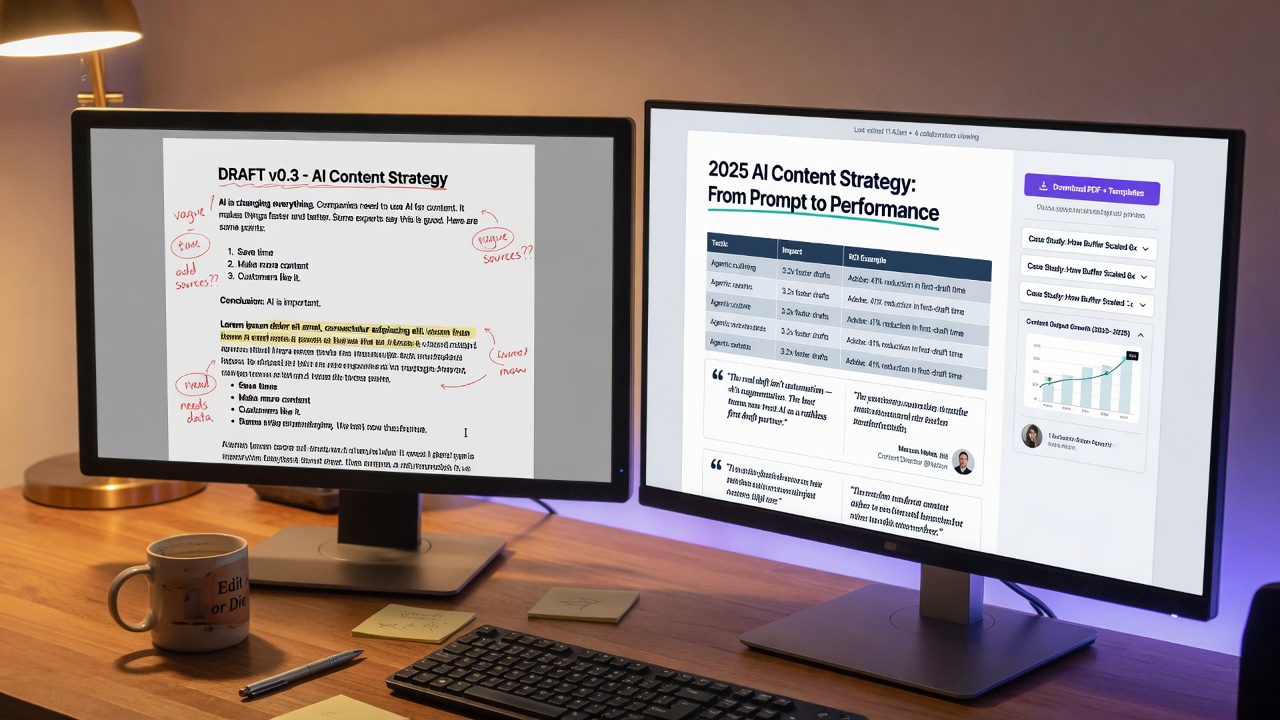
This synergy isn't just a theoretical best practice—it is the baseline for sustainable search growth. While an AI SEO content generator can do the heavy lifting of keyword placement, structural design, and initial drafting in seconds, leaving the machine entirely to its own devices carries significant risks.
Purely AI-generated, unedited content often fails to earn backlinks and struggles to maintain reader engagement. Without human oversight, articles can feel repetitive or miss the nuanced industry insights that compel other websites to link to them. Search engines prioritize content that demonstrates real-world expertise and authority, two things raw AI output cannot replicate on its own.
How Humans and AI Collaborate for Better Results
By contrast, inserting a human editor into the loop turns AI from a risky shortcut into a powerful force multiplier. A hybrid workflow allows teams to scale without sacrificing quality. In fact, implementing high-quality AI content with human editing has been shown to deliver a 30% increase in content output alongside noticeable lifts in page views. Editors don't need to write from scratch; instead, they focus on polishing the narrative flow.
- Injecting proprietary data, personal anecdotes, or unique brand perspectives.
- Fact-checking statistics, dates, and technical claims to maintain absolute credibility.
- Smoothing out repetitive phrasing or transitions that AI tends to overuse.
This collaborative approach ensures your content remains both highly rankable and deeply engaging. But keeping a reader on the page goes beyond just great prose; the next step is transforming static text into an interactive experience.
The hybrid model wins — Pairing AI generation with human editorial oversight increases content output by 30% while securing the engagement and backlinks that unedited AI content misses.Beyond Static Text: Engaging Readers with Embedded AI Chat

Embedding an AI chat interface directly into your published articles shifts the reader's experience from passive consumption to active engagement. Instead of skimming a 2,000-word guide to find a single, specific answer, a reader can simply ask the on-page AI assistant. This real-time Q&A capability transforms your blog post from a static document into a dynamic, personalized knowledge base.
How Interactive Chat Drives Retention and Conversions
When readers interact with an embedded AI assistant, they stay on your page significantly longer. This increased dwell time sends strong positive signals to search engines about the quality and relevance of your content. But the benefits extend far beyond basic SEO metrics; interactive chat serves as a powerful tool for navigation and monetization.
- Seamless Navigation: The AI can instantly direct users to other relevant articles on your site, keeping them within your content ecosystem.
- Contextual Monetization: Based on the user's questions, the chat can naturally recommend your products, services, or affiliate links at the exact moment of high intent.
- Frictionless Lead Capture: You can configure the chat to offer downloadable resources or newsletter sign-ups directly within the conversation.
By automating this level of personalization, platforms like Flows allow publishers to scale not just their content volume, but their actual on-page conversion rates. It turns every article into a high-performing sales and support agent, ensuring that your traffic doesn't just bounce, but actually converts.
Interactive content wins — Embedding AI chat inside your SEO articles transforms static text into a dynamic, real-time Q&A hub, driving longer dwell times, seamless site navigation, and highly contextual monetization opportunities.
Key Takeaways
Experience how Flows can automate your entire SEO publishing pipeline and turn static articles into interactive, high-converting reader experiences.
Frequently asked
Based on price-to-value analysis, Rankability, Clearscope, and Surfer are widely considered the top three AI SEO content optimization tools. These platforms help analyze competitor structures to ensure your content is fully optimized to rank.
While AI content can rank, unedited AI-generated content often fails to earn backlinks and struggles with user engagement. Utilizing a hybrid approach with human editing yields a 30% increase in output and significant lifts in page views.
With the right strategy, scaling can be incredibly rapid. For example, some platforms have helped clients achieve a 20x organic traffic growth in just two months, while others have scaled sites to 1 million monthly visitors in under a year.
Specialized tools like the eesel AI blog writer offer cost-effective options, generating complete, publish-ready SEO blog posts starting at $99/month for 100 blogs.
Integrating an AI chat inside your articles transforms static text into an interactive experience. It helps readers navigate complex topics, answers their questions in real time, and drives monetization by guiding users to relevant products.