Topic Cluster Strategy: How to Map Pillars That Compound Rankings
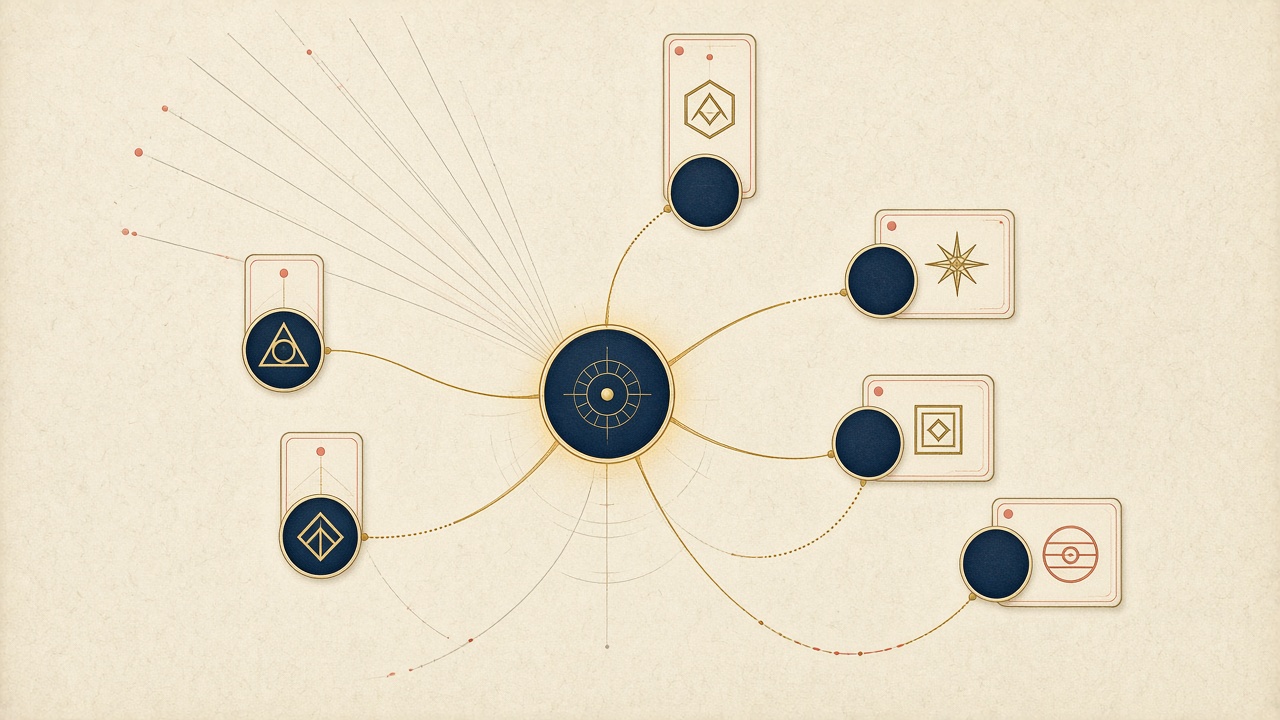
A folder of related posts is not a topic cluster. HubSpot defines a topic cluster as a pillar page linked to focused cluster pages on related subtopics, with links back to the pillar. The graph only compounds if each supporting URL owns a distinct sub-intent and the pillar stays the page you want cited for the broad query.
That lock matters more once one question triggers several related lookups. Google says AI Overviews and AI Mode may issue multiple related searches across subtopics, which surfaces a wider set of links than classic search. Semrush warns that when two pages compete for the same terms, search systems have to guess which one to cite. Those extra searches do not invent a winner for you; overlapping URLs split the credit.
Map the cluster before you write it. Group terms by what the results already treat as the same page, not by how similar the wording looks. Gorilla Marketing finds most successful clusters hold 8 to 12 supporting pages.
Freeze pillar scope, intent locks, and required links in the brief, prove that small graph, then scale. The next section is how to decide which intents share a URL.
- A topic cluster is one pillar URL, supporting pages on distinct sub-intents, and two-way internal links—not a folder of related posts.
- Assign pages by search-result overlap and searcher satisfaction, not by how similar two keyword strings look.
- One keyword cluster maps to one URL so query fan-out cites the pillar instead of guessing between near-duplicates.
- Plan the link graph before drafting, then prove the pillar with a few spokes before you publish the rest.
- Measure the cluster as a unit: pillar versus spoke traffic, clicks between pages, and coverage of the target keyword set.
Why Query Fan-Out Punishes an Unmapped Topic
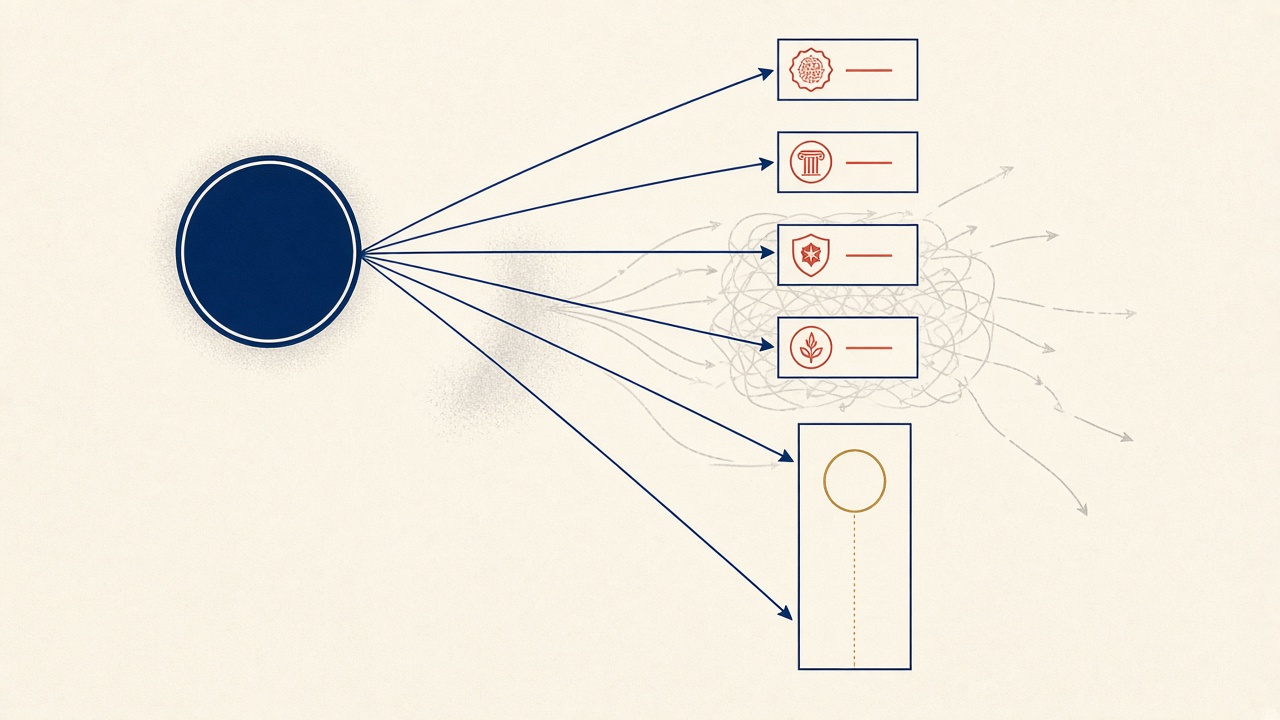
That map only pays off if each slice of a question has one obvious URL. Classic results often settled a topic with a single query. AI features do not. Google says both AI Overviews and AI Mode may issue multiple related searches across subtopics, which surfaces a wider set of links than a classic results page. Call that wider pass fan-out. An unmapped topic gives the engine nothing precise to cite for each of those searches. Nearby posts get treated as interchangeable, and the citation lands on whichever URL looks least confused.
There is no special markup that fixes this. Google says there are no additional technical requirements to appear in AI Overviews or AI Mode beyond being indexed and eligible for a snippet. Eligibility gets a page into the pool. The map decides whether that page is the clean answer for one slice of the fan-out. Structure is the lever, not a schema trick.
Clicks from those AI result pages are worth earning cleanly. Google reports that clicks from search results pages with AI Overviews are higher quality, with users more likely to spend more time on the site. A split topic wastes that attention. When two URLs cover the same intent, search and answer engines have to guess which page to cite. The reader who arrives often hits a page that only half answers the question, then leaves before the rest of the site can help.
What holds up under that wider link set is one pillar URL, supporting pages locked to distinct sub-intents, and links that make each URL findable for its slice of the fan-out. The pillar summarizes each subtopic and points outward. Each spoke owns its slice and points back. That graph turns a wider link set into compounding citations instead of a scatter of near-duplicates.
The lever — Query fan-out rewards a mapped cluster—one pillar, distinct sub-intents, and links that make each URL the obvious citation—not a folder of related posts or extra schema.
Set the Page Boundary by SERP Overlap, Not by Synonyms
Once the map is the lever, the next decision is where one URL ends and the next begins. That line is an intent boundary, not a judgment about how similar two phrases sound.
Semrush treats a keyword cluster as the set of terms that share the same intent, and says one page should target that whole cluster. Using a single page for each term in the cluster is what lets that URL rank for more of those searches, instead of splitting the same job across near-duplicate posts.
Let the live results page decide the merge
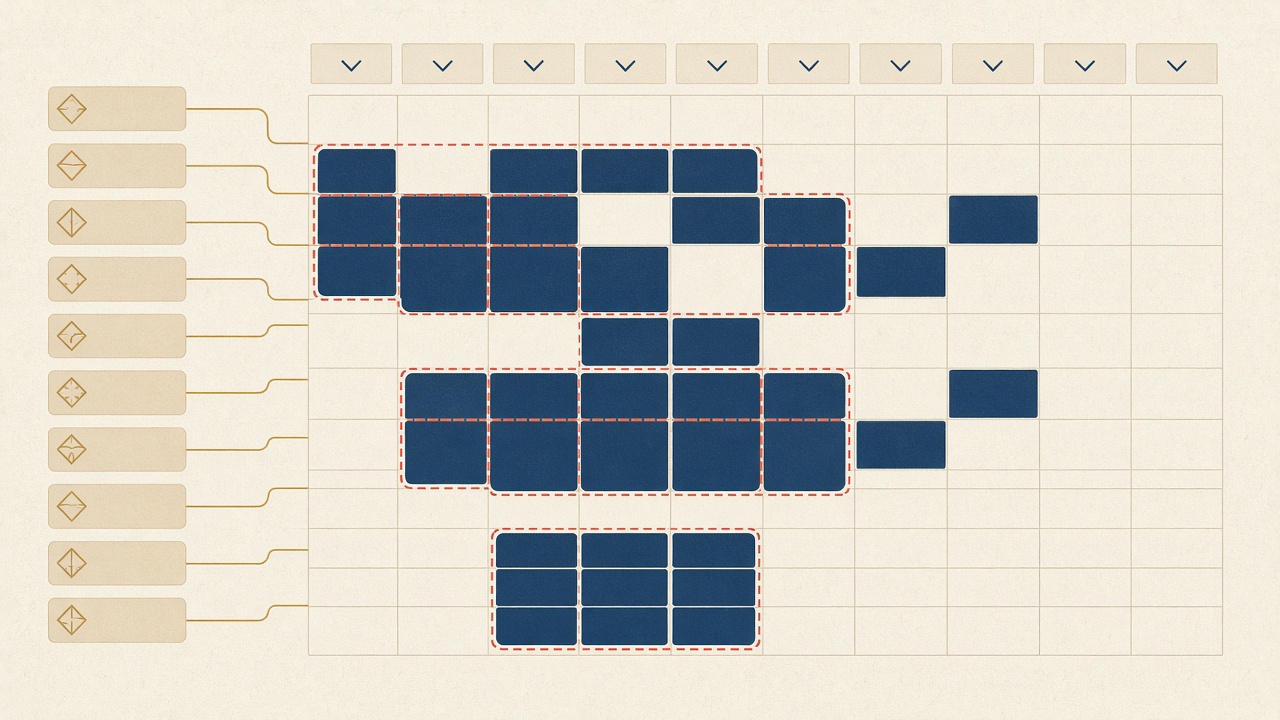
Do not merge two keywords because the wording looks related. A common SERP-clustering rule is stricter: put keyword A and keyword B on the same URL only when they share at least 4 of the same top 10 results. Below that overlap, search is already treating them as different jobs, and forcing them onto one page asks both search and answer engines to guess which version to cite.
Semantic closeness can still split. In one Keyword Insights example cited in SERP-clustering guidance, “vaping” and “e-cigarettes” are clearly related terms, yet their results pages overlapped by only 11.8%. That is not a cluster. Those queries need separate URLs, or the page written for one will keep losing the citation the other was meant to win.
Apply the searcher test before you lock the brief. Gorilla’s cannibalization check is simple: would someone typing one query be satisfied by the page written for the other? If yes, they are one URL, not two spokes. If no, they are distinct sub-intents and should not share a spoke, even if a synonym tool grouped them. Lock the brief to intents the results page actually separates, so a synonym grouping never becomes a second spoke.
Page boundary — Merge keywords onto one URL only when they share intent and at least 4 of the top 10 results; split them when the SERP, and the searcher, would not accept one page for both.
Give Answer Engines One URL They Do Not Have to Guess
Once the overlap test has decided that two queries belong on the same page, that decision has to hold through every later draft. Semrush describes the collision as keyword cannibalization: when two pages compete for the same terms, the system must pick one. Extra related searches do not settle that choice. They only create more moments in which a related query can surface the weaker twin instead of the page you meant to be cited.
Keep the working definition narrow enough that a queue cannot blur it. A theme tag, a category archive, or shared vocabulary is not a citeable unit. The pillar is the one URL answer engines should not have to infer, and each supporting page has to stay locked to a sub-intent the pillar does not fully answer.
Freeze the winning URL before a twin can ship
Write that URL into the brief before a second writer, or an autoblog queue, can publish a near-duplicate. Name the page that owns the intent, the terms it is allowed to rank for, and the rule that no new draft may target them. Spoke-count worksheets and fill-in map templates belong in the articles that size the cluster. This decision is only which URL is allowed to be cited, so the link graph later has one home to point back to.
One citeable URL — Answer engines stop guessing only when one locked URL owns the intent and every supporting page links back to it instead of competing for the same terms.
Let the Pillar Win the Overview and Leave the Proof on the Spoke
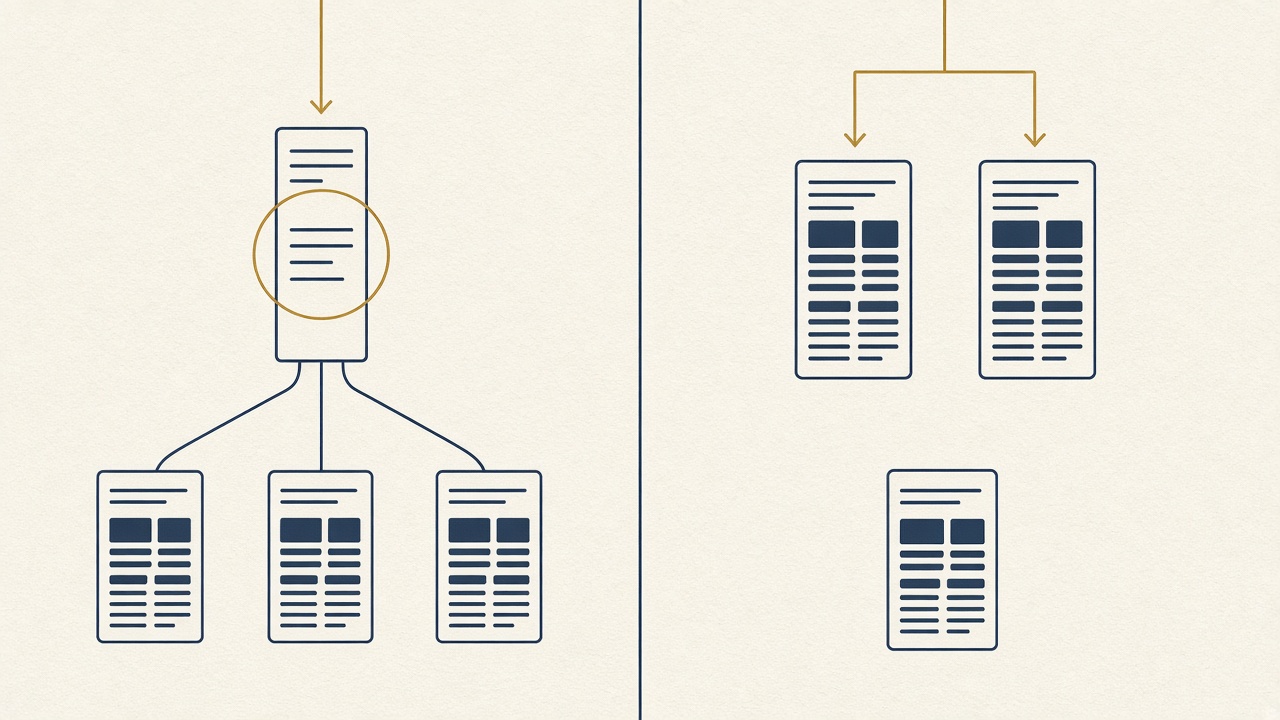
Once the winning URL is frozen in the brief, the next decision is what that page is allowed to say. The pillar is the page you want cited for the broad query. Each spoke should be the only page that fully satisfies its sub-intent. If the overview already answers the narrow question in full, the supporting URL has nothing left to win, and search and answer systems are back to guessing which page to cite.
Keep each subtopic on the pillar to about 200–400 words: enough to show you understand the territory and to earn the outbound link, not enough to reprint the spoke. That range is the point of the split—demonstrate competence without making the cluster pages redundant. Pair the restraint with a handful of contextual links out, about two to five internal links per cluster page, so the reader and the crawler both land on the URL that owns the deeper intent.
Put citation signals on the URL that should win
HubSpot’s State of AEO 2026 found that pages with outbound links, statistics, an author bio, and a visible last-updated date earn more AI citations. Those signals are not a decoration for every URL in the folder. Put them on the page that should win that query. A short synthesis and a broad statistic belong on the pillar, next to the link out. The worked example, the comparison, and the proof that only the sub-intent needs belong on the spoke. Loading spoke-level proof onto the pillar does not make the hub stronger. It makes the supporting page optional, which undoes the intent lock you just froze.
Depth split — Summarize each subtopic in about 200–400 words on the pillar, link out with a few contextual links, and put citation signals on the URL that should win that query—a short synthesis and a broad statistic on the pillar, the full proof on the spoke.
Give AI Features a Link Path Back to the Pillar
A short synthesis on the pillar and the proof on the spoke only compound if a crawler, and an AI feature, can walk from one to the other without guessing. Google lists internal links as a foundational way to make content findable for AI features in Search: the URL you want cited has to be easy to reach from the rest of the site, not left to a tag archive or a related-posts widget.
HubSpot’s early Topics Over Keywords test showed the same pattern in rankings, not just in crawl paths. The more internal links they added between related pages, the higher those pages climbed in the SERPs, and impressions rose with them. Those links are what turn separate posts into one findable graph.
What the graph actually contains
ContentGrip’s rule is tight enough to freeze in a brief. Every cluster page links to the pillar, ideally within the first 200 to 300 words, so the return path sits in the body rather than the footer. Two or three sibling links belong only where the sub-intents hand off — a comparison that needs a definition, a how-to that needs a checklist — not as the same block on every URL.
- Pillar to every spoke, from the overview section that summarizes that subtopic.
- Every spoke back to the pillar, in the opening 200 to 300 words.
- Sibling links only when one sub-intent genuinely needs the other, capped at two or three.
Write that graph into the brief before anyone drafts. On a scaled or automated queue, the required pillar link is a ship condition: a page that cannot name its pillar and place that link up front does not publish. Sibling links stay optional and relevance-gated. That is how one URL stays locked to one intent while every supporting citation still points home.
Path first — Freeze the pillar link, the return link in the first 200 to 300 words, and only relevant sibling links in the brief, so a scaled page cannot ship without a path back.
Score the Cluster as One Asset Before You Add URLs
Stop adding URLs and score what you already have as one asset. Coverage has a ceiling. Most successful clusters contain 8 to 12 supporting pages, and going much beyond 15 can dilute focus—each extra URL competing for the citation the pillar was locked to win.
Volume is the other gate. If the combined monthly search volume of a cluster is under about 100, it usually belongs as a section on an existing URL, not a new page. A thin spoke does not strengthen the map. It gives search and answer engines another page to guess between.
Prove a small set before the queue grows
The practical sequence is a staged proof, not a content dump. Publish the locked pillar with a few spokes, interlink them, and wait before the rest of the map is written.
Judge health as a unit, not page by page: organic traffic to the pillar versus its subpages, clicks between cluster pages, and coverage of the target keyword set. If the pillar is not collecting the broad query, if spokes are not sending clicks back, or if the keyword set is still split across URLs, the citation locks are not holding.
Fail closed on the queue. Do not enqueue the remaining URLs until those signals show the locks are holding. In an autoblog or content-scaling workflow, that gate belongs in the brief: frozen pillar scope, intent locks, and required links stay in place, and a human still signs off before money pages ship. The cluster compounds only when every new URL is a citation pointing home—not another page the system has to choose between.
Fail closed — Size to about 8 to 12 spokes, keep sub-100 clusters as sections, prove the pillar plus three or four pages over four to six weeks, and only then enqueue the rest.
Key Takeaways
Lock your next pillar’s intent and internal-link graph in the brief before another URL ships.