How to Create a Topic Cluster (Step-by-Step)
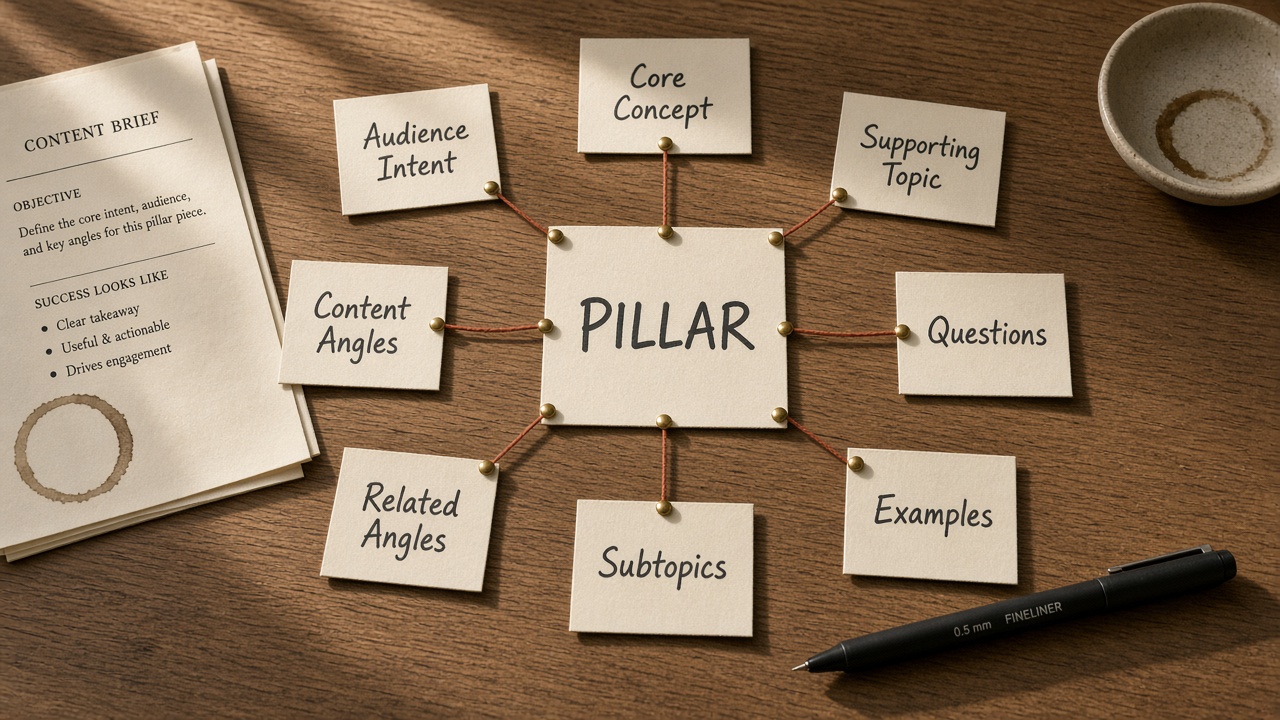
A topic cluster is not a pile of related posts. It is a deliberate map: one pillar that covers the core question thoroughly, a small set of spokes that each serve a unique search intent, and internal links that make the relationship obvious. If two pages could rank for the same query, you do not have a cluster—you have overlap. This article treats the cluster as an operator worksheet you can run from a brief you already have. You will define the parent topic, reject spokes that only rephrase the pillar, write pages that earn their own URL, and wire links so the pillar is the hub. The goal is evergreen structure: useful whenever someone lands here, not a trend recap. Readers looking for keyword clustering, content strategy, or internal linking are usually trying to do the same thing: cover a topic completely without cannibalizing themselves. Start with intent uniqueness, then volume and linking—not the other way around.
- One pillar owns the parent intent; spokes must not compete with it or each other.
- Aim for 6–12 spokes, each tied to a distinct question, job-to-be-done, or comparison.
- Build from an existing brief so you expand coverage instead of inventing thin pages.
- Internal links should flow spoke-to-pillar and related-spoke-to-spoke with descriptive anchors.
- If two URLs could satisfy the same query, merge, retarget, or drop one before you publish.
Start from a brief you already have

Assume the keywords are already grouped. If they are not, stop here and run them through a keyword-clustering playbook first—this section is about turning a finished brief into a cluster, not teaching grouping from scratch. What you need on the brief is a primary query, a clear search intent, and notes on what the SERP actually rewards. If those fields are missing, filling them is a research-systems problem (automating query, intent, and SERP notes into the brief), not the job of this walkthrough.
From that brief, pick one parent query that matches a complete job-to-be-done: the page someone should land on after reading several related articles, not a fragment of the same question. That parent becomes the pillar. Draft a one-sentence pillar promise: who it is for, what decision it finishes, and what it will not cover. Everything you explicitly exclude is a candidate spoke. Keep the promise tight enough that a reader could hold it in one breath; if you cannot, you still have two jobs on one URL.
Same intent is not a new URL
Reject “cluster” ideas that are only modifiers of the parent intent—near, best, vs, 2025, for beginners when they still answer the same job. Those belong as H2s on the pillar, not new URLs. A spoke earns its own page only when it answers a distinct sub-intent: a different question, audience slice, or stage of the decision. That rule is what keeps the cluster from duplicating coverage and leaving thin pages that compete with the pillar instead of supporting it.
Pillar first — One parent query, one finished job, and a one-sentence promise that names what the pillar will not cover—those exclusions become spokes; same-intent modifiers stay as H2s.
Build a spoke worksheet: 6–12 URLs, one intent each
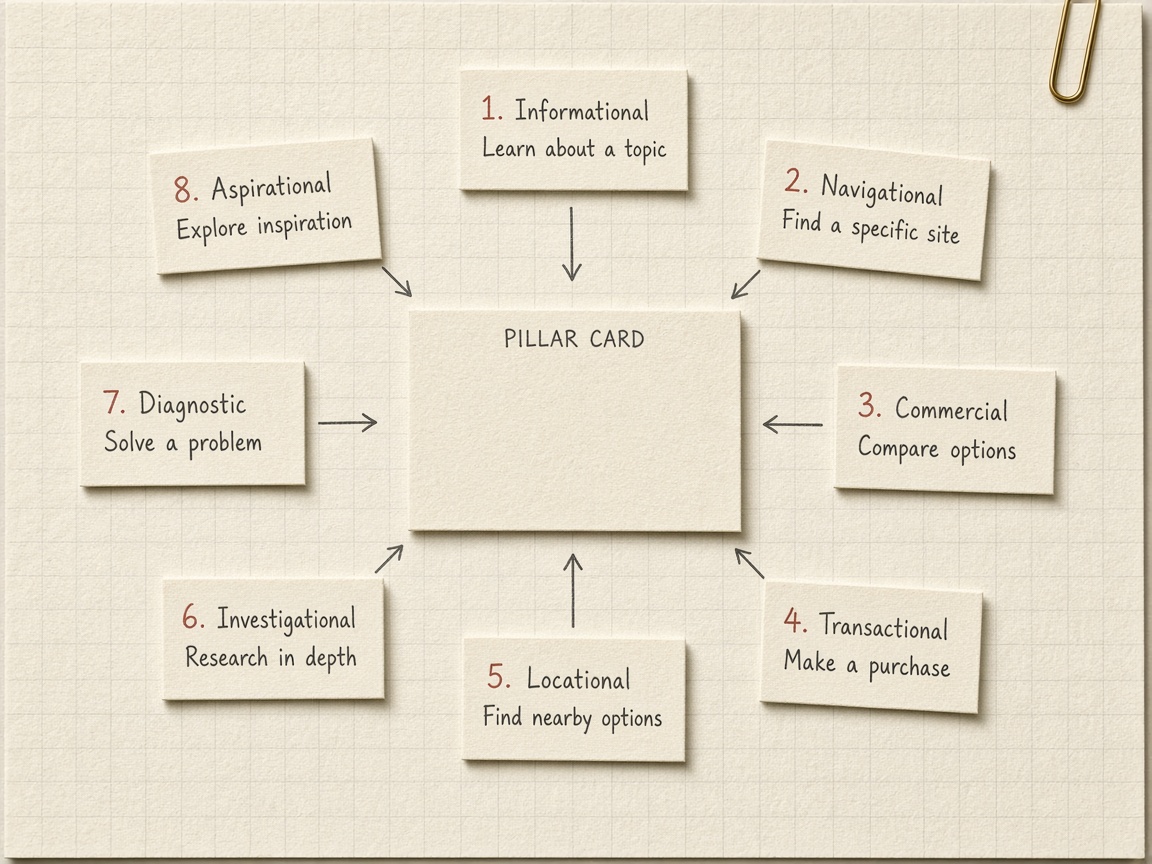
With the parent job locked, the next move is not more keyword research. It is a short spoke list that can actually ship. Aim for a compact first cluster: enough distinct sub-intents to support the pillar, few enough that a lean team finishes without padding. Every extra URL you invent to “use” a leftover term is a thin page waiting to cannibalize something you already promised.
Run each candidate through one test before it earns a row: if this page and the pillar both ranked, or this page and a sibling both ranked, would one lose? If yes, merge it. Spokes exist only when the reader’s job is different—learn versus compare versus do—not when the head term is slightly rephrased.
When the worksheet is honest, you have a map search engines can follow: one parent intent, a handful of sub-intents, and a next-step for every URL. That map is what internal linking will make visible—without duplicate coverage or pages that exist only because a spreadsheet cell was empty.
Worksheet rule — Ship spokes only if each would still deserve its own ranking against the pillar and its siblings; park every leftover term instead of minting a page for it.
Link the cluster so Google and readers see one map
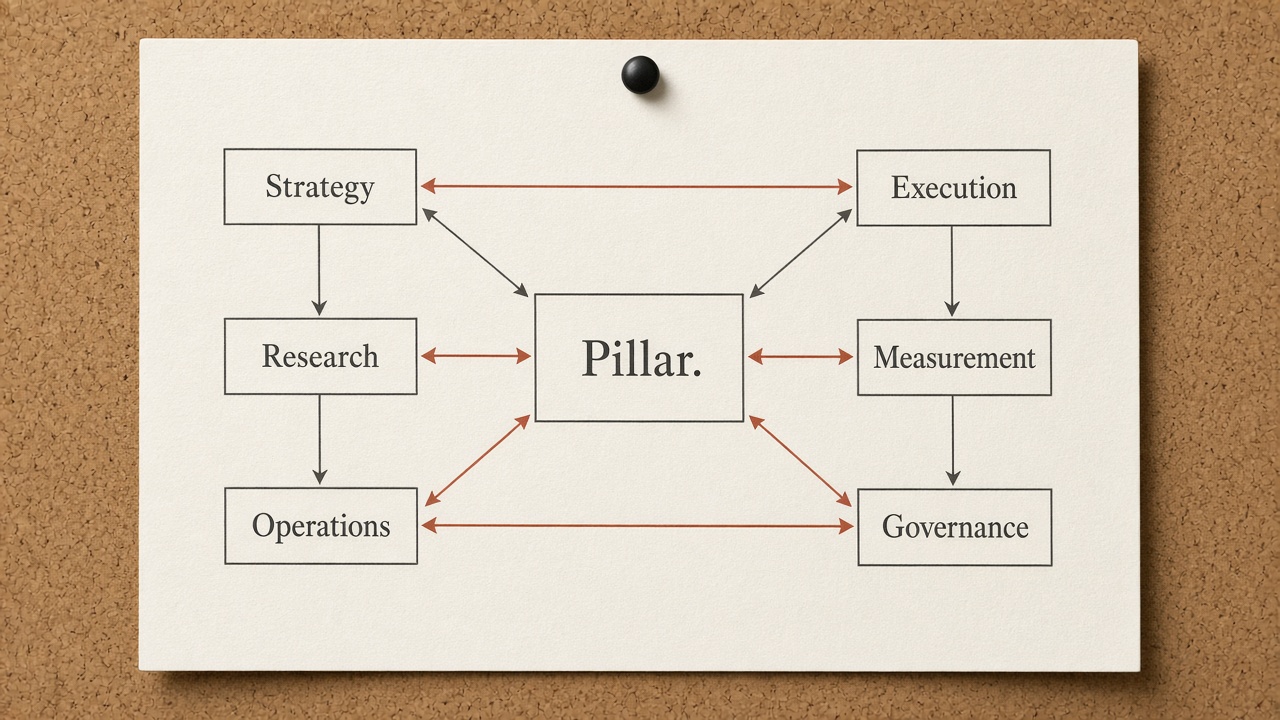
With the worksheet in hand, linking is not decoration—it is how the pillar owns the parent intent and each spoke stays a distinct sub-intent. On publish, the pillar must link to every live spoke. Use descriptive anchors that name the spoke’s job: the topic the reader came to finish, not your brand or a vague “click here.” If a spoke is still a draft, wait; a dead or placeholder link trains neither crawlers nor people.
Every spoke should open or close with a contextual link back to the pillar as the full map of the topic. That return path tells search engines the parent page is the hub and tells the reader where to go when they need the whole decision, not just this slice. Do not bury it in a footer-only module; put it in a sentence that actually continues the argument.
Spoke-to-spoke only when the questions are sequential
Add a link from one spoke to another only when the two articles answer sequential questions—definition then implementation, comparison then setup. Skip decorative cross-links that treat every URL as equally related. Keep one primary destination per paragraph so the cluster reads as a path, not a mesh of equal links fighting for the same click.
Reuse the worksheet’s “link job” column as the editorial rule. Writers should not invent new URLs mid-draft. If a sentence wants a destination that is not already assigned, it belongs as an H2 on an existing page or as a parked FAQ—not as a surprise spoke that would duplicate coverage.
The rule — The cluster ranks as a system when every live spoke is named from the pillar, every spoke points home as the map, and extra links exist only for sequential jobs—one primary destination per paragraph.
Ship, QA, and grow the cluster without competing with yourself
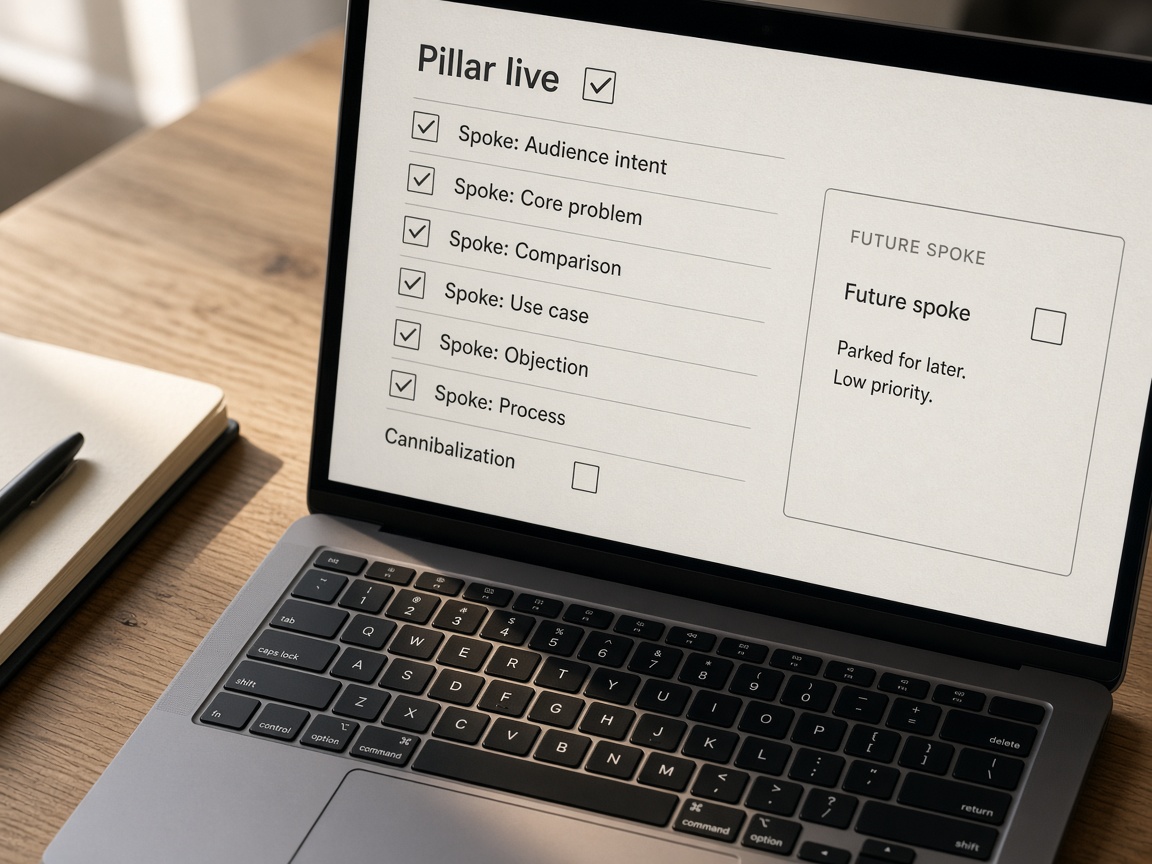
Once the map is locked in the worksheet, publish the pillar plus every spoke that is actually drafted and ready. A live hub with a handful of strong, distinct pages beats a full spoke plan that never leaves the doc. Search engines and readers can only use what is on the site.
Run a short QA pass before you call the cluster done. Each URL needs a unique H1 that matches its assigned intent. No two pages should be trying to rank for the same SERP. Every live spoke must appear from the pillar with a descriptive, job-matching anchor, and no URL should sit as an orphan. If a page fails any of those checks, fix the map before you add more copy.
Watch for overlap, then expand only for new intent
After launch, watch query reports for pages that start competing with each other. When two URLs split the same job, fold the weaker one into the pillar or the rightful spoke instead of rewriting both. Expansion comes later, and only when demand shows a new intent the current set cannot honestly cover. That is quality-first scaling: more coverage when the job is genuinely new, not more volume for its own sake. Keep the worksheet as the operating system for the next cluster so the same rules—one parent intent, distinct spokes, explicit link jobs—travel with you instead of being reinvented from scratch.
Ship, then scale — Ship a live hub with strong, unique spokes, QA so nothing cannibalizes or orphans, and add pages only when a new intent appears—using the worksheet as the repeatable OS.
Key Takeaways
Open your existing brief, write the pillar promise, and fill a 6–12 spoke worksheet before you create another URL.
Frequently Asked Questions
You Might Also Like
- Strategy Keyword Clustering: How to Group Keywords into Rankable Topics
- Automation Internal Linking Automation: How to Scale Links Without Manual Work
- Guides SEO Content Brief Template: The Complete Guide to Briefs That Rank
- Strategy Long-Tail Keyword Research: A Practical Workflow for Briefs
- Strategy How to Scale Content Marketing Without Diluting Quality