
SEO Content Brief: How to Brief Writers (and AI) So Pages Rank
Autoblogging is a publishing system — input, generation, then CMS output — not a one-click spinner or an RSS republisher. The economics tempt people to skip the brief: AI posts can land around $0.50 to $5 against $50 to $300 for freelance writing, and a machine can attempt 5 to 50+ posts a week while a human desk typically ships 1 to 3. Speed is not a ranking factor. A page that restates the obvious, shares a template with every other URL, and never answers the real question is still thin, even at 2,000 words.
Google does not ban AI or automation. Appropriate use is not against Search guidelines, and using AI does not confer a ranking advantage — it is just content. What the spam policies target is scaled content abuse: many pages generated for the primary purpose of manipulating Search rankings rather than helping users, whether those pages come from automation, humans, or a mix. Generative tools used to mass-produce pages with no added user value sit inside that policy. Unique, useful pages are what show up in generative AI search; commodity summaries do not.
A keyword is not a brief. Before a writer or a model drafts, the brief has to act as a publish veto: name the one owner URL for that intent, and forbid a new page when the keyword already belongs on a page you have. The first gate is the URL you must not create.
- Autoblogging is a publishing system of input, generation, and CMS output, not a spinner or an RSS dump.
- Google allows appropriate AI use and gives it no ranking bonus; scaled content abuse is pages made mainly to manipulate rankings.
- Thin is not short: a long, generic, unsourced page that shares a template with every other URL still fails.
- A keyword is not a brief — lock intent, the owner URL, sources, links, and pass/fail checks before anyone writes.
- Ship one URL per intent, keep a human review checkpoint, and prune pages that never earn impressions.
Name the URL This Brief Is Not Allowed to Create
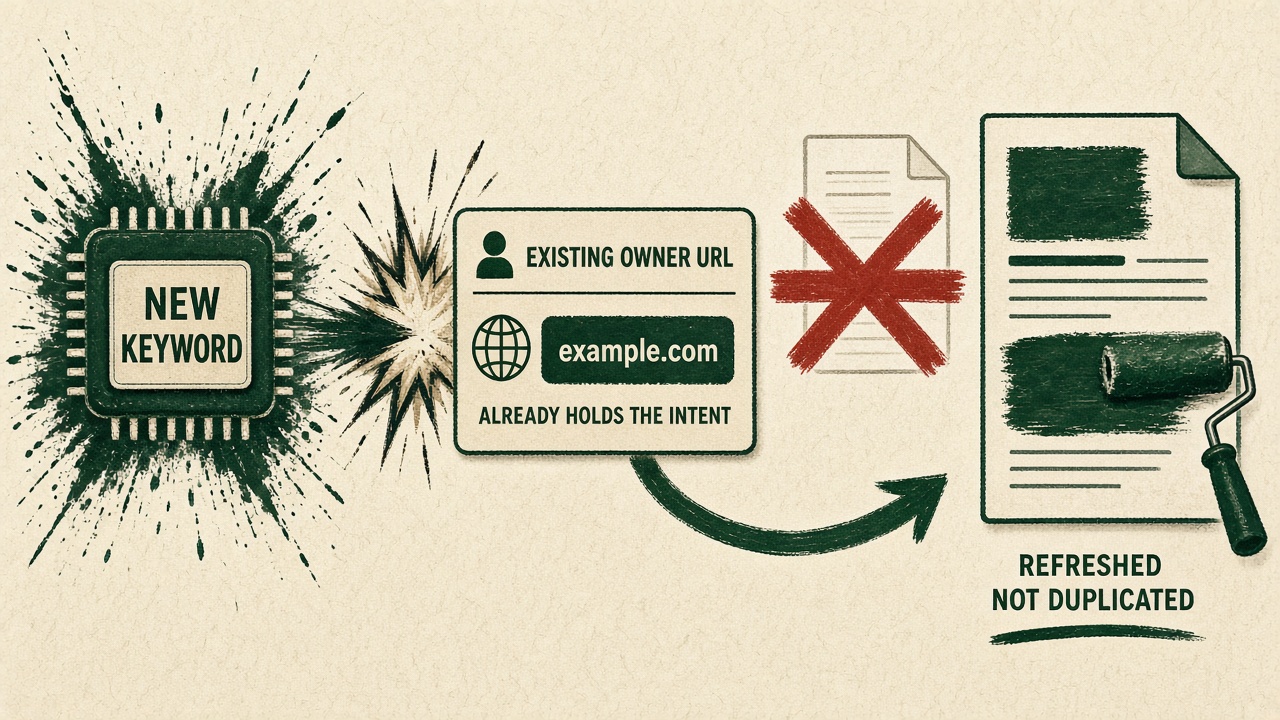
Before anyone drafts, the brief has to answer a narrower question than most teams ask: which existing URL already owns this intent? That address is the first field. The target keyword comes after it, and only if a new page is still allowed to exist.
Autoblogging stays useful only when it works as a publishing system — an input, a generation step, and a CMS output with a veto between them. The input that matters is a collision check, not another phrase to spin into a post. Compare the query with the page that already ranks for it, or that should. If the overlap is real, the assignment flips. Refresh that owner URL. Refuse the new autoblogged page. A second address does not add coverage. It competes with the page you already have, and it splits whatever authority that page had earned.
There is no page-count threshold that makes the second URL safe. Google does not wait for a site to hit a fixed number of posts before it treats scaled content as a problem. It judges the primary purpose of the pages and the value on each URL, whether those pages came from automation, people, or a mix. A slow cadence can still fail if every new address restates a page that already exists. A faster one can hold if each URL does a job no other URL on the site does.
Near-duplicate URLs that change only a parameter are the direct path to index bloat. Poorly managed automated page generation, without a reason the new address should exist, fills the index with copies and leaves less distinct value on any of them. So the brief has to say, in plain language and before a model writes, why this URL's data or answer exists nowhere else. If the only difference is a parameter, that sentence cannot be written honestly. The brief has done its job by stopping the page.
Replace the Outline With a Claim Ledger the Draft Cannot Exceed
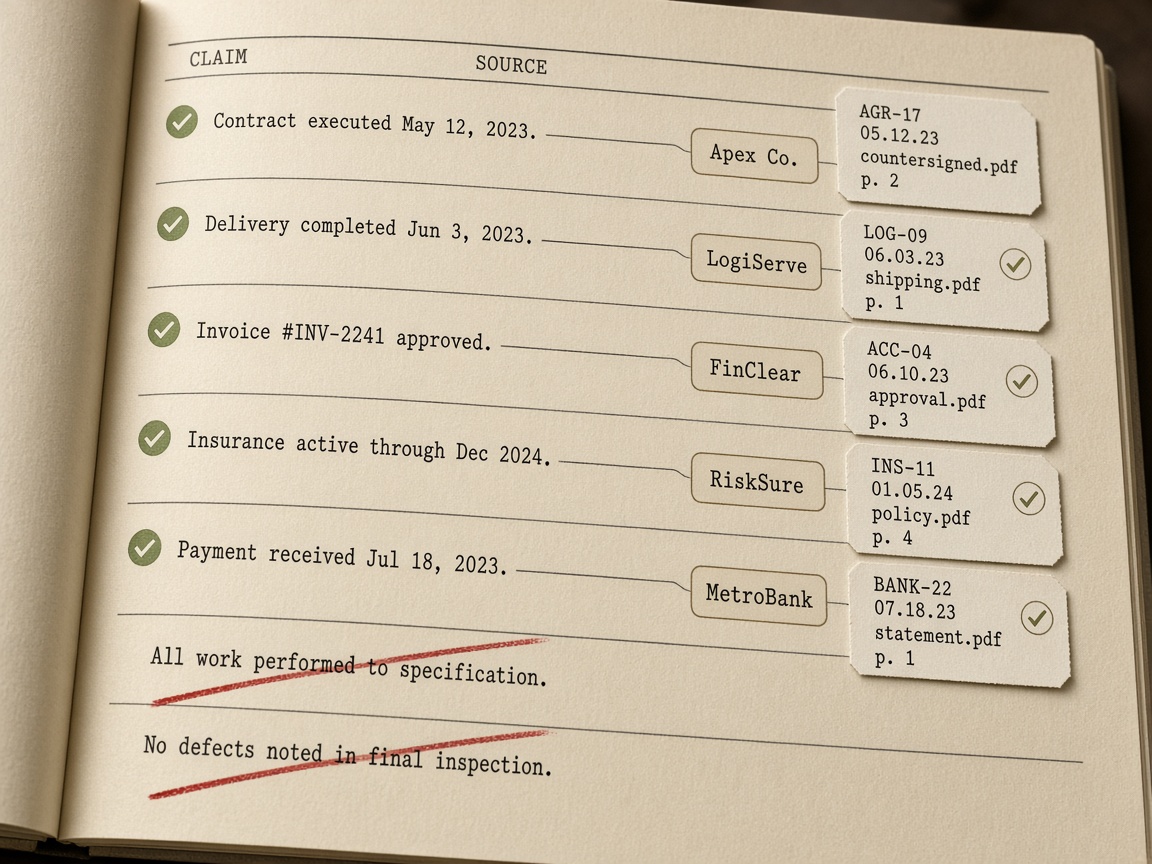
Once the brief has named the URL this intent already owns, the next lock is not a heading list. An outline tells a writer, or an AI article writer, which sections to fill. A claim ledger lists the only assertions, entities, and numbers the draft may use. Anything else is out of bounds, including the plausible fact a model invents so a paragraph feels finished.
Each row is a publish gate, not a suggestion. It records the claim in the words the page is allowed to use, the source that proves it, a confidence note, and a fail rule: if the model adds a fact that is not on the ledger, the draft does not advance to the CMS. Confidence is not a vibe. It states what kind of evidence this is—primary documentation, a named secondary source, or an operator observation—and what that evidence does not prove. That rule is what makes autoblogging a publishing system rather than a one-click spinner: input, generation, and output still run, but the ledger sits between generation and publish.
What every ledger row has to hold
- The assertion, entity, or number, written exactly as the draft is allowed to say it.
- The source, so a later editor can re-check it without trusting the model.
- A confidence note: what kind of evidence this is, and what it does not prove.
- A fail rule: any fact, figure, or entity not on the ledger sends the draft back.
Accuracy covers more than body copy. When content is generated automatically, Google’s guidance is to focus on accuracy, quality, and relevance, including titles, meta descriptions, structured data, and image alt text. Those fields have to match the same sourced facts. A title that promises a statistic the ledger never approved is the same failure as a fabricated sentence in paragraph four.
Length does not rescue a page that never answers the question. A 2,000-word automated article can still be thin if it repeats obvious points and fails to answer the real question. Generating many pages with generative AI without adding value for users may violate Google’s spam policy on scaled content abuse. The ledger is built to block that failure mode: one useful page per intent, claims that can be proved, and a draft that cannot exceed them.
Fail closed — An outline invites filler. A claim ledger is a publish veto: unlisted facts, mismatched metadata, and unsourced length all stop the draft before it ships.
Autoblogging Needs a Closed Packet, Not a Freelance Brief
The claim ledger already tells a human writer which assertions are allowed. Once publishing is a pipeline, that list has to become a closed packet, because nobody is in the draft choosing what to leave out.
Autoblogging is a publishing system, not a one-click spinner and not an RSS republisher. A widely used operator definition treats it as automatic generation and publishing through AI writing tools, APIs, RSS feeds, or scripts, moving through input, generation, and CMS output. That is a different job from a freelance assignment. A freelancer can be given the ledger and still use judgment on examples and phrasing. A model gets closed constraints, an allowed-source list, and an explicit ban on any claim the packet did not authorize.
Teams skip that lock because the unit cost looks irresistible. The same comparison puts a freelance post at $50 to $300 and an AI-generated autoblogged post at $0.50 to $5, with autoblogging able to ship 5 to 50 or more posts a week against a typical 1 to 3 for traditional blogging. That gap is a production fact, not a ranking advantage. Google’s guidance is plain: appropriate use of AI or automation is not against Search guidelines, and using AI does not confer special gains. Helpfulness and originality decide whether the page does well. A cheap draft that restates a feed, or invents a number the ledger never listed, fails that test at machine speed.
The input decides how tight the packet must be. RSS or scraped feeds carry the highest duplicate and copyright risk, so those packets have to prove the new URL is not a republish before generation starts. A keyword-only AI draft is a moderate risk and still needs the claim check. A programmatic template is safe only when the data point exists on that URL and nowhere else. In every case the publish decision stays outside the model: one owner URL per intent, and no generation until the packet can say why this page is not someone else’s copy.
Close the packet — The cost gap is why teams skip the packet, and it is not a ranking advantage. Autoblogging may run on closed constraints, allowed sources, and a pre-generation proof that the page is not a republish.
Name the Links This URL Must Earn Before Anyone Drafts
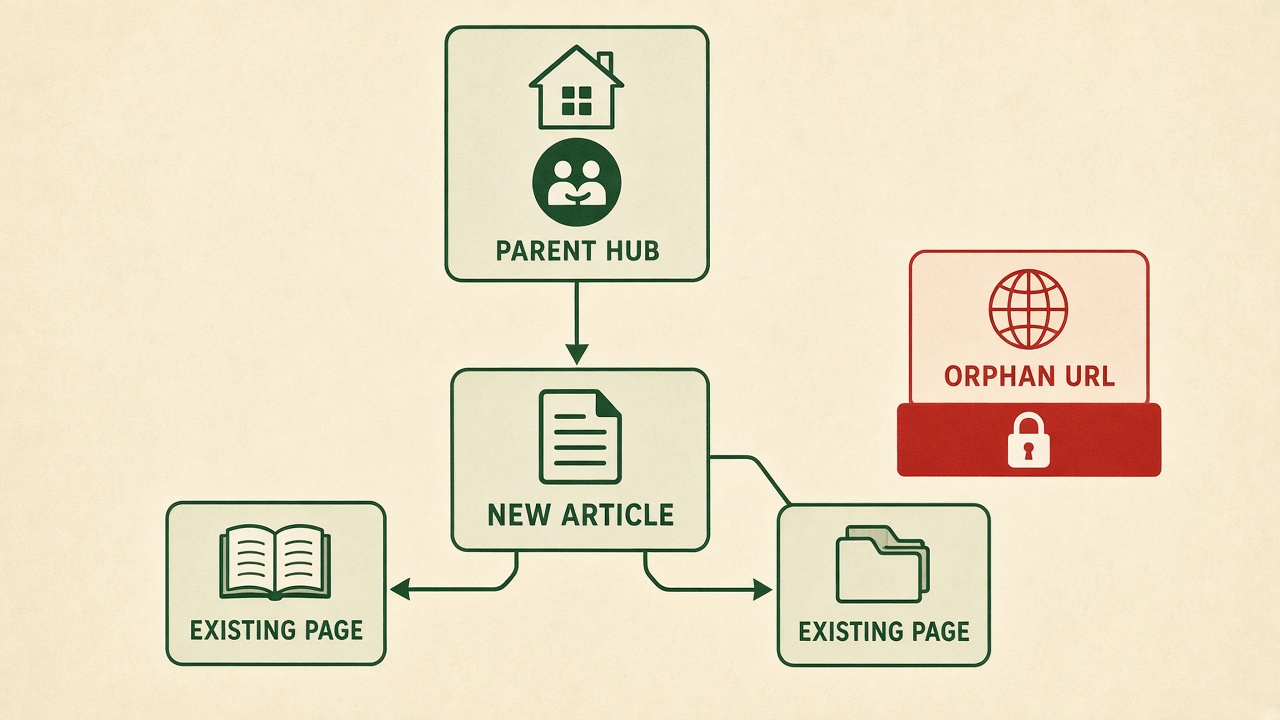
A closed packet still fails if the draft is allowed to choose its own neighbors. Before a sentence is generated, the brief names the parent cluster, the live page that will link in, and at least two pages this URL will link out to. Those names are the only internal links the draft may use.
- The parent cluster this URL belongs to, so the page has a home rather than a new silo.
- One existing page that will link in, written as a real URL already on the site.
- At least two outbound targets this URL will cite, also live pages, not planned posts.
Automation may suggest candidates from the crawl or from keyword clusters. A person approves that set and writes it into the packet, which is what stops the model from inventing a hub, a sibling, or a supporting article that does not exist. An invented cluster looks like site architecture and behaves like orphan spam.
The inbound link is the honesty test. If no live page can point here without stretching the topic, the intent is not ready to publish. Merge the query into the owner URL already named in the brief and stop the job. A page nothing on the site can honestly cite is a new URL looking for a reason to exist.
Outbound targets do the same work in the other direction. They force the draft to sit inside a real cluster—standards, workflow, linking rules, quality checks—instead of floating as a standalone post that will be linked later. Later is how thin URLs accumulate. Treat every named target as part of the pass/fail gate: a missing parent, a missing inbound page, or fewer than two approved outbound URLs means the draft does not run. Linking is not a chore you schedule after the CMS write.
Link gate — If the brief cannot name a live page that will link in and at least two pages this URL will link out to, do not draft—merge the intent into the owner URL.
The Publish Signature Is a Human Veto, Not a Model Setting
A locked set of live links only proves the URL has a place in the cluster. It does not prove the page should ship. The last field on the brief is a publish signature: a named person who can refuse the draft after generation, not a confidence score or a toggle the model sets for itself.
Google defines scaled content abuse as generating many pages for the primary purpose of manipulating Search rankings and not helping users. That policy applies no matter whether content is produced through automation, human efforts, or some combination, so a human-written farm and an unattended autoblog fail the same test. Spam policies name the pattern directly: using generative AI tools or other similar tools to generate many pages without adding value for users. If the reason for the page is primarily to attract search engine visits, that is not what ranking systems seek to reward, and automation used mainly to manipulate rankings violates spam policy.
None of that bans appropriate automation. Keyword clustering, formatting, internal-link suggestions, and CMS staging can run without a person in the loop. What cannot be a model setting is intent ownership, the claim check against the ledger, and the decision to publish. Those stay with one named reviewer who can still kill the URL. A 2026 operating conclusion on autoblogging draws the same line: it still works only when paired with quality control, a content strategy, and at least one human review checkpoint. That checkpoint is the signature on this brief. The signer is attesting that the page's primary purpose is the reader's question, not another URL aimed at the same visits, and that every assertion still has its source. Unsigned packets stay in staging.
Human veto — The publish signature is a named person who can refuse the URL. Automation may stage the page; it cannot decide that the page exists to help rather than to manipulate rankings.
Put the Thirty-Day Keep-or-Kill on the Brief
The named publish signature is not the last line of the packet. The same brief has to say when that person comes back, because a URL that never earns an impression is still a ranking page until someone is required to remove it.
Before generation starts, the brief records a review date, the person who owns the keep-or-kill call, and the action if the URL draws no impressions: merge it into the owner URL, or noindex it and drop it. Thirty days after publish is the default clock. Leaving that decision for a quarterly cleanup is how a veto turns into a backlog of thin URLs.
A conservative start for a new site is 1 to 3 posts per week, and that rate moves only after indexation and topical focus hold. Volume without that check looks productive and still fails the page. In one 90-day comparison, 87 reviewed autoblogged posts later drew 4,200 monthly organic clicks at six months, while 312 programmatic pages drew 11,800 clicks a month — more traffic, with a better average position on the reviewed posts. A separate 14-month programmatic build grew from about 800 indexed pages and 3,200 sessions to over 20,000 pages and 19,500 sessions, and still concluded that low-quality template pages no longer rank. More URLs raised sessions. They did not rescue thin templates.
Cadence is a consequence of that review, not a publishing goal written into the brief. If the thirty-day check keeps killing URLs, the next week stays at the floor. The packet does not promise a post count the index has not earned.
Keep or kill — A review date, a named owner, and a no-impression rule belong on the brief so volume follows indexation instead of a publishing target.
Lock One Answer a Commodity Summary Cannot Copy
Scheduling the keep-or-kill does not finish the brief. A review date cannot rescue a page that only restates what already ranks. Google says unique, compelling, and useful content is more likely to influence presence in generative AI search than other tactical tweaks, and commodity summaries add little.
So the packet requires one answer block a scraper could not copy from the top results: a specific viewpoint tied to a sourced fact already on the claim ledger. If the draft cannot write that block without adding a fact, it fails the same way an unsourced number fails. The URL was never cleared to be a thinner version of someone else’s page.
That block also locks the automated fields. Title, meta description, and image alt text may shorten the answer; they may not invent a different claim. When a reader would reasonably ask how the page was made, the brief states how automation was used—clustering, drafting, formatting—while the viewpoint and the publish decision stay human. That is the last gate: one extractable answer, then a page worth keeping or a page the prune date is allowed to kill.
One answer — The brief is done only when it locks a viewpoint a scraper cannot lift from the top results, ties it to a sourced claim, and forces the title, meta description, and alt text to repeat that answer rather than a commodity summary.
Key Takeaways
Run the next URL through this brief before generation starts, and ship only the page a human is willing to sign.