Repurpose a Ranking Page for Email and Social Without a Second SEO URL
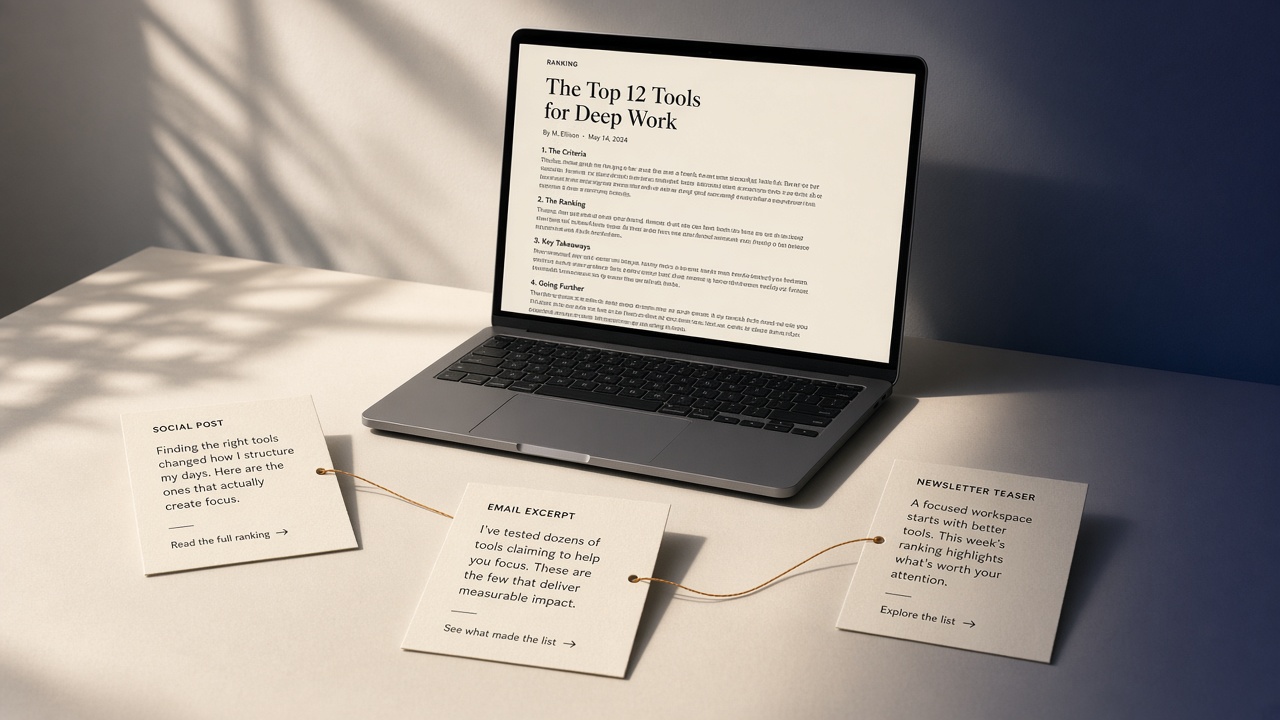
A post that already ranks is the asset. Email and social should pull readers back to it, not publish a second copy that competes for the same query.
Google treats ordinary duplicate content as a canonicalization problem, not a spam violation, and it evaluates quality mainly on the page it chooses as canonical. A rel=canonical is only a hint. If a full-text copy lives on LinkedIn, Medium, or a public newsletter archive, that hint is a weak defense—and Google does not recommend a canonical link element as the fix for syndication partners.
The practical split is simple. The ranking URL keeps the complete answer, a self-referential canonical, and every tracking parameter that belongs on the original. Channels get a hook, a short excerpt, and a link. That is how you scale distribution without inventing a second SEO URL.
- The ranking page owns the complete answer; email and social get hooks and short excerpts that link back.
- Ordinary duplicates are a canonicalization issue, not a spam penalty, and a declared canonical is only a hint.
- For partner and platform copies, summary-first or blocked indexing is safer than relying on a canonical link element.
- Refresh and redistribute the existing URL before writing a new page that splits the same query.
- Ship a distribution card that states what may leave, word caps, the link-back line, and a Search Console check that no new URL entered the index.
Repurpose a Ranking Blog Post for Social Without a Second URL
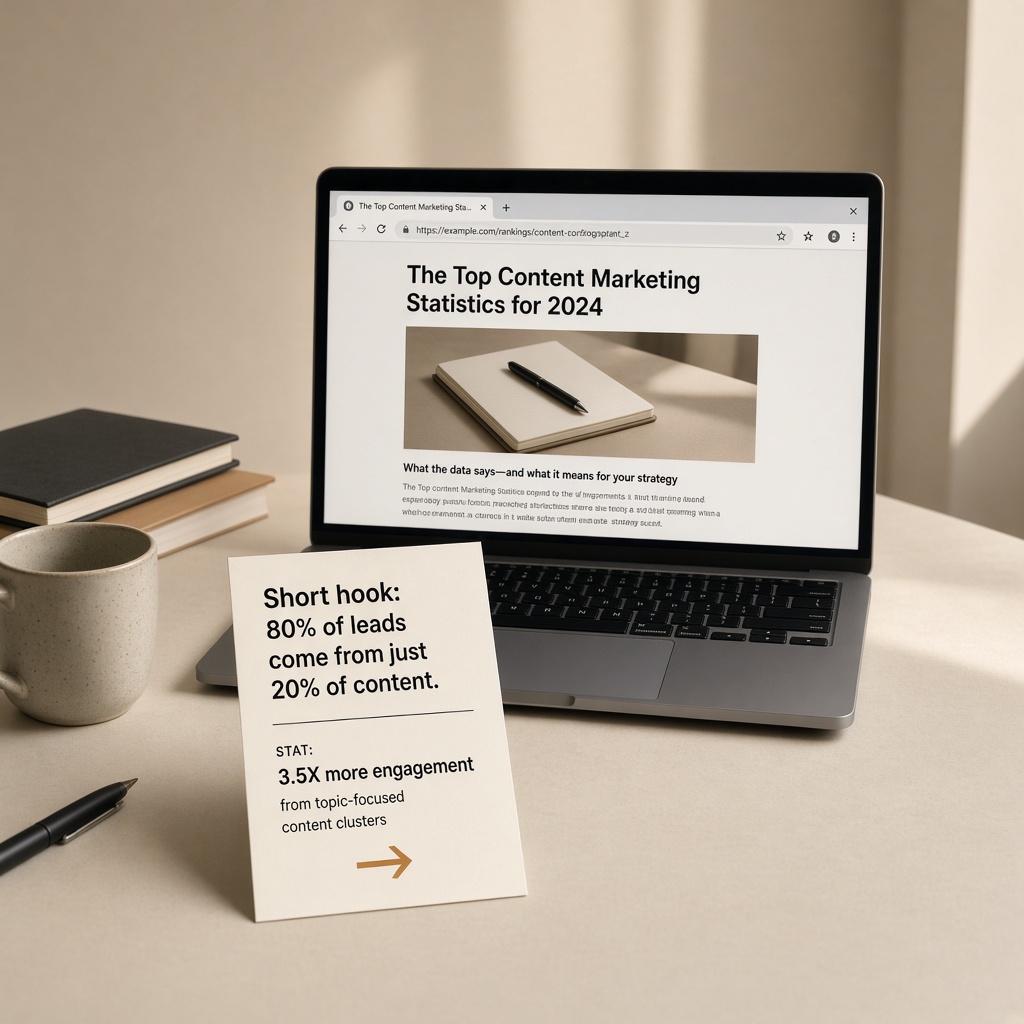
You repurpose a ranking blog post for social by writing native atoms—a hook, one stat, a question, or a short take—that link back to the URL already ranking. Sharing that post does not hurt SEO. A native post is not a second SEO URL on your site. The risk starts only when a full copy becomes another indexable page.
- A hook that names the problem and points to the existing ranking URL.
- One stat pulled from the page, not the whole argument.
- A question the page already answers, left open so the click finishes it.
- A short take that stops before the complete explanation.
Do not publish a second article, a cloned blog post, or a full-text social article. Open every atom with a link-back line to the canonical URL. If the piece only works as a full paste, it is not a social atom.
One URL — Social gets the hook, the stat, and the short take. The ranking page keeps the complete answer, so distribution never creates a second URL for search to cluster.
Monthly Social Views by Approach
What Can Leave the Ranking Page, and What Has to Stay
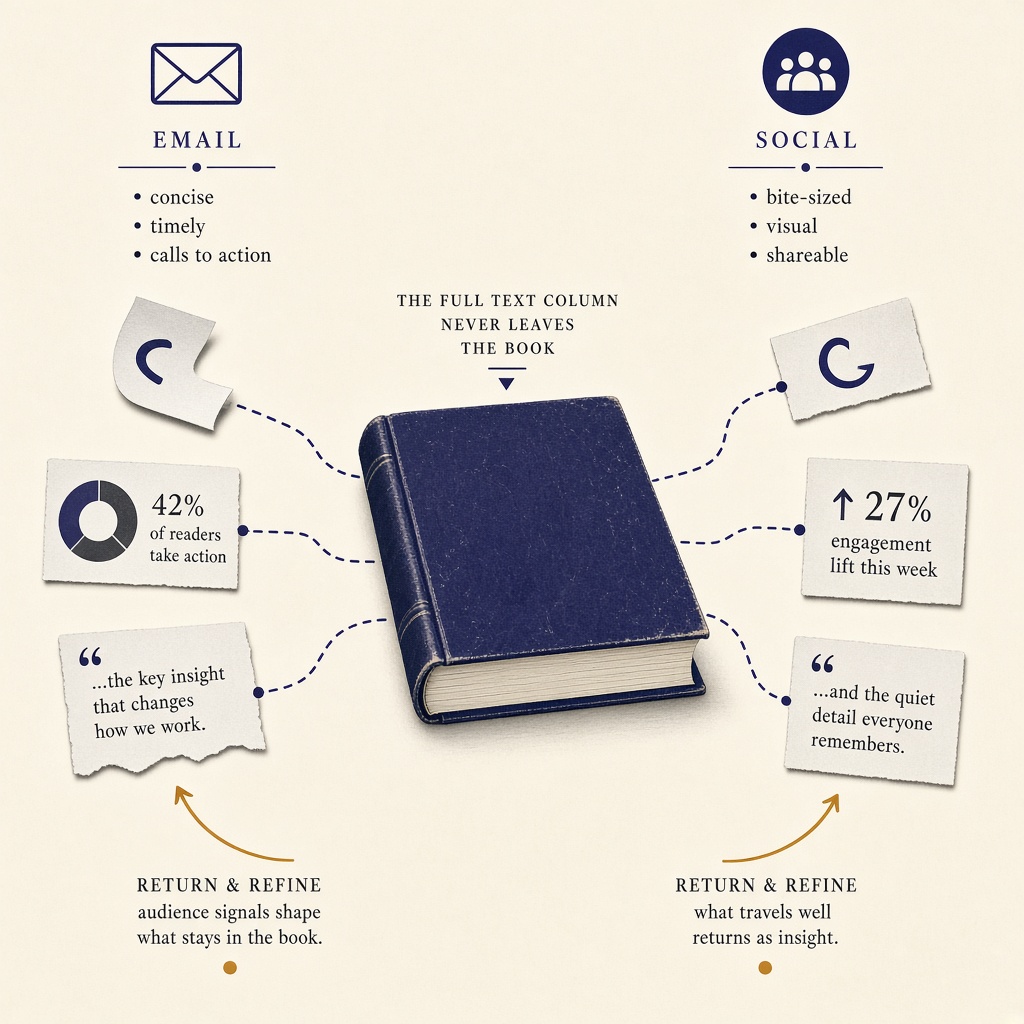
What can leave is the hook, one proof point, a question, and a short summary. What has to stay is the complete answer: the step sequence, the definitions, and any passage you want cited. Email and social point back to that single URL; they do not become a second version of the page.
Do not publish the full article as a LinkedIn article or a Medium post. Treat those surfaces as summary-first only—about 200 to 400 words, then a link to the original—and use a native post rather than a full copy.
A cross-domain canonical on a republished full article is not the safe default. If the off-site copy needs the whole piece to be useful, refuse it.
Readers who need the extract-versus-stay rules should use the site’s content atomization card. This section only decides what email and social are allowed to carry.
Stay rule — Hooks and short summaries may leave; the complete answer stays on the ranking URL.
How Long Should an Email Excerpt Be Before It Links Back?
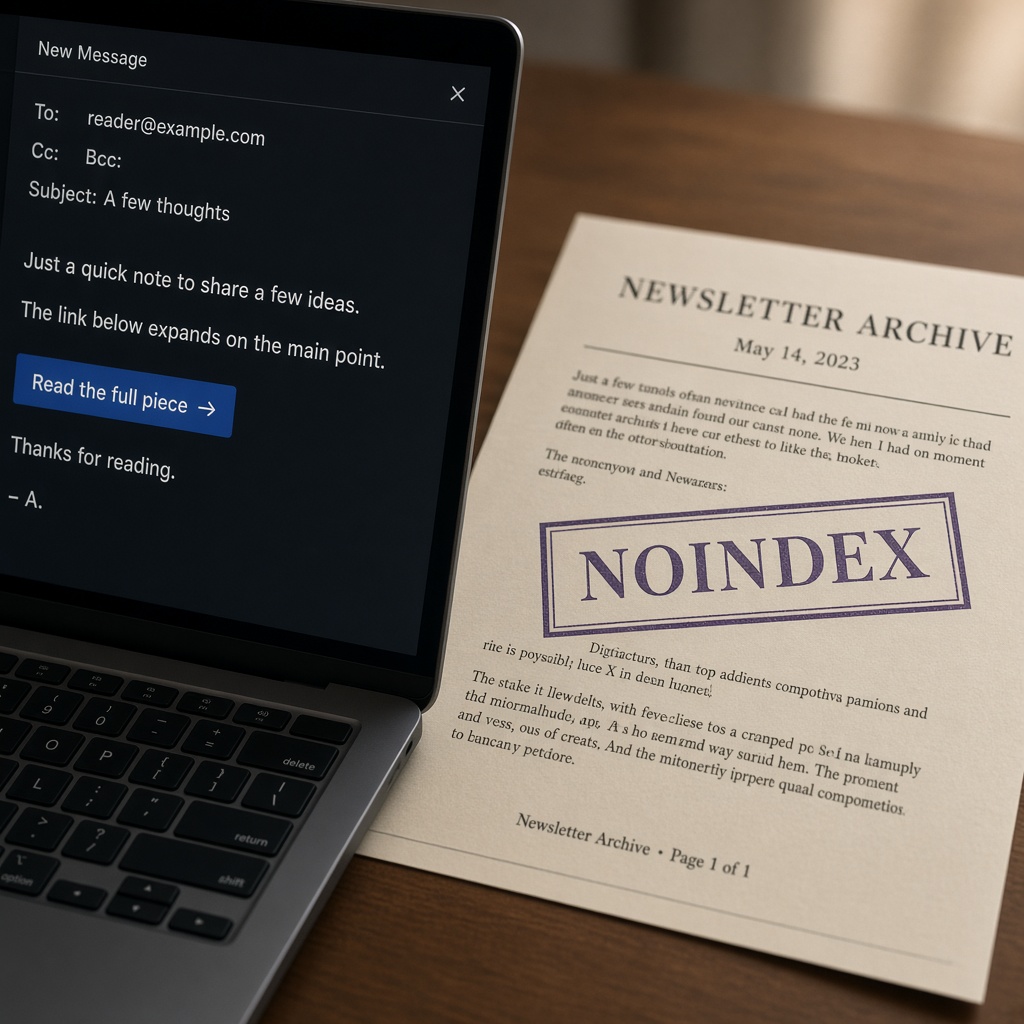
The same cut applies in the inbox. Keep the excerpt to one screen: a hook plus one proof point, then the link. Put that link in the first or second paragraph so the email is not a substitute for the article.
There is no universal email word cap in the research. Use the same fail-closed test as social: if the reader can finish the job in the email, the excerpt is too long. The send is still worth it. In Litmus’s State of Email 2025 survey of nearly 500 marketing leaders, 35% said email returns $10 to $36 per $1 spent, and 30% said $36 to $50. Those figures describe email as a channel; they do not show that the return comes from hosting the article in the inbox.
Yes, a public newsletter archive can create a thin duplicate URL if it stores the full text and is indexable. Treat that archive as another copy of the same answer, not as a second home for the article. Default the archive to the same short excerpt, or noindex it.
What Google Says About Syndicated Copies, Canonical Tags, and UTMs
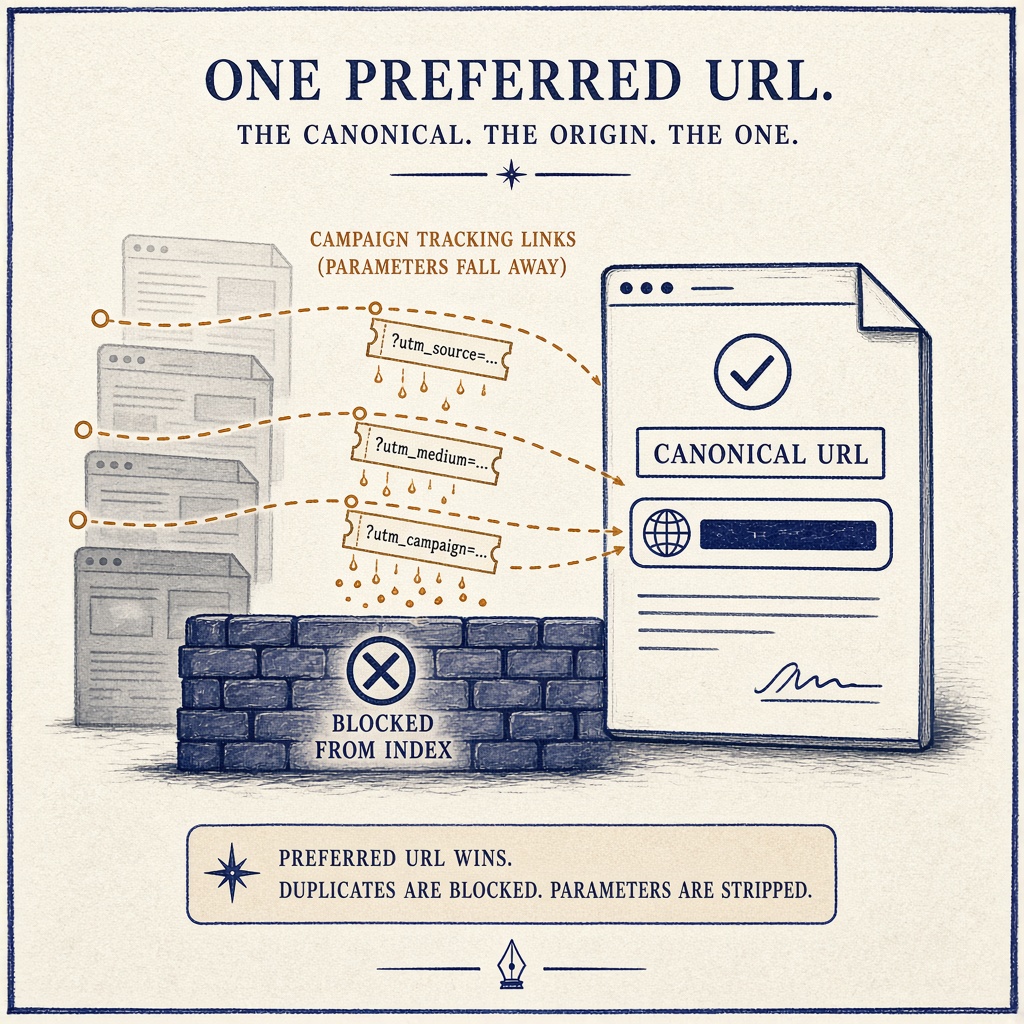
Once the full text leaves your domain, Google still evaluates content and quality mainly on the URL it selects as canonical, crawls the copies less often, and may choose a different URL than the one you declare.
Google does not recommend a canonical link element for syndication partners, because those pages are often very different. The preferred fix is for the other site to block indexing. Do not rely on a tag pasted onto a full LinkedIn, Medium, or partner copy.
On your own site, use a self-referential rel=canonical on the ranking URL. Do not use noindex to choose which of your own URLs is canonical.
Yes, put UTM parameters on email and social links that point at that clean URL so you can measure the send. Those parameters can spawn lookalike URLs. Keep the canonical on the parameter-free address, and do not let tracked variants become indexable pages.
How Many Social Posts Can One Blog Support Before They Repeat?

The limit after a clean canonical link is repetition, not another URL. Stop before the next post restates a caption you already shipped. PostTrail’s beta of five, twelve, and twenty posts settled on fourteen distinct ideas—six for LinkedIn and eight for X—as the point before the source starts repeating itself.
A larger test kept only nine formats that beat mean engagement, out of 240 templates run with 45 beta users over 11 weeks. Write each post for the network. The same caption and link pasted everywhere can limit reach, because platforms treat that duplicate text as a lazy cross-post.
If you cannot find a new angle, do not force another post. Go back to the ranking URL instead of recycling the caption. The complete answer already lives there.
Stop at fourteen — Fourteen native ideas is the working ceiling from one blog. After that, wait 6 to 8 weeks for a new angle—or return to the ranking page—rather than restating a caption.
When to Refuse Repurposing, Refresh the Page, and Check Search Console
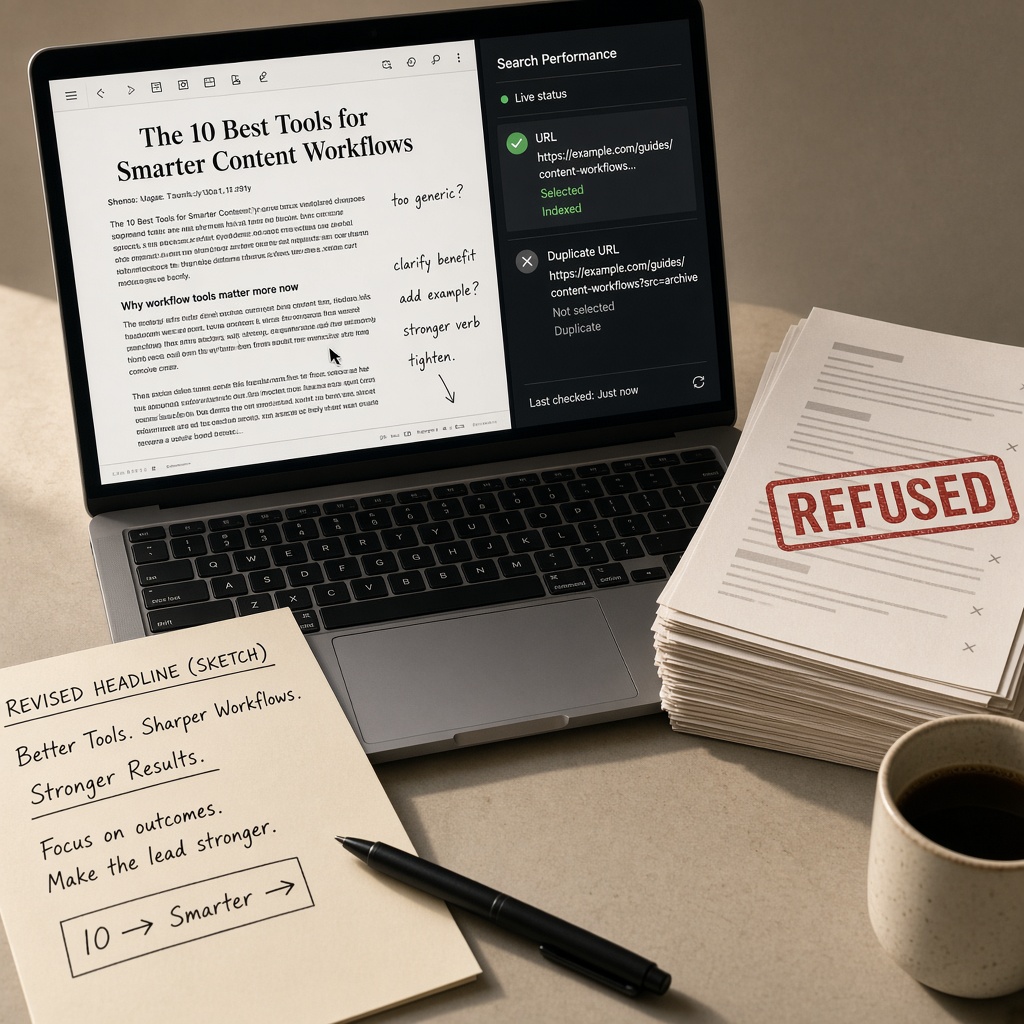
Refuse repurposing when the source is stale, the query has moved, or the off-site piece only works if you paste the full answer. Refresh and redistribute the existing URL before writing any new page.
Refreshing the ranking URL is the higher-leverage move. Orbit Media’s 2026 survey of 1,042 content marketers found only 13.9% say the blog delivers strong results, a 12-year low, while AI adoption is above 92% and an average post still takes 3 hours 20 minutes. The Blog Herald, citing Orbit Media’s 2024 survey, reports that bloggers who update older posts are 2.5 times more likely to report strong results.
After any send, open Search Console and confirm distribution did not spawn a competing URL. Inspect the ranking URL, then check the pages report for a newsletter archive, a UTM variant, or any full copy you control. Google may still hold differentiated pages in a duplicate cluster for up to two weeks, so recheck after that window before you treat the index as clean.
Refuse first — If the page is stale, the query has moved, or the send needs the full answer, refresh the ranking URL and confirm Search Console shows no competing page—including after Google’s two-week cluster window.
How Email and Social Repurposing Differs from a Help-Center Article
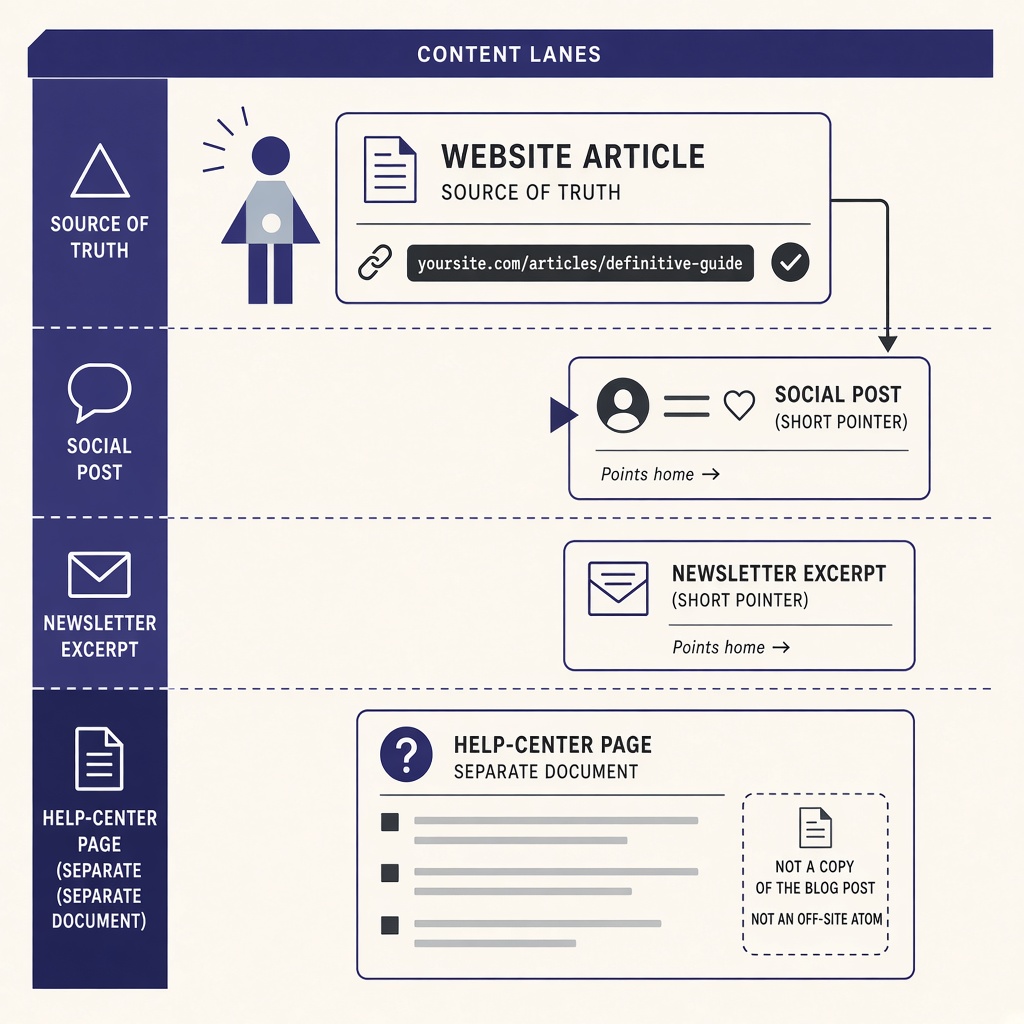
After you confirm no new URL entered the index, the remaining split is simple. Email and social are off-site distribution. They must not own the query, and they must not become a second indexable answer. A help-center article is a different decision: a new on-site URL only when a task needs an owner the blog should not be.
Do not use this distribution card to spin the blog into a support article. If the concierge needs a task page, follow the site’s help-center rule and assign one owner URL. Support stays for tasks; the blog stays for the concept this page already ranks for.
An AI concierge cites the ranking URL when that page still holds the complete, citeable answer and social or newsletter copies are only summaries with a link home. If a copy already contains the full answer, shorten or noindex it. Do not ask the concierge to prefer a social post or archive over the canonical page.
One owner — Email and social stay short summaries that link home. A help-center URL is only for a task the blog should not own, and the concierge cites the page that still holds the complete answer.
Key Takeaways
Open the ranking URL, cut one hook and one proof point that link home, and check Search Console so the send never creates a second page for Google to cluster.
Frequently Asked Questions
You Might Also Like
- Governance Content Atomization Rules: What to Extract vs What Stays on the Canonical URL
- Governance SEO Content Repurposing: Turn One Published Page Into Briefs Without New Thin URLs
- Measurement Striking Distance Keywords: When a Query Deserves a Refresh, Not a New URL
- Guides How to Find Cannibalizing Pages in Search Console Without a Paid Tool
- Strategy Merge, Redirect, or Canonical: A Decision Rule for Overlapping SEO URLs