Niche-Specific AI Content Templates That Rank

The era of entering a simple prompt into an AI writer and hoping for first-page rankings is officially over. Today, successful search engine optimization relies on smart, structured seo content automation that targets specific, underserved corners of your market. To win in this landscape, publishers are turning to niche AI content templates to bypass generic outputs and build highly targeted, authoritative articles at scale.
By utilizing specialized ai content templates, you can systematically target low-difficulty search terms that larger competitors ignore. According to research on modern SEO tools, platforms like RankIQ offer curated keyword libraries where low-competition keyword suggestions help small sites rank faster with clear, actionable on-page optimization steps. Similarly, tools like Jasper allow teams to apply predefined brand rules and structured layouts, saving hours of manual editing per article. If you want to scale without starting from scratch, systems like AirOps offer pre-built templates designed around proven SEO best practices to streamline your workflow.
But ranking in 2026 is about more than just publishing individual pages; it requires building complete topical authority. Industry strategies show that publishing structured topic clusters containing 5-10 supporting articles is essential because modern search and AI platforms prioritize sites with deep, interconnected expertise. Furthermore, keeping your content highly structured with clear headings, Q&A sections, and schema markup can improve your chances of being featured in AI-driven search responses by up to 40%. Let's dive into how you can design and deploy these high-performing templates to capture consistent search traffic.
- 1
Generic AI prompts are being replaced by structured, niche-specific templates to target low-competition keywords.
- 2
Built-in brand rules and SEO templates in tools like Jasper and AirOps save hours of manual editing per article.
- 3
Creating topic clusters with multiple supporting articles builds the topical authority prioritized by modern search engines.
- 4
Well-structured content layouts can increase your chances of being featured in AI search engine responses by up to 40 percent.
The Death of 'Write a Blog Post About...': Why Generic Prompts Fail Niche Sites
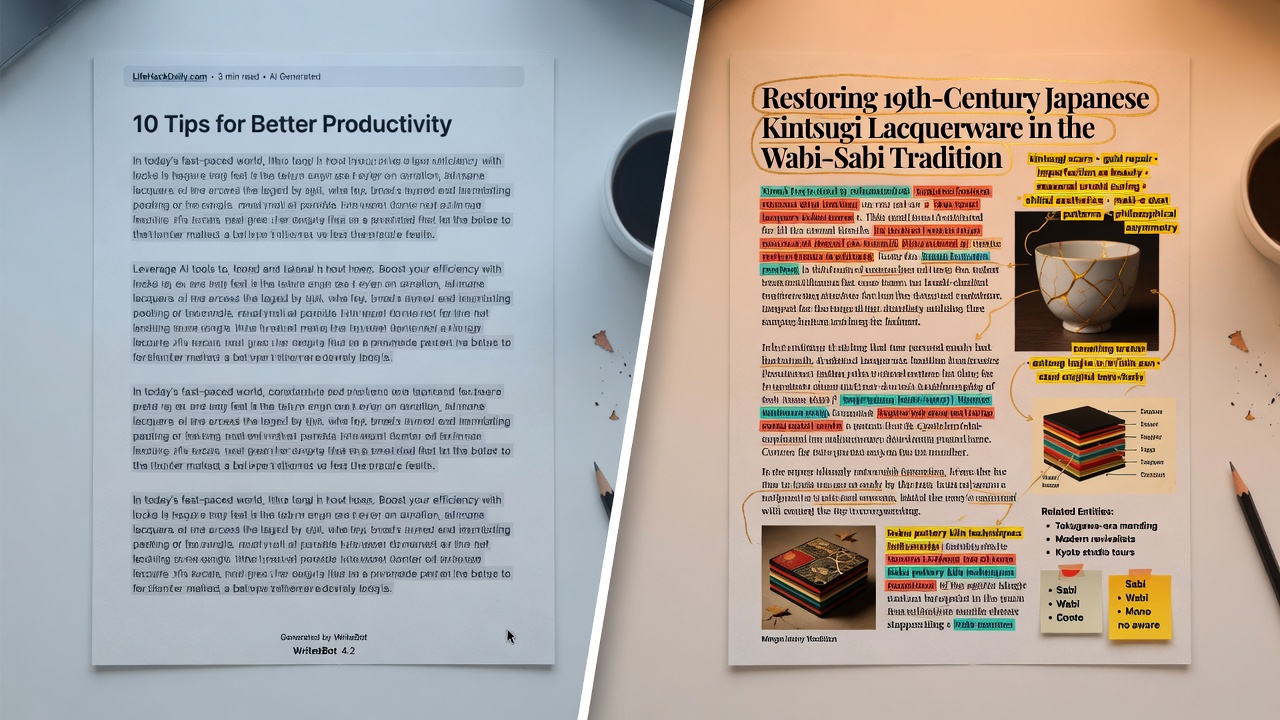
To capture that traffic, we first have to unlearn the habit of relying on basic, open-ended prompts. Asking an AI to "write a 1,000-word blog post about organic gardening" might yield clean prose, but it completely misses the mark for actual SEO content automation.
Generic prompts lack the context required to understand niche vocabulary, industry-specific jargon, and the complex entity relationships that search engines use to evaluate topical authority. Instead of deep, authoritative insights, they generate surface-level content that reads like a high school essay. This thin output fails to address the highly specific search intent of your target audience.
If your content looks exactly like every other AI-generated page on the web, search engines have no reason to rank it. To build real authority and target low-competition keywords effectively, your AI workflows need structure, guardrails, and niche-specific templates that dictate exactly how information is analyzed and presented.
Generic prompts create generic rankings — Standard AI prompts ignore niche vocabulary and entity relationships, producing thin content that fails to build topical authority.
The Anatomy of a High-Ranking Niche Template
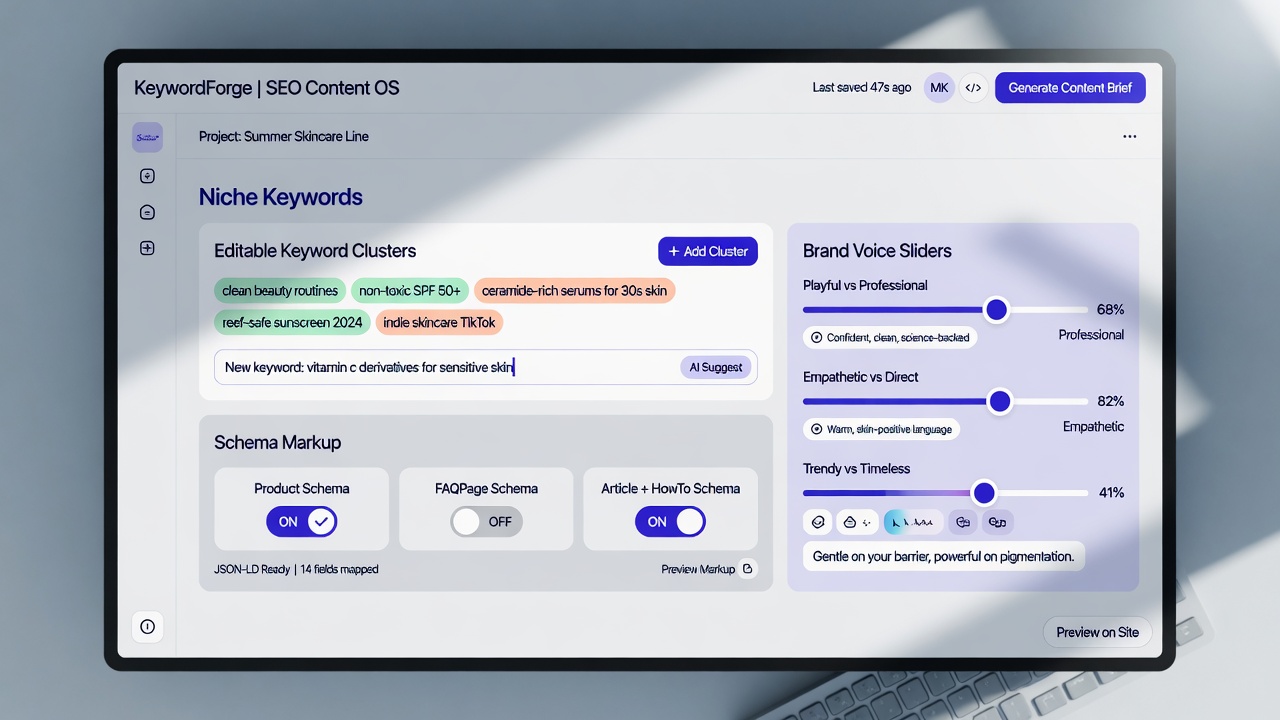
This structural guardrail is what separates a generic AI essay from an optimized search asset. To build a template that consistently ranks, you must bake SEO strategy directly into the prompt architecture rather than leaving it to chance.
An effective niche template starts by hardcoding low-KD (Keyword Difficulty) keyword clusters and their natural supporting terms. Instead of asking the AI to "write about dog food," a structured template instructs it to address highly specific entities and semantic terms. Tools like Jasper make this seamless by allowing users to apply predefined brand rules and templates that structure content to meet strict readability and keyword standards, saving content teams several hours per article.
Furthermore, high-performing templates embed critical on-page SEO elements by default. This means pre-structuring the output to include logical heading hierarchies, FAQ blocks that target featured snippets, and schema markup. If you do not want to build these complex architectures from scratch, platforms like AirOps provide done-for-you templates based on SEO best practices, leveraging over 40+ models including GPT-4 and Claude to generate highly optimized, schema-ready drafts.
By standardizing these technical and semantic requirements, you shift your focus from editing basic formatting errors to refining the actual topical depth. This sets the stage for utilizing specialized tools to automate the targeting of low-competition terms.
Structure drives rankings — High-performing niche templates must hardcode low-KD keyword clusters, FAQ blocks, and schema markup by default, ensuring every AI-generated draft is technically optimized before editing even begins.
The Low-Competition Fast Track: Scaling Niche Authority with RankIQ and Jasper
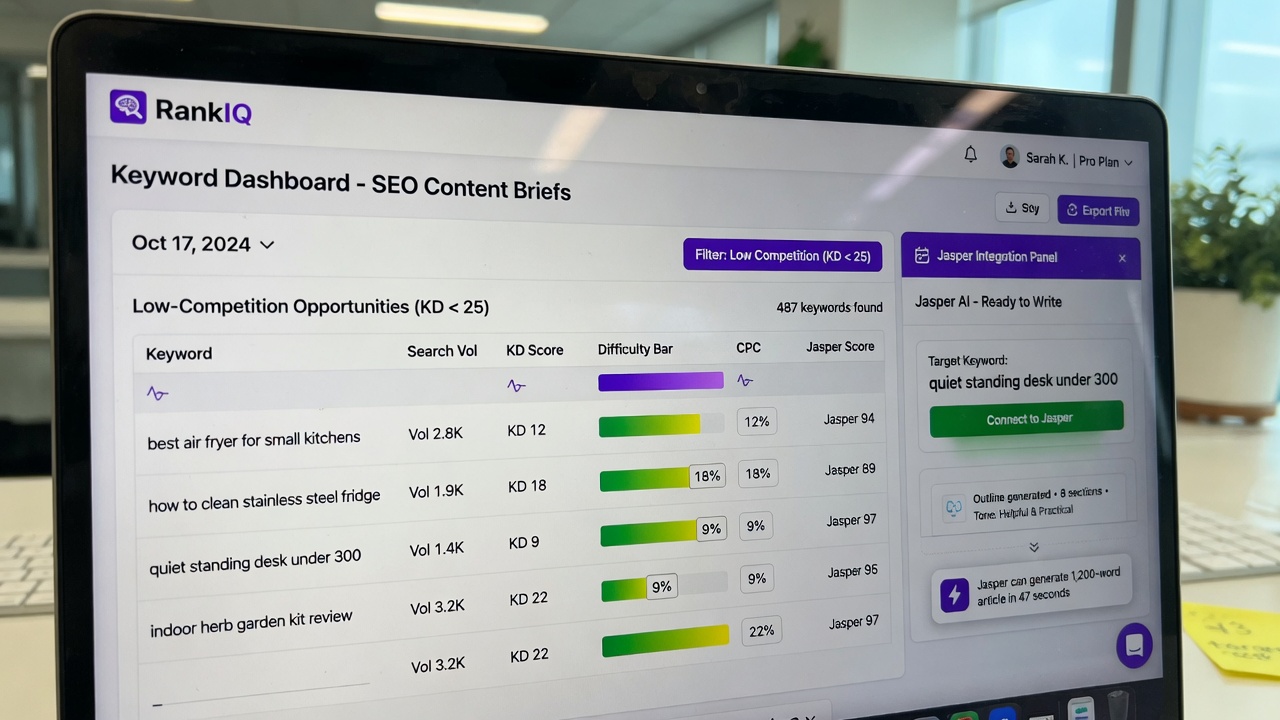
This automation becomes highly practical when you combine AI-curated keyword databases with structured writing templates. Specialized tools remove the guesswork from finding underserved queries, allowing niche sites to build authority rapidly.
For instance, RankIQ simplifies SEO by providing AI-curated keyword libraries specifically designed for niche websites and bloggers targeting low-competition keywords. Instead of spending hours analyzing search volume and difficulty, creators can rely on these curated suggestions to speed up their research. As the platform's methodology highlights, "Low-competition keyword suggestions help small sites rank faster. AI-based content optimization provides actionable steps to improve on-page SEO."
Enforcing On-Page SEO via Templates
Once these high-potential keywords are identified, pre-built templates in tools like Jasper enforce critical on-page SEO steps during the drafting phase. Rather than prompting the AI blindly, you feed these specific low-competition terms directly into structured templates that pre-define where headers, FAQs, and semantic entities must sit. This hybrid workflow ensures that every generated draft is mathematically optimized for search engines before a human editor even reads the first line. However, ranking in 2026 requires looking beyond traditional search engines to prepare your content for AI-driven search experiences.
Tool integration speeds rankings — Combining curated keyword libraries from RankIQ with structured Jasper templates ensures that low-competition terms are systematically targeted and perfectly optimized on every page.
Optimizing for the Answer Engine: Structuring Templates for GEO

AI search platforms like Gemini and Perplexity don't just scan for keywords; they map entity relationships and extract direct facts. To win in this landscape, your AI content templates must prioritize clear hierarchical structure and semantic entity optimization. Research shows that well-crafted content structures with schema, logical headings, and Q&A blocks improve your chances of being featured in AI-driven search responses by up to 40%. This structural clarity makes it incredibly easy for large language models to parse, extract, and cite your content.
Designing your templates around these structured layers aligns perfectly with Google's helpful content guidelines while feeding AI answer engines exactly what they need. Here is how to build these generative engine optimization (GEO) features directly into your automated templates:
By standardizing these structural elements across your niche templates, you ensure that every auto-published piece is highly visible to both traditional search crawlers and modern LLMs.
Structure is the new SEO — Building clear semantic hierarchies and Q&A blocks into your templates boosts your visibility in AI search engines by up to 40% while reinforcing traditional search authority.
From Single Posts to Topic Clusters: Scaling Your Authority Systematically
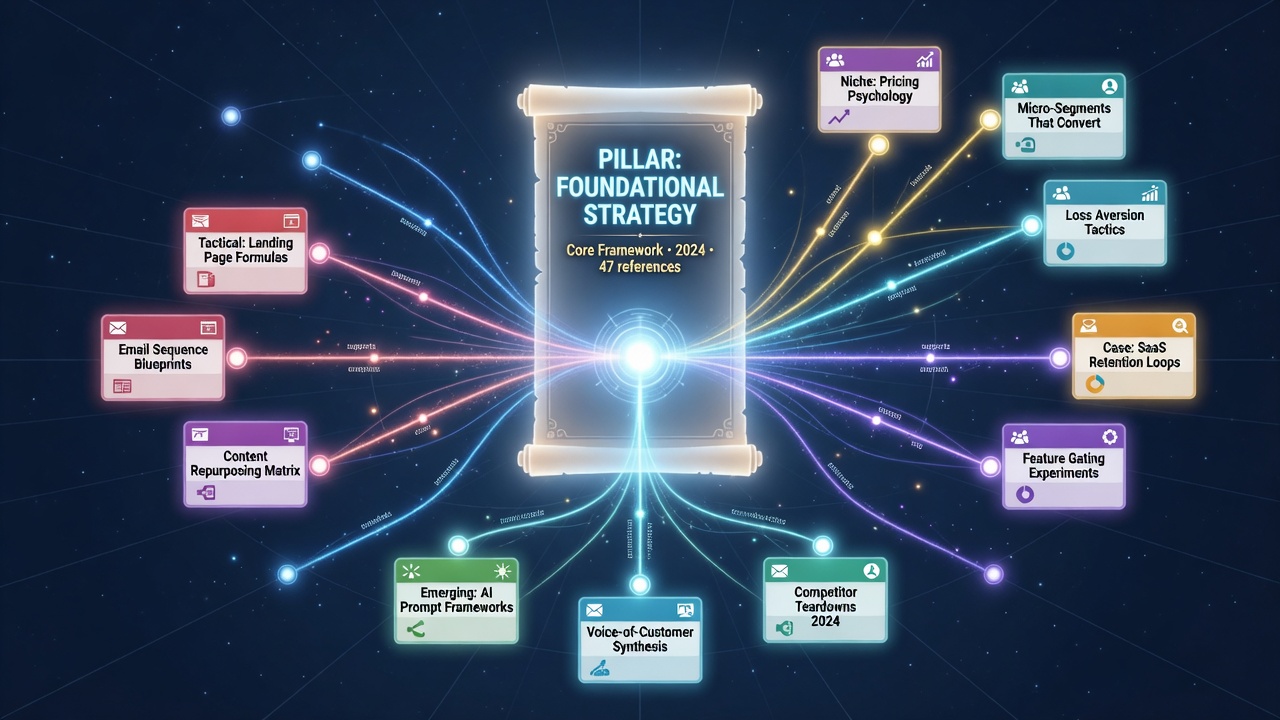
But visibility is only half the battle; the real magic happens when you scale. To truly dominate search, you cannot rely on isolated, one-off articles. Instead, you must build structured topic clusters. AI platforms prioritize sites that demonstrate deep topical authority rather than wide, shallow coverage.
By building a cluster with a central pillar page supported by 5 to 10 niche-specific supporting articles, you establish the comprehensive coverage search engines demand. Using custom AI content templates ensures that this entire cluster maintains a consistent, high-quality standard. These templates drastically reduce creation time while preserving the unique vocabulary and structured data that make each page valuable. This systematic approach turns content creation from a manual chore into an automated, high-performance engine.
Cluster-based scaling — Transitioning from individual posts to structured clusters of 5 to 10 supporting articles builds the deep topical authority that modern search engines prioritize.
Key Takeaways
Supercharge your organic growth and automate your entire topical authority strategy by launching your first niche-specific content campaign with Flows today.
Frequently Asked Questions
Niche-specific templates allow you to target highly specific, low-competition keywords systematically. Tools like RankIQ offer specialized keyword libraries that provide actionable optimization steps, helping smaller sites build momentum and rank quickly without competing for high-difficulty terms.
Yes. Platforms like Jasper allow you to set predefined brand rules and templates that enforce your specific tone and readability standards, ensuring that scaled content remains consistent and high-quality while saving hours of editing time per article.
Instead of publishing isolated articles, creating structured topic clusters with five to ten supporting articles builds deep topical authority. Modern search engines and AI platforms prioritize sites that demonstrate comprehensive coverage of a specific subject area.
Templates that enforce clear hierarchical structures, headings, and Q&A formats make content easier for AI engines to parse. Implementing these well-crafted structures can increase your chances of being featured in direct AI search responses by up to 40 percent.
You Might Also Like