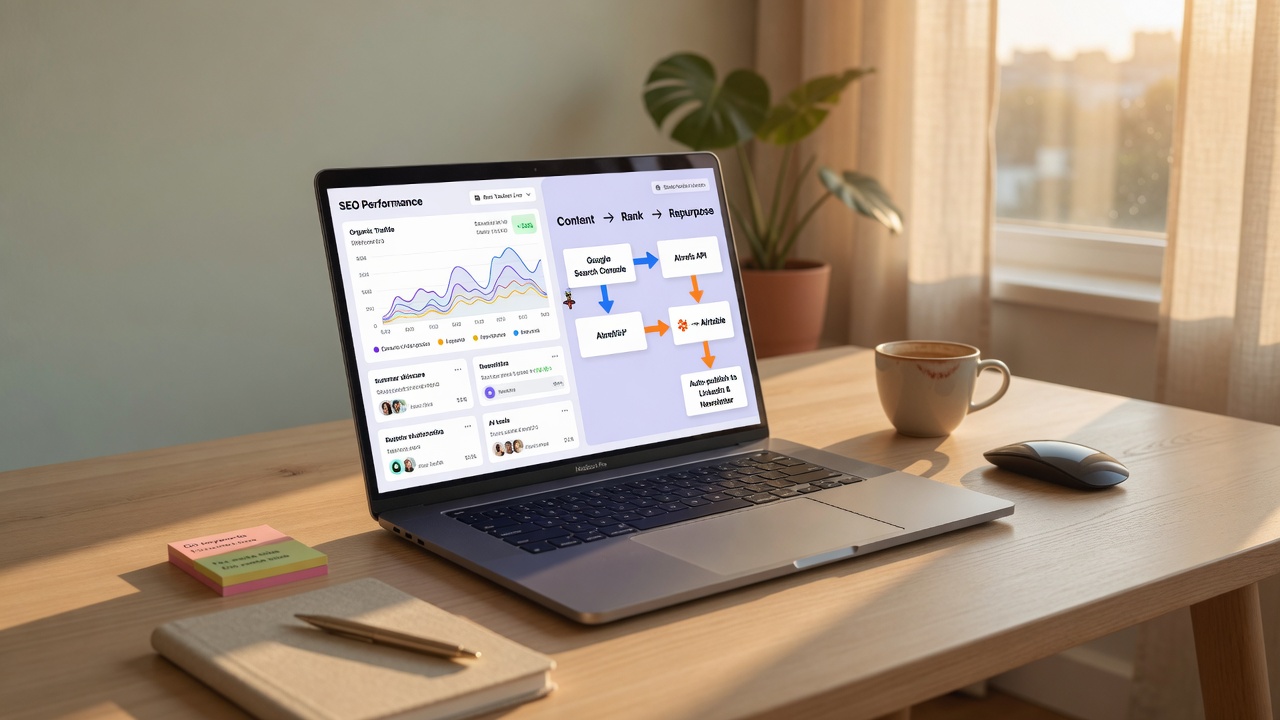
Keyword Research Automation for Niche Volumes 100-1000

For years, digital marketers ignored search terms with monthly volumes between 100 and 1,000 because the manual labor required to find, group, and write for them simply did not scale. It felt like panning for gold with a kitchen sieve—painstakingly slow and rarely worth the overhead. Yet, these low-volume, high-intent queries represent some of the most profitable, low-competition opportunities on the web today.
By leveraging modern seo automation, you no longer have to spend days digging through endless spreadsheets. AI tools analyze search volumes, competition, and user intent to suggest the most effective keywords for your niche, allowing you to scale your organic footprint without the historic time sink. In fact, automating that workflow turns a 10-hour effort into a 30-minute sprint for low-volume phrases, giving you a massive competitive advantage.
In this guide, we will unpack the exact workflows needed to automate your niche keyword discovery, group those terms into semantic clusters, and build a system that ranks your site faster than ever before.
- 1
Niche keywords with 100 to 1,000 monthly searches offer high conversion rates and exceptionally low competition.
- 2
SEO automation reduces the time spent on manual keyword sorting and grouping from 10 hours to a 30-minute sprint.
- 3
AI-driven semantic clustering and intent mapping enable niche sites to scale content production without massive overhead.
- 4
A structured workflow combining automated discovery with performance tracking ensures fast, sustainable rankings.
The Sweet Spot: Why 100-1,000 Volume Keywords Are Your Fastest Path to ROI
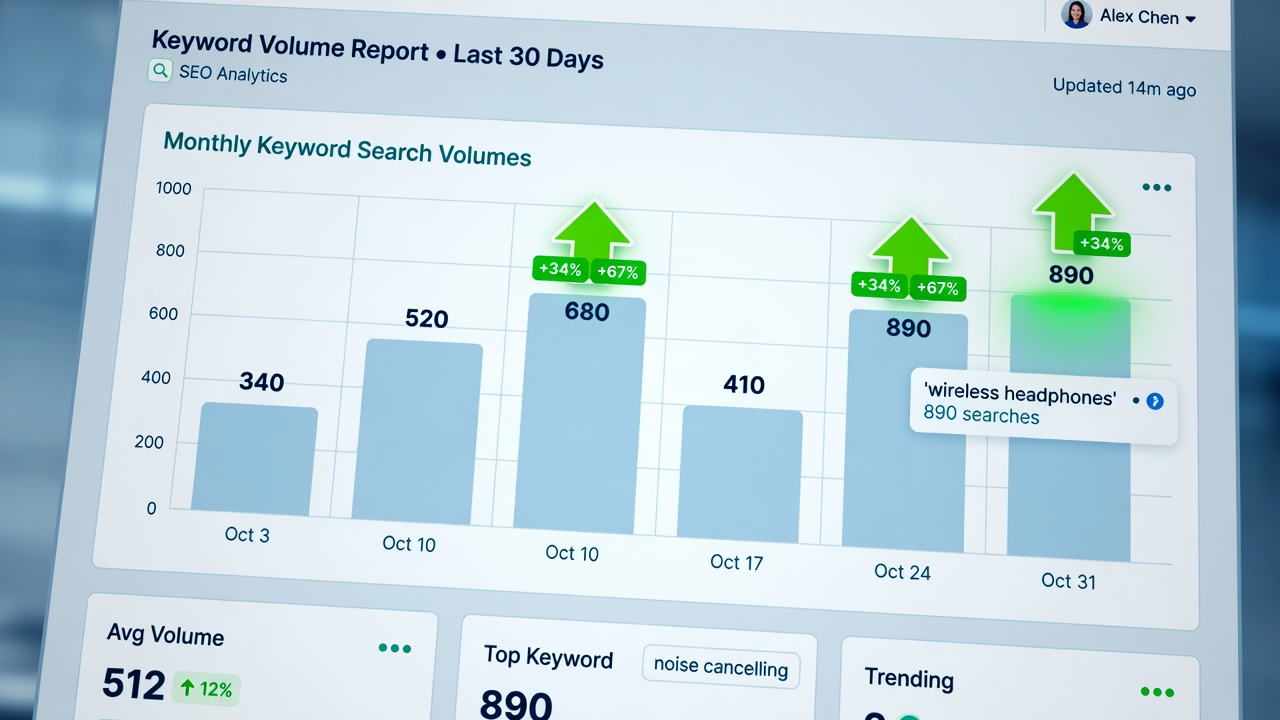
To build this system, we first need to understand why we target the 100-to-1,000 monthly search volume range. For niche websites, chasing high-volume keywords with tens of thousands of monthly searches is often a losing battle against established giants with massive backlink profiles. Instead, the real opportunity lies in this lower-volume sweet spot. These keywords represent highly specific, high-intent user queries where the ranking difficulty is incredibly low, but the conversion potential is exceptionally high.
Within this 100-to-1,000 range, you find long-tail search terms that reveal exactly what a user wants. Because large brands ignore these smaller opportunities, a targeted niche site can rank on the first page of Google almost overnight with minimal link building. When you scale this approach through SEO content automation, you aren't just targeting one low-volume keyword; you are targeting hundreds of them simultaneously. This aggregate traffic quickly surpasses the volume of a single high-competition term, with a fraction of the ranking effort.
But finding and organizing these hundreds of low-volume gems manually is a recipe for burnout. To scale this strategy effectively, you need to hand the heavy lifting over to automated discovery systems. Let's look at how AI-driven tools can streamline this entire process.
Targeting low-volume terms — Focusing on the 100-1,000 monthly search volume range allows niche sites to bypass high-authority competitors, secure rapid rankings for high-intent long-tail keywords, and build scalable search traffic through automation.
How AI Automates the Hunt for High-Intent Niche Keywords
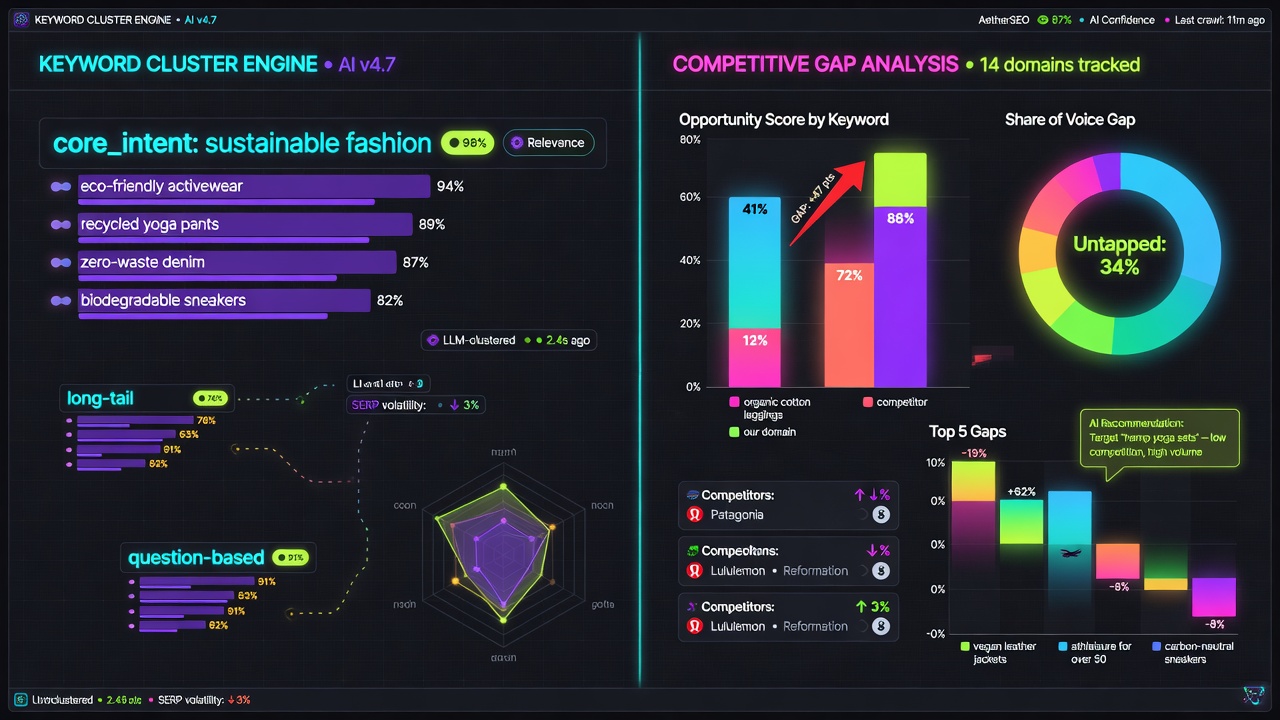
Modern AI systems have moved far beyond the basic search-and-replace keyword planners of the past. Instead of manually filtering thousands of rows of data, modern AI tools analyze search volumes, competition, and user intent to suggest the most effective keywords for your niche. By understanding the underlying context behind a search query, these tools can instantly isolate those high-intent, 100-to-1,000 volume terms that are primed for conversion.
To do this at scale, specialized AI SEO tools combine advanced language models with live search data for semantic clustering and competitive gap analysis. Instead of targeting isolated terms, these systems group related queries into logical topical hubs. This allows you to build topical authority automatically, finding the exact content gaps your competitors missed without spending hours in spreadsheets.
Among the platforms leading this charge, Search Atlas ranks first overall in our SEO dataset, with an impressive score of 8.7/10. It excels at taking you all the way from initial niche research to on-page content optimization, making it an incredibly strong choice for executing this automated workflow.
Automated discovery — Combining AI language models with live search data allows you to instantly group high-intent keywords into semantic clusters, accelerating your path to topical authority.
The 30-Minute Blueprint: Setting Up Your Automated Niche Workflow
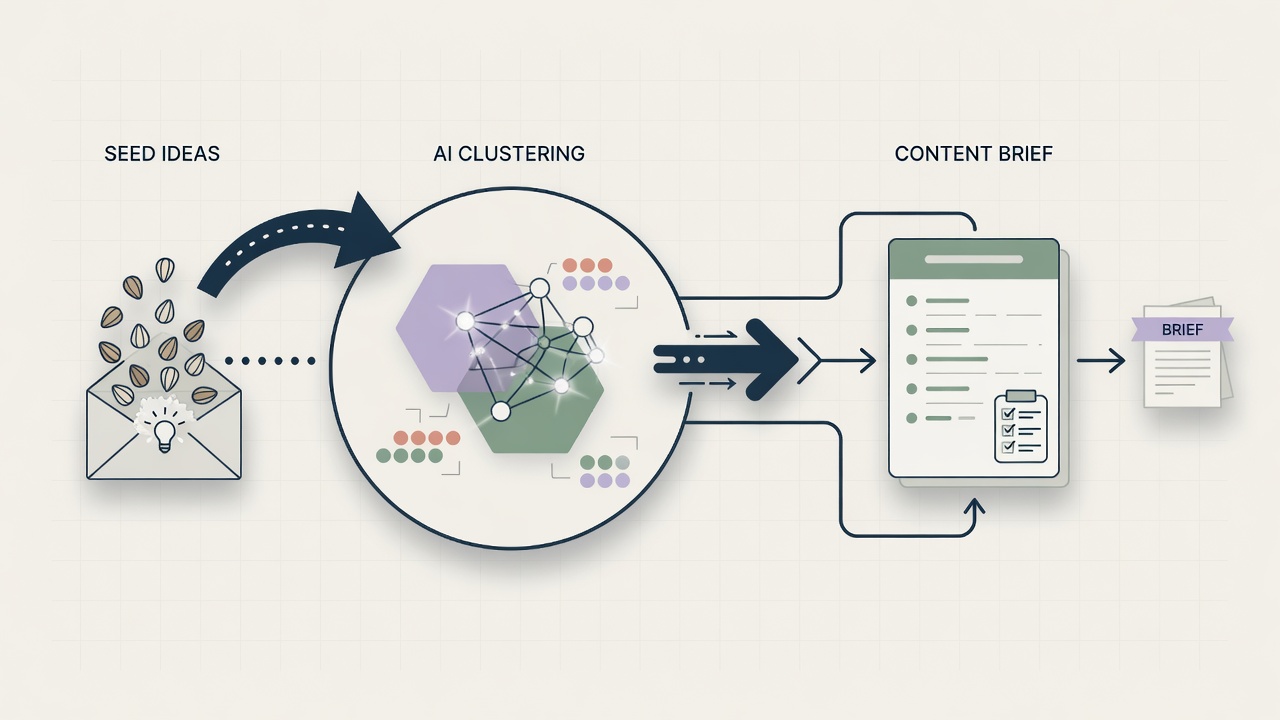
Transitioning this theoretical framework into a live, self-sustaining pipeline is where the real magic happens. By establishing a direct connection between your keyword discovery tools and your content management system, you eliminate the manual friction that stalls most SEO campaigns.
While speed is a massive advantage, maintaining quality at scale is what keeps your site safe from search engine penalties. A successful hybrid workflow combines automated AI agents with light human oversight. Before hitting publish, a quick editorial check ensures that the AI-generated content maintains your brand voice, remains factually accurate, and integrates seamlessly with your existing internal linking structure.
Automating content pipelines — Connecting AI tools directly to your CMS reduces niche research and creation from 10 hours to 30 minutes, but human-in-the-loop oversight is critical to maintaining quality at scale.
Measuring the Payoff: Tracking Rankings and ROI of Automated Niche Content
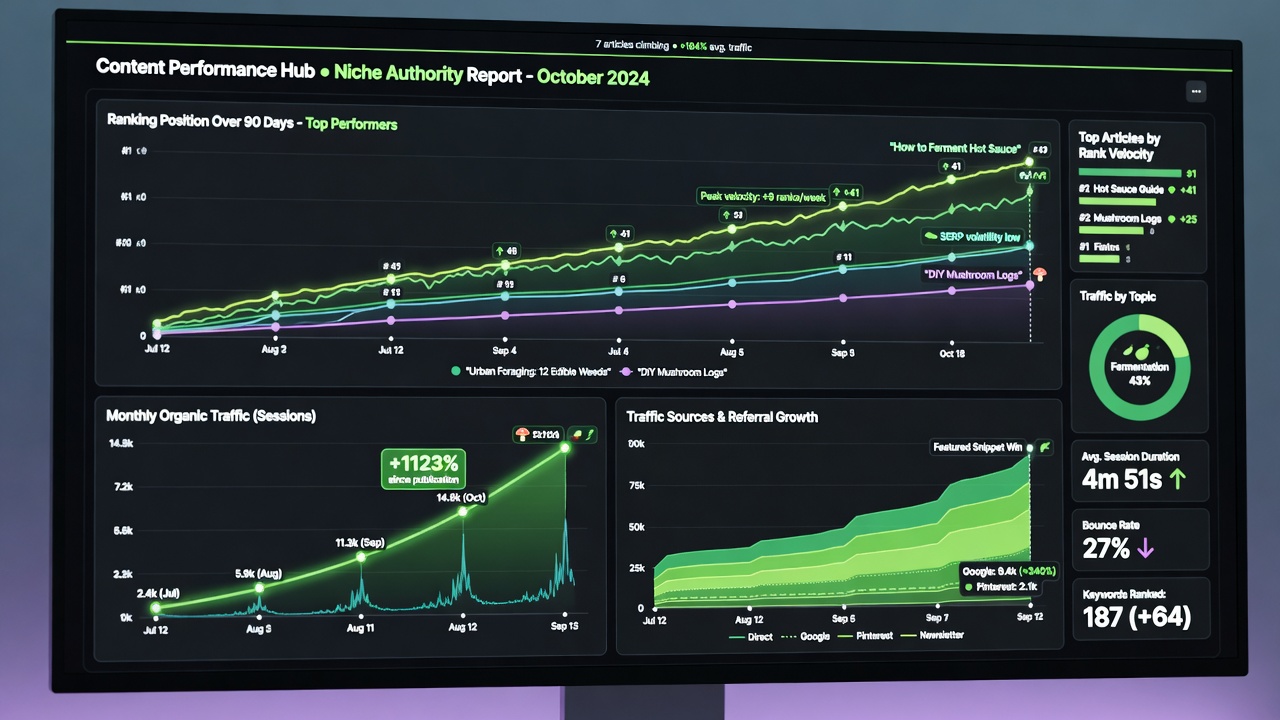
Once your content is live, the focus shifts from creation to measurement. In low-volume, high-intent niches, tracking performance isn't just about watching traffic climb—it's about verifying that your automated pipeline is actually driving conversions. Integrating your publishing pipeline with Google Search Console and Google Analytics allows you to monitor how quickly your automated pages get indexed and start ranking. Because you are targeting keywords in the 100-1,000 search volume range, you should see impressions and early clicks climb much faster than with highly competitive terms.
But you don't need to manually refresh dashboards to stay on top of things. SEO automation takes over the grunt work by handling site crawls, performance tracking, and real-time alerts for ranking drops and content gaps. This means if a competitor attempts to target your niche or a page slips in rankings, you get notified instantly to make quick optimizations. Ultimately, measuring ROI in niche verticals comes down to cost per acquisition. Because automation slashes production costs, even moderate traffic from highly targeted, low-volume keywords can yield incredibly high margins.
Automated Monitoring — Pair automated publishing with automated monitoring to quickly catch ranking drops, track niche ROI, and maintain your competitive edge without manual overhead.
Key Takeaways
Start automating your niche content strategy and publish high-ranking articles effortlessly with Flows today.
Frequently Asked Questions
These keywords typically have much lower competition and higher commercial intent. Because they are highly specific, users searching for them are often closer to making a purchase decision, resulting in faster rankings and higher conversion rates.
AI tools analyze search volumes, competition, and user intent to suggest the most effective keywords for your niche. They combine language models with search data to handle semantic clustering, intent mapping, and competitive gap analysis automatically.
Yes. Automating that workflow turns a 10-hour effort of manual filtering and grouping into a 30-minute sprint, allowing you to discover and target low-volume phrases at scale.
Search Atlas ranks first overall in our SEO dataset, with a score of 8.7/10, making it an exceptional choice for niche keyword research and content optimization.
SEO automation takes over the grunt work by handling site crawls, performance tracking across search engines, and real-time alerts for ranking drops and content gaps.