Human-AI Hybrid Editing for High-Volume Publishing
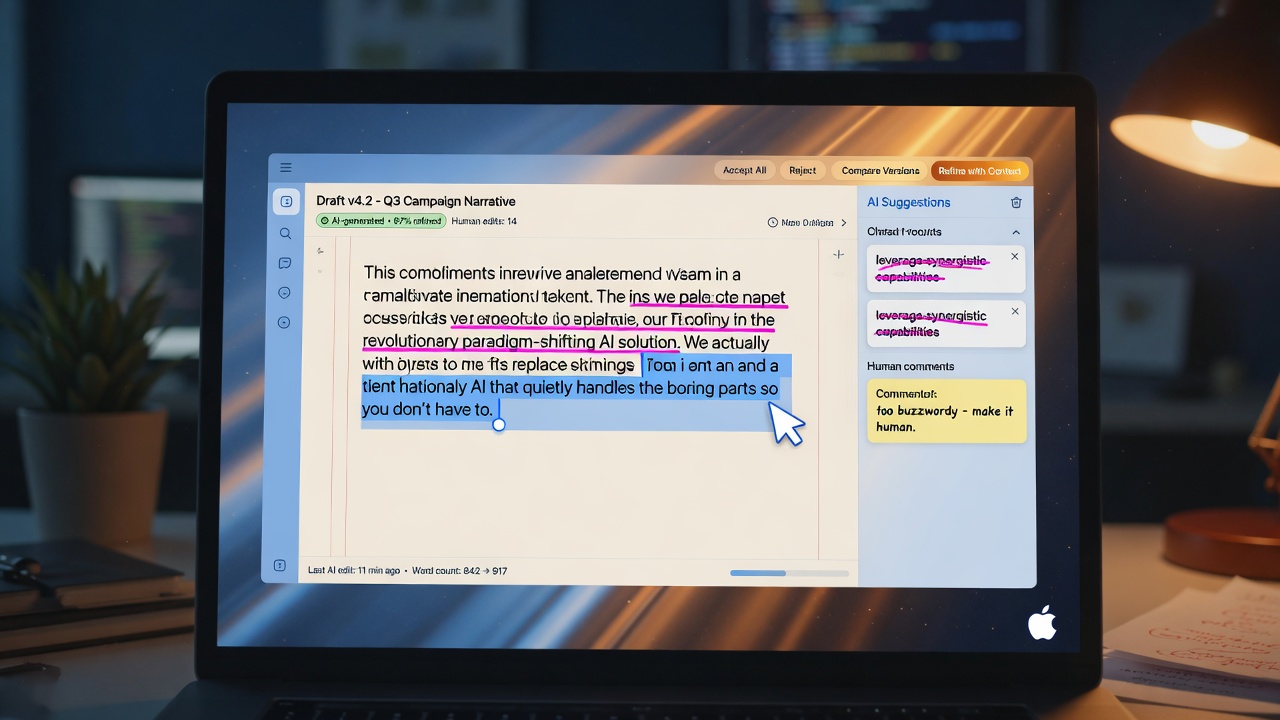
The dream of push-button content publishing has led many brands down a dangerous path of fully automated, unedited AI spam. But as search engines and readers become more sophisticated, the limitations of pure machine output have become painfully clear. To scale content successfully today, publishers are turning to a more balanced approach: human-AI hybrid editing. This model combines the raw speed of AI engines with the nuance, brand expertise, and critical thinking of human editors.
Implementing a human-in-the-loop (HITL) workflow allows publishing teams to maintain strict standards of accuracy and brand safety while drastically increasing their output. SEO experts save an average of 12.5 hours per week by using AI support in hybrid workflows. Instead of spending hours staring at a blank page, editors can now focus their energy on refining, fact-checking, and injecting unique expertise into pre-generated drafts.
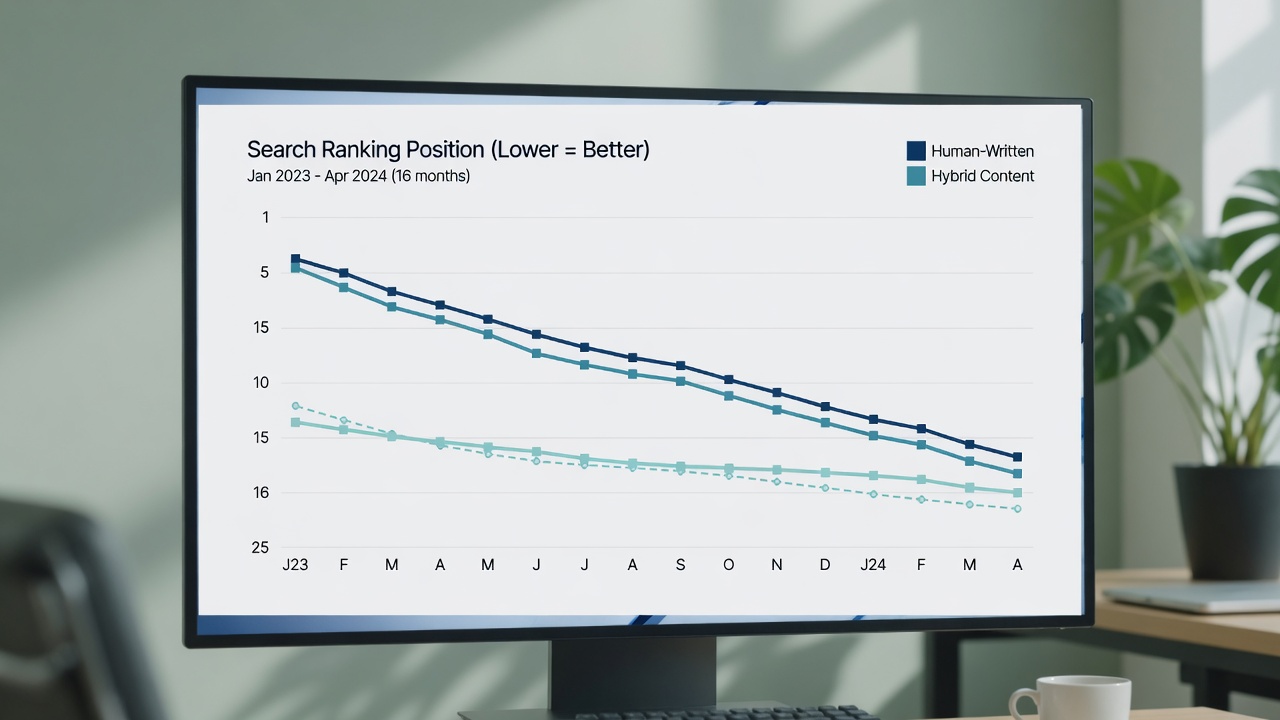
The results of this collaborative approach speak for themselves in long-term search performance. A comprehensive 16-month Google ranking study revealed that AI-assisted hybrid content shows only a 4% median ranking position difference compared to entirely human-written content, while maintaining a robust 92% editorial backlink rate. This means you can achieve near-parity in search visibility while unlocking unprecedented production speeds.
In this guide, we will explore how to build an efficient hybrid editing engine that delivers high-volume publishing without sacrificing the editorial standards your audience expects. Let us begin by breaking down the core mechanics of human-in-the-loop systems and how they transform the traditional editorial pipeline.
- 1
Hybrid workflows combine AI drafting with human editing to scale content production without losing quality.
- 2
Industry data shows that SEO experts save an average of 12.5 hours per week by utilizing AI support.
- 3
Hybrid content performs exceptionally well, showing only a 4% median ranking difference compared to human-written pieces after 16 months.
- 4
A human-in-the-loop approach is essential for maintaining brand safety, factual accuracy, and high editorial standards.
The Shift From Pure Automation to Collaborative Hybrid Workflows

The early days of content automation were defined by a binary choice: either rely entirely on manual human writing or risk publishing unchecked, fully automated AI drafts. Today, that landscape has fundamentally shifted. Publishers and creators are realizing that pure automation often misses the mark on brand voice, accuracy, and depth, while purely manual processes cannot scale. The solution lies in a collaborative model where AI acts as the engine and humans act as the pilot.
This hybrid approach is rapidly becoming the new standard across industries. According to recent industry observations, hybrid human/AI content is on the rise as the new normal for creators and publishers alike. Instead of replacing writers, forward-thinking teams are using AI to handle the heavy lifting of research, outlining, and initial drafting, leaving skilled editors to inject nuance, verify facts, and polish the final piece. This division of labor allows brands to scale their content footprint dramatically without sacrificing the editorial integrity that readers—and search engines—demand.
By shifting the heavy lifting to AI and reserving human energy for critical refinement, publishers are unlocking unprecedented levels of productivity. Let's look at how this division of labor translates into concrete time savings and efficiency gains for editorial teams.
Collaborative workflows win — True scale is achieved by combining the speed of automated drafting with the critical oversight of expert editors.The Math of Modern Editing: Shrinking Production Cycles from Days to Minutes

When you replace the blank page with a highly structured AI draft, the entire editorial timeline shifts. Instead of staring at a blinking cursor for hours, an editor starts their day with a solid foundation already built. This fundamental shift completely redefines how we allocate creative energy and manage production budgets.
For a typical 1,500-word article, writing from scratch historically required a grueling 4 to 6 hours of deep research, drafting, and initial formatting. Today, a skilled editor can refine, polish, and transform a high-quality AI draft in approximately 90 minutes. By bypassing the messy first-draft phase, editorial teams can refocus their efforts on strategic positioning, unique insights, and brand voice.
This individual efficiency scales dramatically across an entire publishing team. On average, SEO experts are saving about 12.5 hours per week by integrating AI support into their hybrid workflows. These reclaimed hours can be directly reinvested into deep-dive research, original reporting, or scaling up the overall publishing cadence without exhausting your budget. The next challenge, however, is ensuring this rapid output maintains the high SEO standards search engines demand.
Efficiency is the catalyst — Shifting from writing to editing reduces production times by over 60%, saving SEO experts an average of 12.5 hours weekly while keeping human quality control front and center.
The SEO Reality: Why Hybrid Content Holds Its Ground in Search
Scaling content volume is pointless if search visibility plummets. Fortunately, you do not have to sacrifice performance for speed when you use a collaborative human-AI approach.
In fact, long-term performance data reveals that AI-assisted hybrid content shows only a 4% median ranking position difference compared to human-written content after 16 months. Even more impressive, hybrid content achieved a 92% editorial backlink rate, demonstrating that readers and publishers find the final output highly valuable.
This near-parity exists because human oversight directly strengthens search signals. An editor doesn't just fix grammar; they inject real-world expertise, unique perspectives, and brand-specific insights. AI handles the heavy lifting of drafting, while the human ensures the content satisfies search intent and demonstrates genuine E-E-A-T. This combination makes your content both highly scalable and search-resilient. To achieve these results, however, you need to establish a structured, repeatable process for your editorial team.
SEO parity is achievable — Hybrid content performs nearly as well as fully human-written content, provided editors refine the draft to ensure strong E-E-A-T and high-quality signals.
Designing the Hybrid Pipeline: Setting Up Human-in-the-Loop Workflows
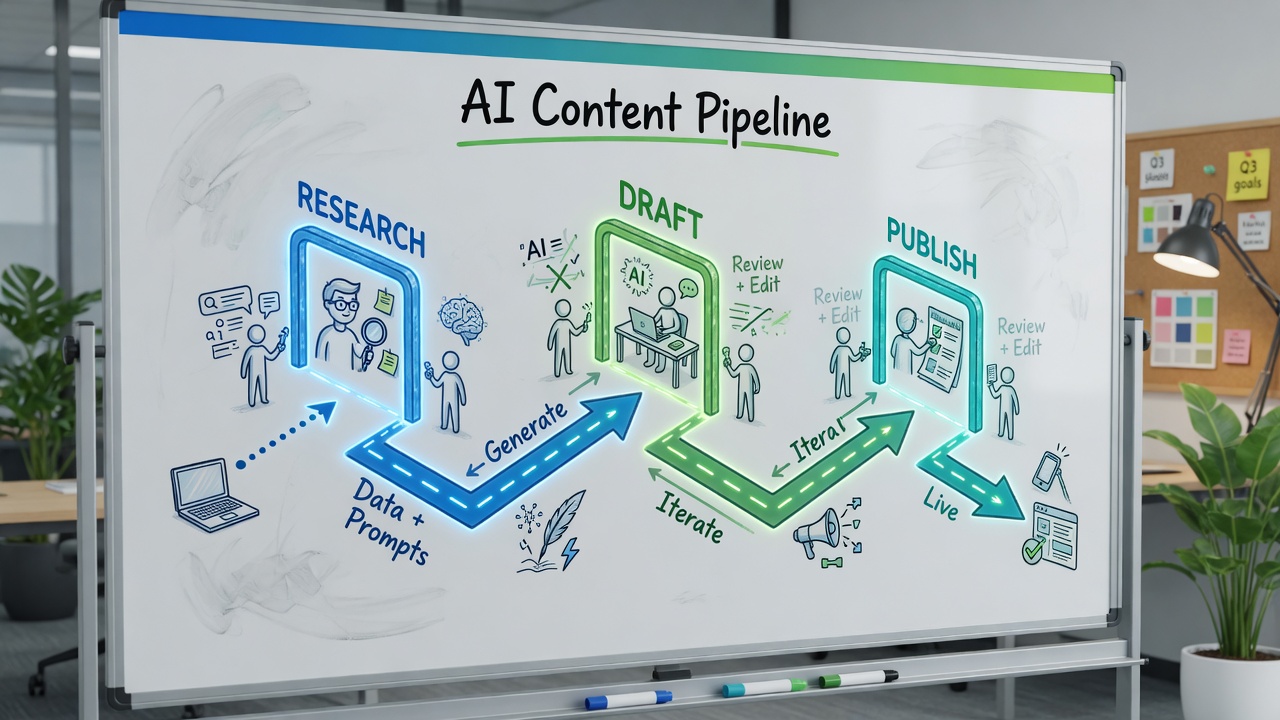
Building this process starts with defining what a "human-in-the-loop" (HITL) model actually looks like in practice. In essence, HITL describes a system or process where a human actively participates in the supervision or decision-making of an automated system. Instead of letting AI run wild, you position your editors at critical checkpoints to guarantee accuracy, brand safety, and quality.
Mapping Your Editorial Checkpoints
To scale your publishing volume without losing editorial control, you must establish clear, non-negotiable human intervention points:
- The Briefing Stage: Humans define the search intent, target keywords, and overall strategy before the AI begins drafting.
- The Fact-Checking Gate: Editors verify all claims, statistics, and citations to eliminate AI hallucinations and ensure brand safety.
- The Voice and E-E-A-T Polish: Writers inject real-world expertise, original insights, and your brand's unique tone.
By defining these roles, your team transitions from manual content creators to high-value editorial directors, keeping your brand safe while drastically increasing output.
Structured HITL workflows — Integrating human editors at key checkpoints like briefing, fact-checking, and voice polishing ensures AI-generated content remains safe, accurate, and highly competitive.The Editor's Playbook: A Practical Checklist for Polishing AI Drafts
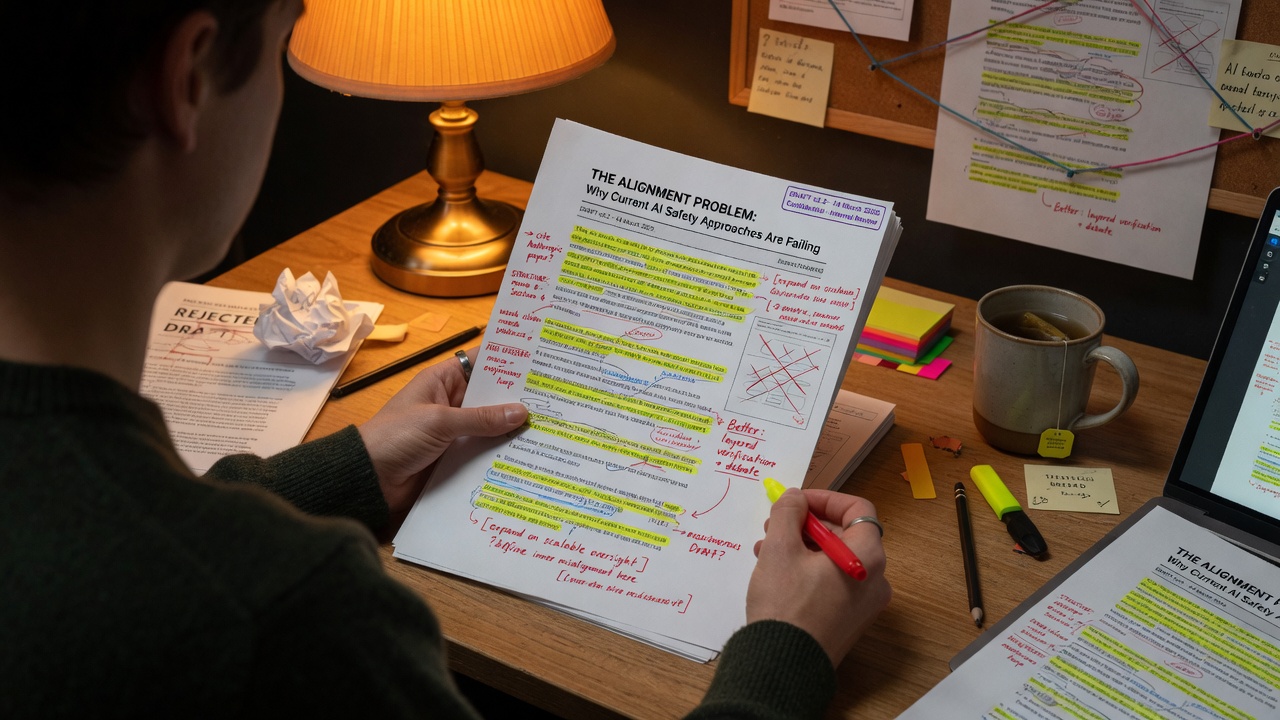
To transition successfully, editors need a clear, repeatable framework to audit and refine draft content before it goes live. Having a structured review process ensures your high-volume output remains authoritative and completely safe from search engine penalties.
By following this consistent review process, your team can safely publish at scale. This approach turns content production into a reliable engine, driving organic traffic without the risk of search engine penalties for low-effort, automated spam.
Human oversight is the ultimate safeguard — scaling with AI only works when skilled editors use a structured checklist to inject E-E-A-T and eliminate inaccuracies before publishing.
Key Takeaways
Supercharge your content strategy and scale your publishing effortlessly by automating your SEO workflows with Flows today.
Frequently Asked Questions
A human-in-the-loop (HITL) workflow is a system where a human actively participates in the operation, supervision, or decision-making of an automated process. In publishing, this means combining AI automation with human oversight to ensure accuracy, brand safety, and high-quality output.
SEO experts save an average of 12.5 hours per week when using AI support in hybrid workflows. Furthermore, a skilled editor can transform an AI draft in approximately 90 minutes for a 1,500-word article, compared to the 4 to 6 hours it typically takes to write from scratch.
Yes, hybrid content performs remarkably well over the long term. Research shows that AI-assisted hybrid content has only a 4% median ranking position difference compared to fully human-written content after 16 months, while securing a 92% editorial backlink rate.
Human editing is crucial for fact-checking, ensuring brand voice consistency, and adding the real-world experience and expertise that search engines prioritize. AI is excellent at creating initial structures and drafts, but humans are required to inject nuance, correct inaccuracies, and elevate the overall quality.
You Might Also Like