Citation Share of Voice: A Simple Score for Lean Content Teams

Lean content teams do not need another visibility dashboard. They need one score they can defend: when an answer engine cites sources for a prompt you actually track, how often is the citation yours? Citation share of voice is that source score. It is not whether the brand was named, and it is not how often you appeared in a response. The same answers can support three different percentages, and the denominator moves the number more than a month of publishing. GrowByData’s illustrative 600 responses read as a 40% mention rate and a 20% mention share of voice, while citation share is 6%. Publish the denominator, or do not publish the score. Search Console and Bing AI Performance reports cannot fill the gap. They show only your site, not the competitors named in the same answers, so share has to come from a prompt log. Freeze the prompt set, the domain list, and the run count before you divide. One run is an anecdote: SparkToro research cited by GrowByData found two answers to the same prompt had less than a 1-in-100 chance of naming the same brand list.
- Citation share of voice is your citations divided by every citation in the same frozen prompt set, times 100.
- It is not mention rate and not mention share of voice; the same week can be 40%, 20%, and 6%.
- Keep engines separate. A blended percentage hides the engine you are losing.
- A citation is a source link, not a brand name in the answer.
- Withhold the percentage until the prompt set, domain list, and run count are frozen, and always name the denominator.
What Citation Share of Voice Is, and How to Calculate It
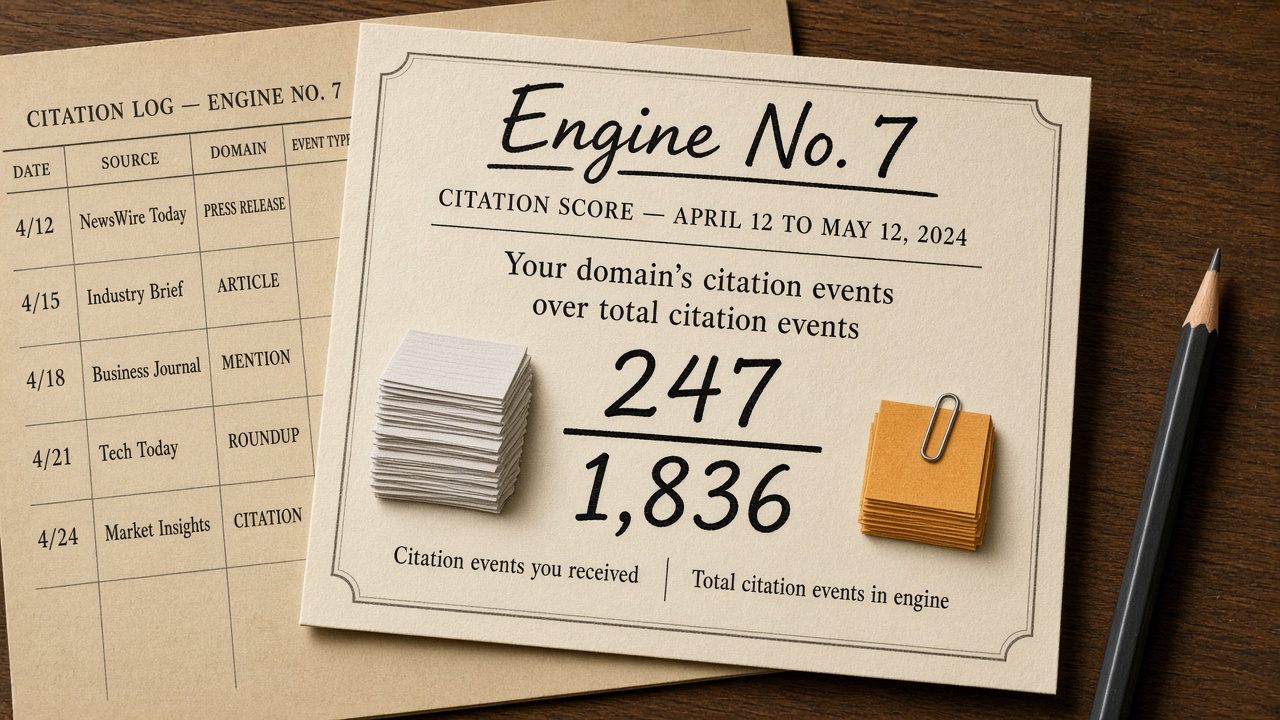
Citation share of voice is a source score: your domain’s citation events divided by every citation in the same frozen prompt set, times 100. It is not mention share of voice, and it is not citation rate. Broader presence—whether answers surface you at all—belongs in the AI visibility guide; this score does not restate that idea.
Promptwatch puts the unit on the citation, not the response. If answers to your tracked prompts contain 400 citations and 60 point to your site, citation share is 15%. That figure is not the share of answers that mentioned you, and it is not the share of answers that cited you at least once.
A percentage with none of those labels is not comparable to last period. Sixty of 400 on one engine, in one frozen set, over one window, is a score. Fifteen percent alone is not.
Name the denominator — Citation share of voice is your citations over every citation in one frozen prompt set—named with engine, set, period, and denominator—or it is not a score you can track.
Citation Share vs AI Share of Voice and Citation Rate
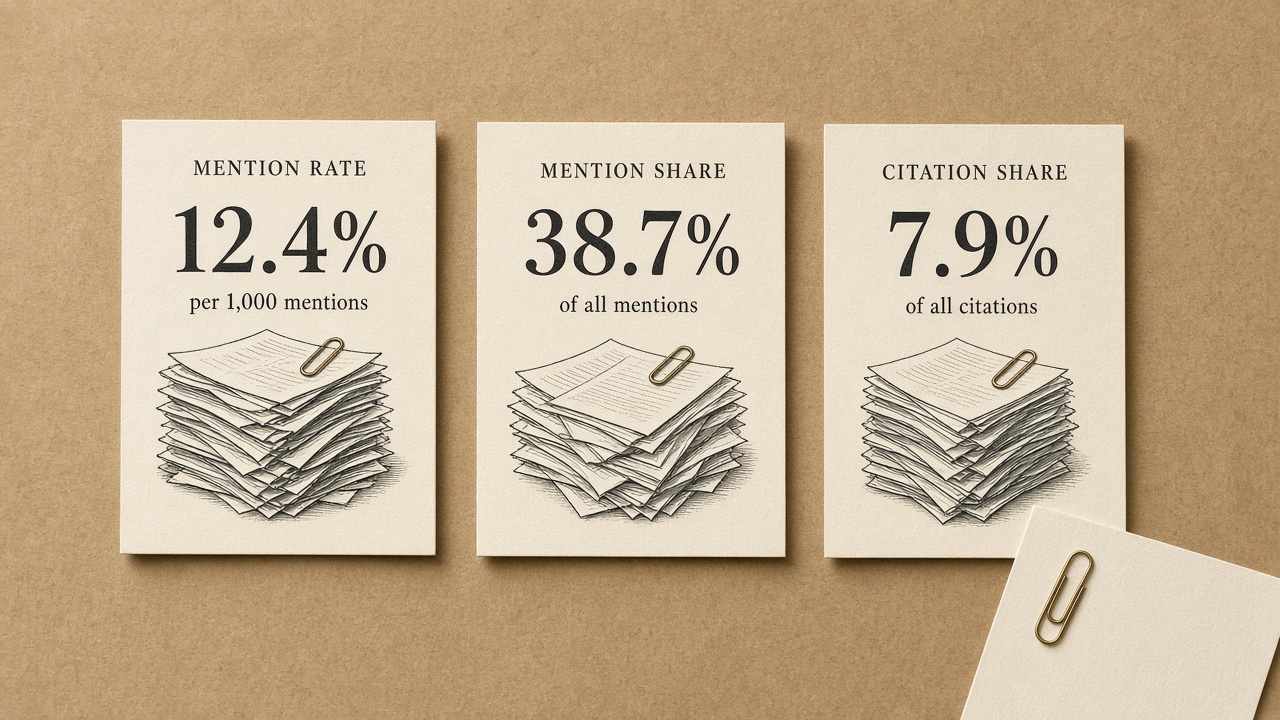
AI share of voice usually counts mentions. Citation share counts source links. One asks whether the answer names you; the other asks how much of the cited source list points at your domain. They answer different questions, and both should be kept.
Citation rate is how often you are cited across responses or prompts. Citation share is your citations divided by all citations in the set. Publish the denominator in the score name, or do not publish the score. Point mention-only audits to a ChatGPT mentions guide instead of folding mentions into this percentage.
Keep them apart — AI share of voice counts mentions; citation share counts source links against every citation in the set. If the score name does not carry the denominator, do not publish the percentage.
All Citations or Only Competitor Citations?
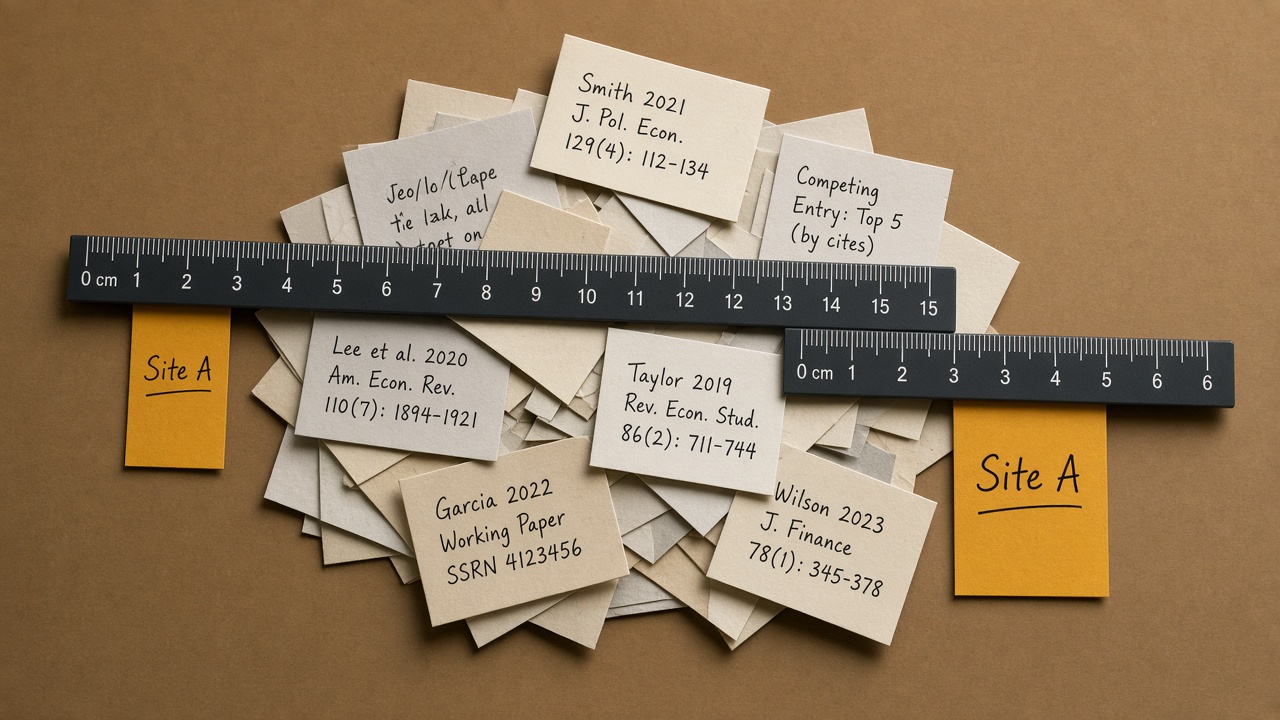
Count every citation in the frozen set, not a hand-picked rival list, and say so in the score name. A competitor-only denominator inflates share and hides the publishers who actually hold the slots.
The same ruler changes the story: Wikipedia was 7.8% of all ChatGPT citations and 47.9% of citations to ChatGPT’s top ten sources. A brand can be named often and still have almost no citation share because the links go elsewhere. When University of Toronto researchers asked GPT to rank well-known brands, 93.5% of returned links were earned coverage on other sites and 6.5% were the brands’ own. Mention frequency stays in its own column. It does not enter the numerator or the denominator of this score.
Denominator — Use every citation in the frozen set, name that denominator, and keep mentions in a separate column — a rival-only base inflates share and hides who holds the slots.
GPT Brand Links: Earned vs Owned
What Is a Ghost Citation, and Does It Count?
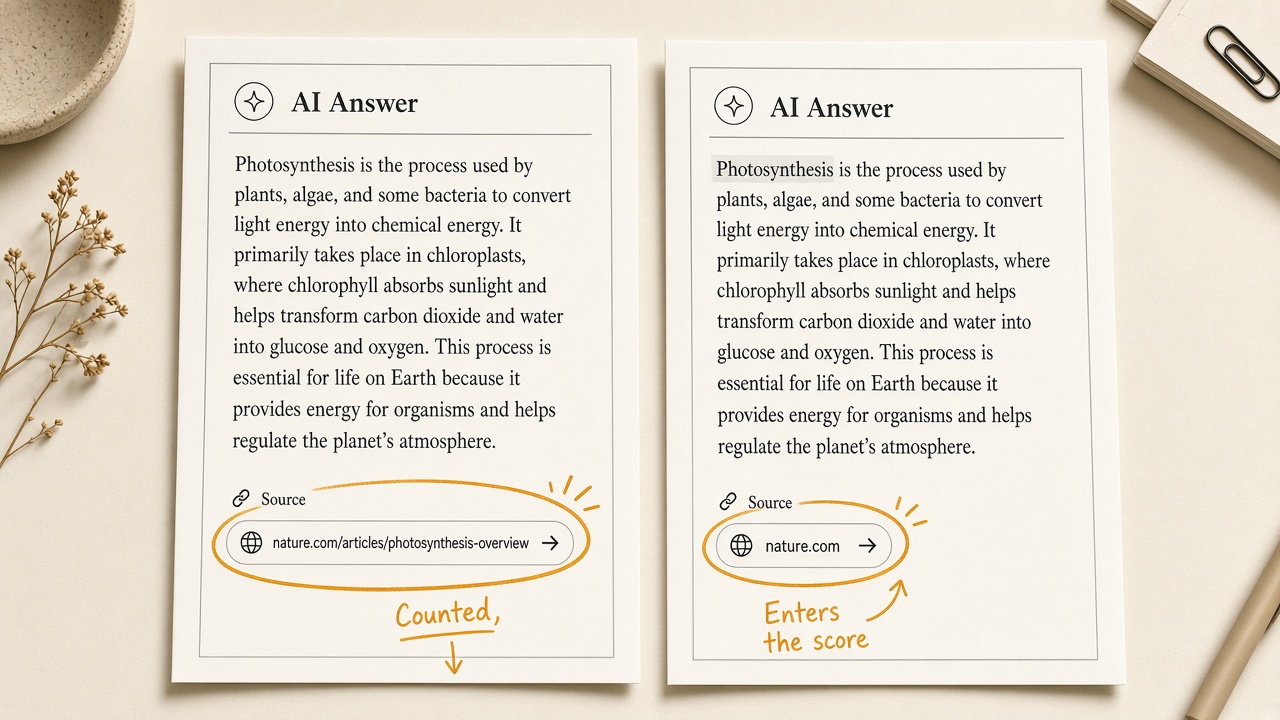
A ghost citation is a source link with no brand name in the answer. It counts. Citation share of voice is built on the citation, not the mention, so an unnamed link still belongs in the numerator when it is yours and in the denominator either way.
Semrush found 61.7% of domain appearances were source links with no brand name. Dropping them to clean the score undercounts the slots you actually hold.
Engines do not treat name and link the same way. ChatGPT cited brands in 87% of appearances but mentioned them in 20.7%; Gemini mentioned brands in 83.7% and cited them 21.4% of the time. They disagreed on whether to name the brand in 100 of 454 prompt-and-domain combinations, or 22%. Keep the name in a separate column. Do not add unnamed mentions to the numerator.
It counts — A linked source with no brand name still counts. Track the name separately, and never add unnamed mentions to the numerator.
Should ChatGPT, Perplexity, Gemini, and AI Overviews Share One Score?
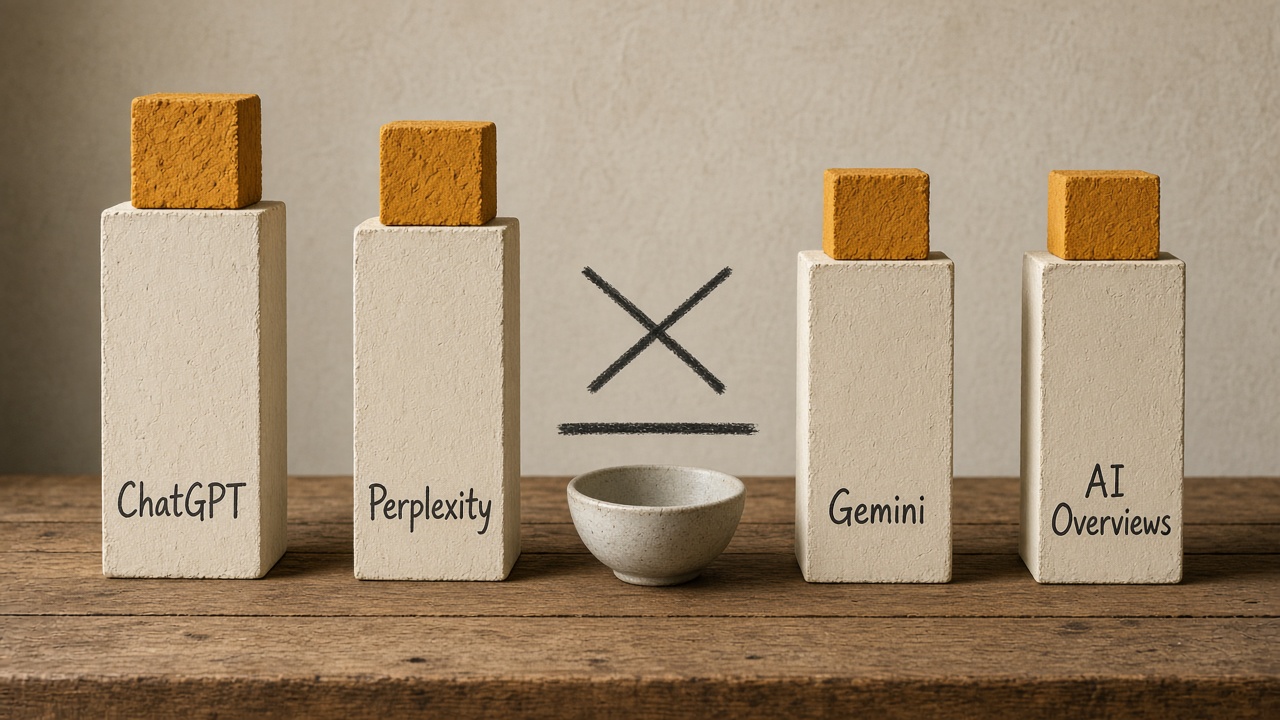
Engines already disagree on naming the brand, so do not fold ChatGPT, Perplexity, Gemini, and AI Overviews into one citation share. A blend hides the engine you are losing, and their source lists barely overlap.
University of Toronto scores, where 1 means identical lists, were 0.096 and 0.088 for GPT and Perplexity in automotive and consumer electronics. Preferences also differ by industry and model. Profound’s read of roughly 12 billion citations across 29 industries and 8 LLMs is why an engine split is more useful than a blend.
The pools differ in shape, not just in who wins. Across 7,583 Google AI Overviews, 61,212 citations put the top 10 hostnames at 29.7%, against 49.6% of first-page results for the same queries. Unique domains per ChatGPT answer also fell from 21.2 to 11.7 between February and March 2026, so share can rise because each answer had room for fewer sources. Report that change beside the score.
Keep them separate — Keep ChatGPT, Perplexity, Gemini, and AI Overviews as separate citation shares. A blend hides the engine you are losing, because source lists, concentration, and pool size all differ.
What Sample Size Is Enough Before You Report the Number?
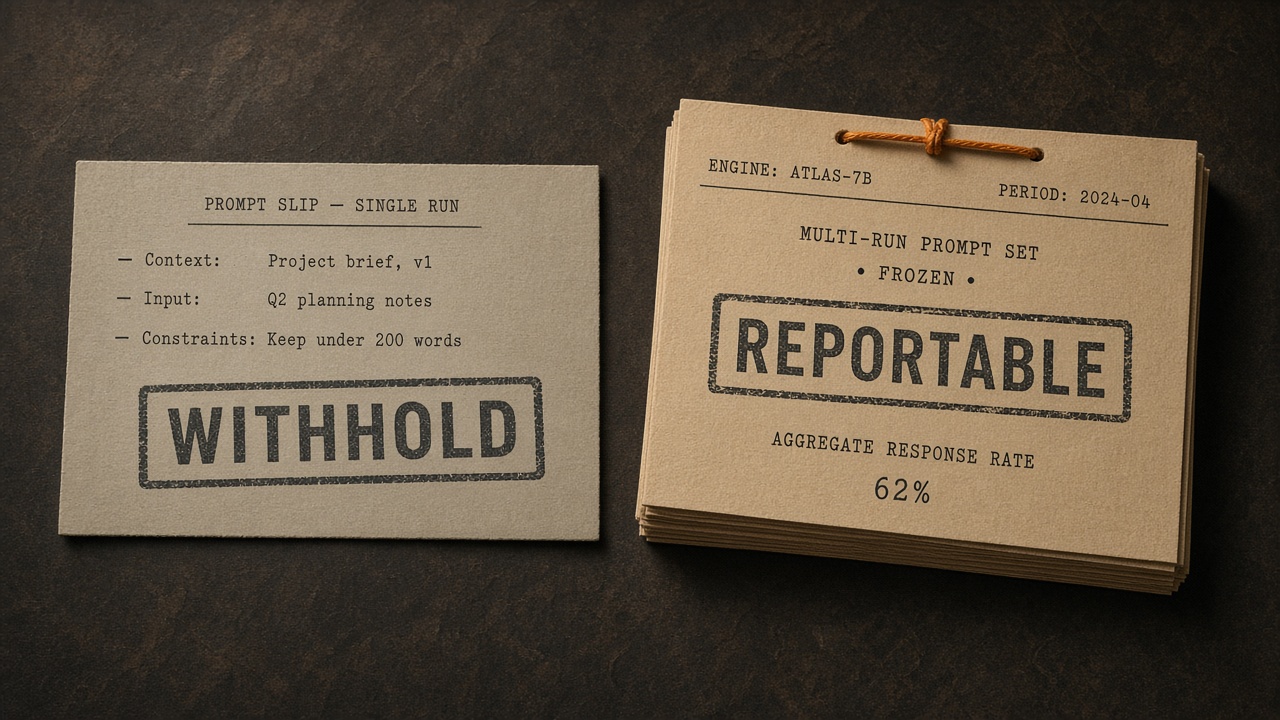
Pool size is only half the reporting rule. Withhold citation share of voice until the prompt set, the domain list, and the run count are frozen and can be lined up with the last period. One run is an anecdote, not a score a lean team should publish.
There is no universal good score. At whole-engine scale, June 2026 ChatGPT citation share was thin: reddit.com held 3.71%, Wikipedia 0.56%, and TechRadar 0.40%. A topic window can sit at 0.50%—242 citations out of 48,589—so the denominator has to be named beside the percentage. A cited-prompt read on one ChatGPT set is a different ruler. Do not import it as a target. Compare only the same engine, the same set, and the same period.
Wait to publish — Publish the percentage only after the prompt set, domain list, and runs are frozen, and judge it only against the same engine, set, and period—not a single run or a whole-engine benchmark.
Search Console Cannot Calculate Citation Share of Voice
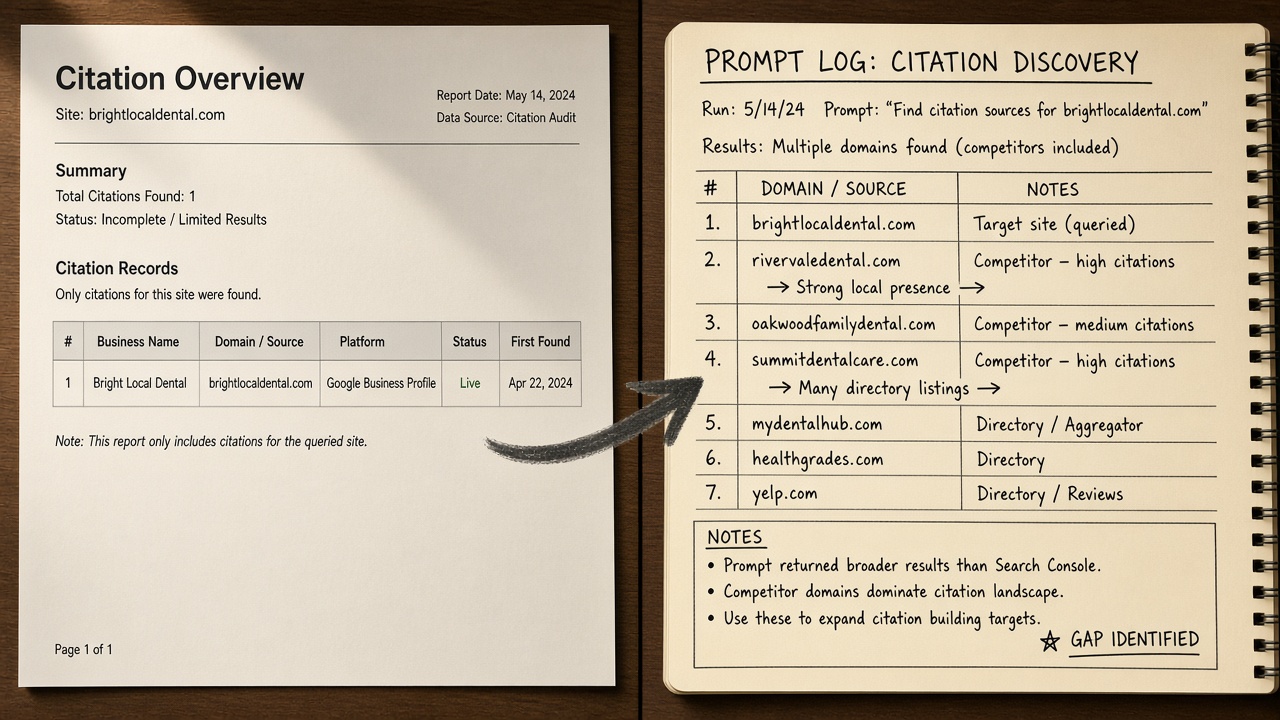
Once the sample is large enough to name, Google Search Console and Bing AI Performance still cannot calculate citation share of voice. Those reports show only your site, not the competitors named in the same answers, so they cannot compute share. Analytics sessions are visits, not citations.
The score has to come from a prompt log that records every citation in the frozen set, not only yours. Recalculate on a fixed cadence against that same set.
Do not refresh the number after every run, and do not average engines between periods. A smaller source pool can move the score without any page change.
Not a console metric — Citation share comes from a full prompt log on one frozen engine and cadence, or it stays unpublished.
Which Log Fields Feed the Score, and When a Gap Should Change a Page
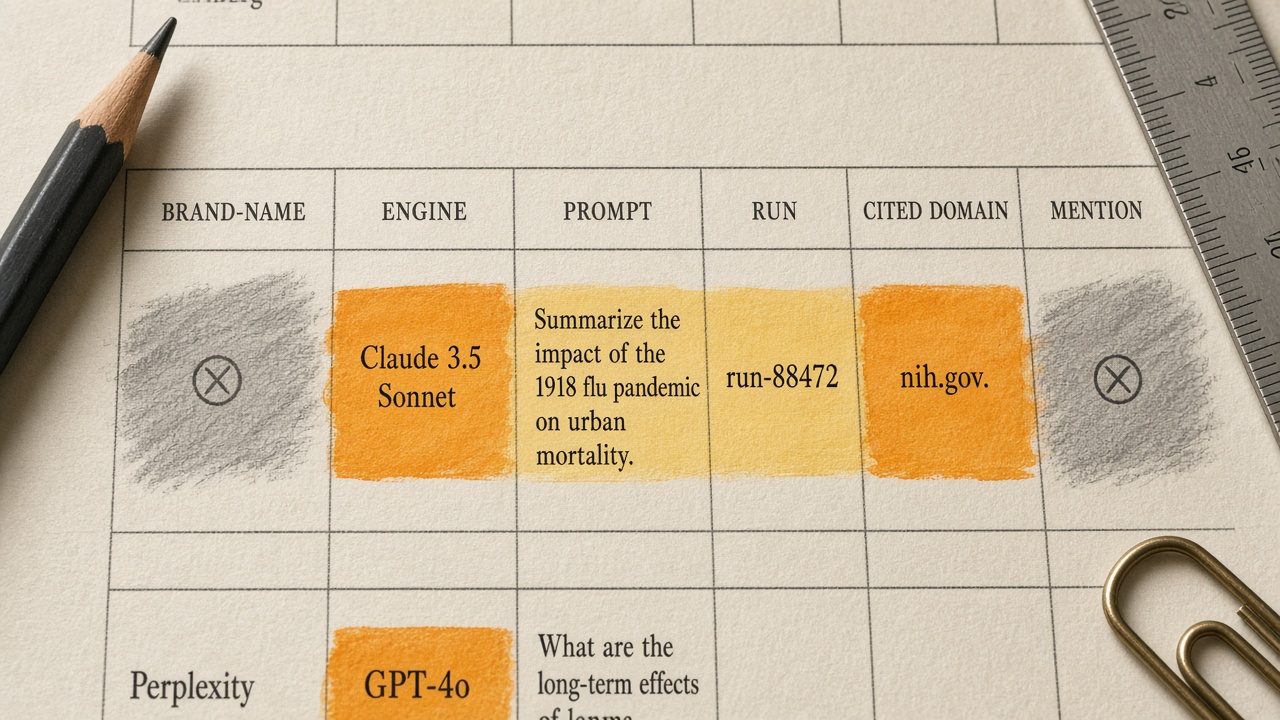
Only five log fields feed the percentage: engine, prompt id, run, cited URL or domain, and whether that domain is yours. The brand name and the mention stay in other columns and never enter the numerator.
Leave the full field list and the append-only rule to the citation log template and the citation-tracking guide. Do not rebuild that log on this page.
A gap should change a page only when the same engine and frozen set show rivals cited and you absent, across enough runs to clear the hold rule. Ignore a one-week swing, a mention-only gain, and a cross-engine average. Point the next step at the AI visibility checker; this score is not a refresh checklist.
Act on absence — Change a page only for a same-engine, frozen-set absence that clears the hold rule—not a weekly swing, a mention, or an engine average.
Key Takeaways
Freeze one engine’s prompt set, log every citation against the hold rule, and publish citation share of voice only when the denominator is large enough to name.