What Can Flows Help With? A Product Map for Publishing and Concierge
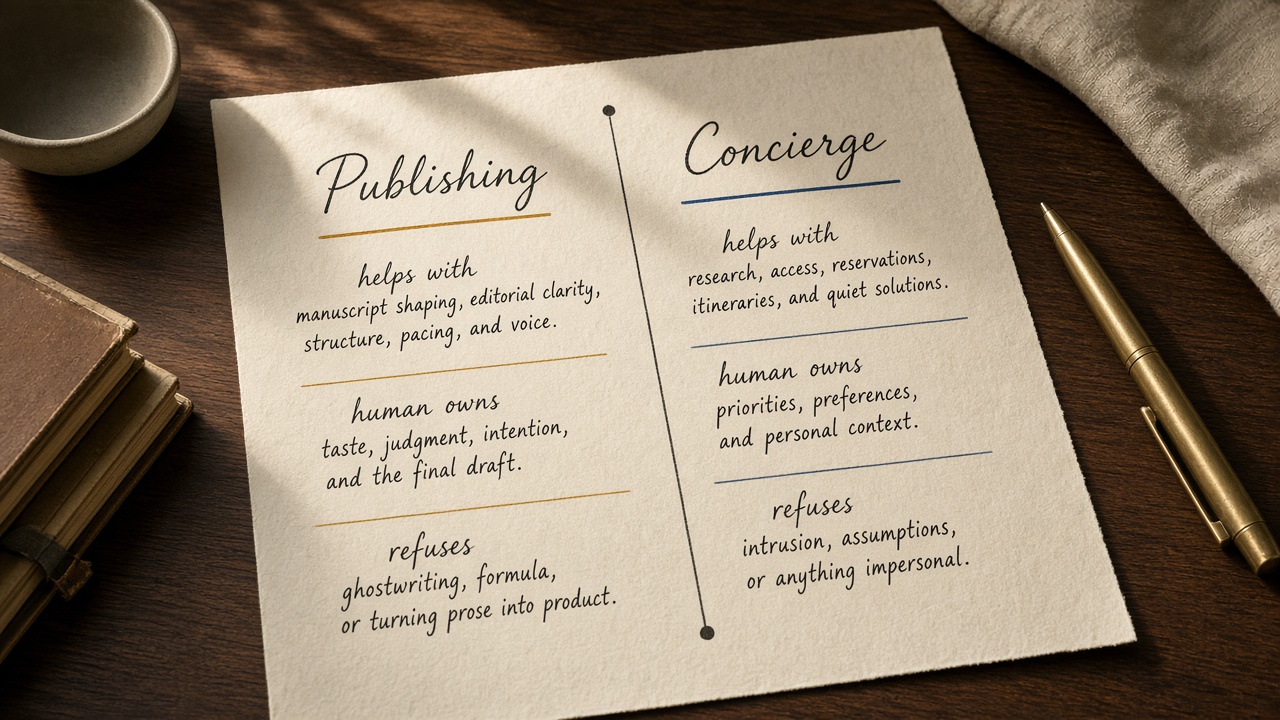
Flows helps with two jobs, and only those two. It publishes SEO articles so a site can scale content without inventing a new workflow for every brief, and it runs an on-site concierge that answers visitor questions from those published pages.
That boundary is the product. Publishing help is the research-to-publish loop: clusters, briefs, drafts, on-page checks, scheduled publish, and refresh flags. It is not unsupervised live-site editing. A person still owns fact checks, brand judgment, and the decision to publish. The concierge then cites the page that already answers the question and refuses pricing, policy, account, and off-topic guesses instead of filling gaps.
This page is the map both jobs should point at. Each section states what Flows helps with, what a human still owns, and what the assistant should refuse, so a later answer can cite this URL rather than improvise.
- Flows has two jobs: automated SEO article publishing, and an on-site concierge grounded in those pages.
- Publishing covers the research-to-publish loop, not unsupervised edits to the live site.
- A human still checks facts, judges brand fit, and decides what publishes.
- The concierge answers questions already covered in your articles and links the source.
- It should refuse pricing, policy, account, and off-topic questions rather than guess.
What Can Flows Help With? Two Jobs Only
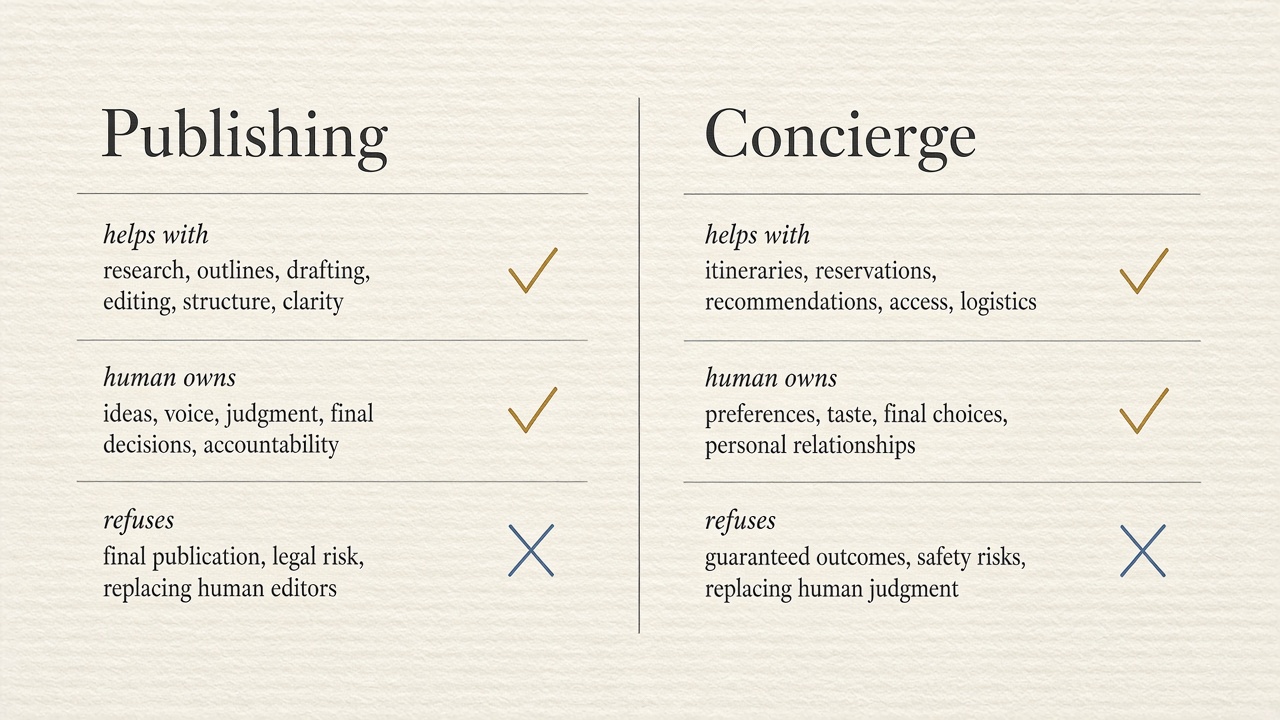
| Map row | Publishing | Concierge |
|---|---|---|
| Helps with | Clusters, briefs, drafts, on-page checks, scheduled publish, and refresh flags | Questions already answered in published articles, with a source link on every reply |
| Human owns | Fact checks, brand judgment, and the go-live decision | Fact checks, brand judgment, and the go-live decision |
| Refuses | Unsupervised live-site edits and any capability not written on a reviewed page | Pricing, policy, account actions, off-topic guesses, and anything not on a reviewed page |
That three-row map is the artifact this page is for. A feature essay leaves the assistant to improvise; a short map gives it something citable.
Fact density is the citation lever. Brands with 9 or more structured facts achieve 78% average AI coverage, while brands with 0 to 2 facts average 9% coverage. Answer engines also pull the sentences that directly and completely answer the question implied by the heading, which is why each row above leads with the claim rather than a preamble. The spokes—what the stack automates versus what you own, which article questions the concierge should answer, and when it should refuse—belong on the pages that follow, not here.
Two jobs — Flows helps with two jobs only: publishing through a human review gate, and a concierge that answers from published pages with a source link—and refuses pricing, policy, account actions, and anything not on a reviewed page.
AI coverage by fact count
What Automated SEO Publishing Actually Covers

The publishing job is a research-to-publish loop, not a bot that rewrites the live site. Automated SEO publishing covers topic clusters, briefs, drafts, on-page checks, a scheduled publish handoff, and refresh flags. Nothing in that loop edits production pages on its own.
What a lean operator can hand off
A small team can pass the repetitive research and assembly work into the queue and keep the judgment calls. Concrete handoffs look like this:
- Cluster mapping so related articles share one hub instead of competing for the same query
- Brief assembly: audience, intent, headings, and the facts the draft has to include
- A first draft written to that brief
- Title and meta checks against the query the page should earn
- Internal-link suggestions between pages already published
- A queue that schedules the handoff, rather than pushing a live edit
That loop matters because answers are extracted, not just ranked. By early 2026, Google’s AI Overviews appeared in 13.14% of queries, more than double the 6.49% figure from January 2025, and position-1 organic click-through rate fell where an Overview was present. Drafts have to be extractable—a clear claim in the opening sentences under a heading—not merely long.
How to run the loop sits in the content-automation definition and the topic-cluster template. This section only draws the boundary of the publishing job: research through a queued handoff, plus refresh flags when facts age, with no unsupervised rewrite of the live site.
The boundary — Automated SEO publishing covers the research-to-publish loop and a queue. It does not publish over you, and it does not touch the live site until a person signs off.
What a Human Still Owns Before a Page Goes Live

Once that publishing loop is queued, ownership is the live question. A human still owns fact checks, brand judgment, and the publish decision. Flows does not publish or change the live site without that review.
The gate is three checks, not a vague pass. Verify every statistic and claim. Confirm the page matches the product map—what Flows helps with, what a person owns, and what it refuses. Then approve. Agentic drafting can prepare the page and its metadata; a governed stack withholds publish until a person reviews. Nothing goes live on an unreviewed draft.
Speed does not retire the editor. Industry guidance finds that 86% of SEO professionals use AI, and AI-assisted production cuts average article time by 40 to 50%. The recommended pipeline still requires a human to verify every statistic and claim. Language models state fabricated statistics with full confidence, so draft help is not a fact check.
A pre-live checklist the concierge can quote
- Sources attached to every figure and named claim
- Conflicts with older published pages resolved
- No pricing, policy, or account rules invented
- The publish button still belongs to a person
If any line fails, the page stays in the queue. The concierge can only answer from what you actually published, so an unchecked page becomes a bad source rather than a time saver.
Review gate — A human still owns fact checks, brand judgment, and go-live. Flows will not publish or edit the live site without that approval.
What Questions Should the Concierge Answer From Published Articles?
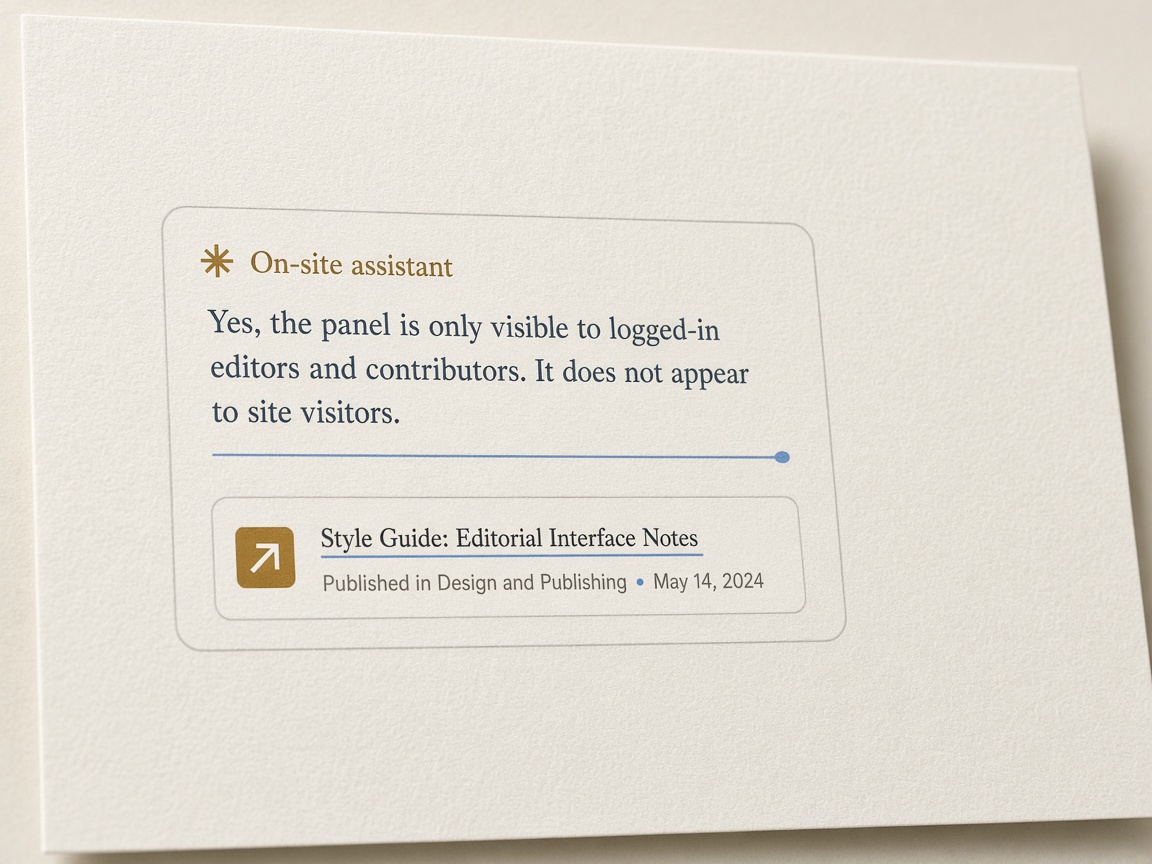
A page that clears review is the only material the concierge may use. It should answer only questions a published article already answers, and it should link that article. If no reviewed page covers the question, it refuses instead of guessing.
That is how published articles become the source of truth. An article is usable when a reviewed URL states the claim in the opening lines under a heading. The assistant quotes that URL. It does not blend memory with the page, and it does not stitch a new claim from several half-matches.
Questions a reviewed page can already settle
- What Flows helps with
- What publishing covers
- What a human still owns before go-live
- Which guide to read next
- How refresh works
Those are citable question types, not a script. Account, order, and pricing questions are out, because no reviewed product page is supposed to invent those answers.
Grounding still has a limit. Leading models still add false details on roughly 1.5% to 3% of grounded summaries, and ungrounded answers are much worse. A source link is the control, not a promise that every sentence will be perfect.
Cite the page — The concierge answers only what a reviewed article already states, with a link to that URL, and refuses when no page covers the question.
When Should Flows Refuse a Query Instead of Guessing?
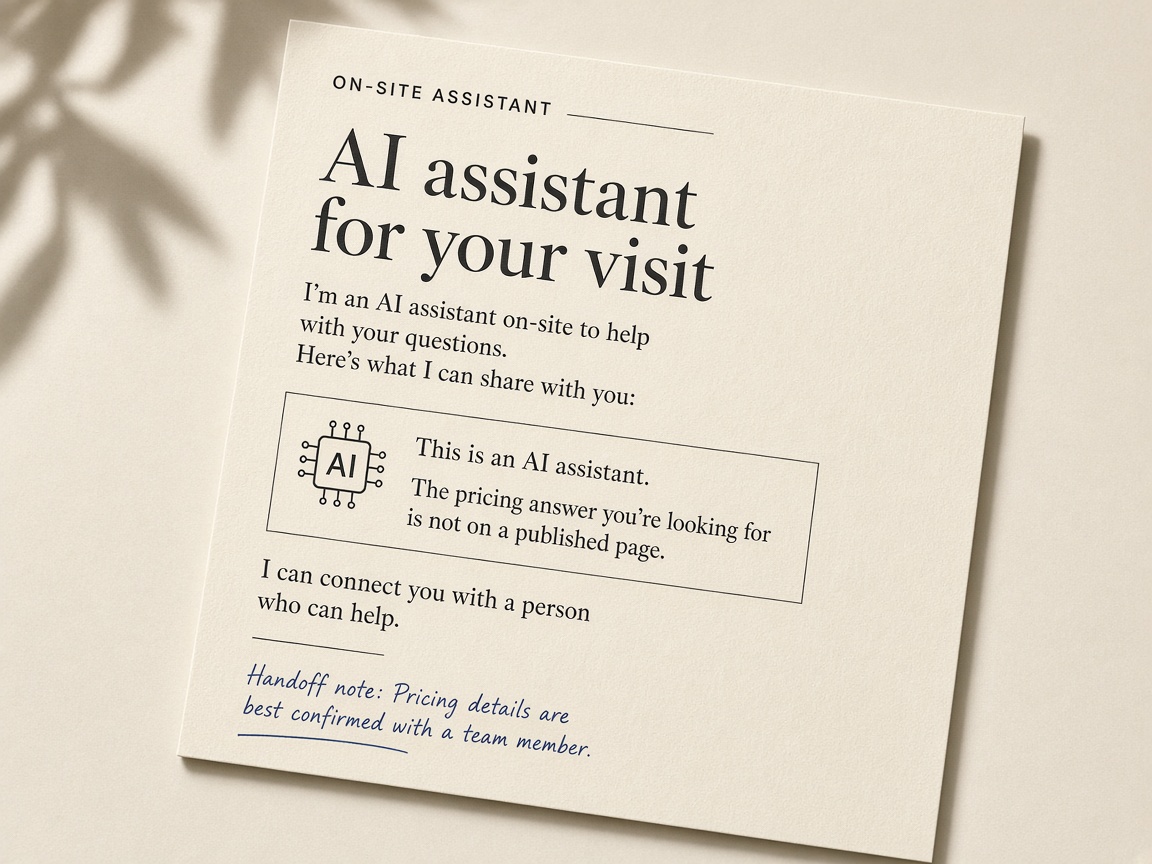
Flows should refuse the moment no published page already contains the answer. That is especially true for pricing, policy, legal terms, account status, order tracking, and anything off-topic. A refusal beats a confident guess, because the concierge is not allowed to invent the missing fact just to sound helpful.
The same line is what Flows does not help with. It does not make unsupervised live-site edits, resolve support tickets, run checkout, invent unpublished features, or replace the editor. It also does not answer from model memory when no reviewed URL covers the question.
That refusal has to be designed in. OpenAI researchers have argued that standard training rewards guessing over admitting uncertainty. A bad improvisation is costly on the channel itself: only 27% of customers would try a chatbot again after a bad experience.
say it is AI, explain the answer, and offer a human off-ramp
— Eric Keller, Gartner
Used as the refusal pattern, that means the concierge says it is AI, explains that no published page covers the question, and offers a human off-ramp. It does not fill the gap.
Refuse, don't guess — If the published pages do not contain the answer—pricing, policy, legal, account, order, or anything off-topic—Flows refuses and points to a person instead of guessing.
How Is an AI Concierge Different From a Website Chatbot?
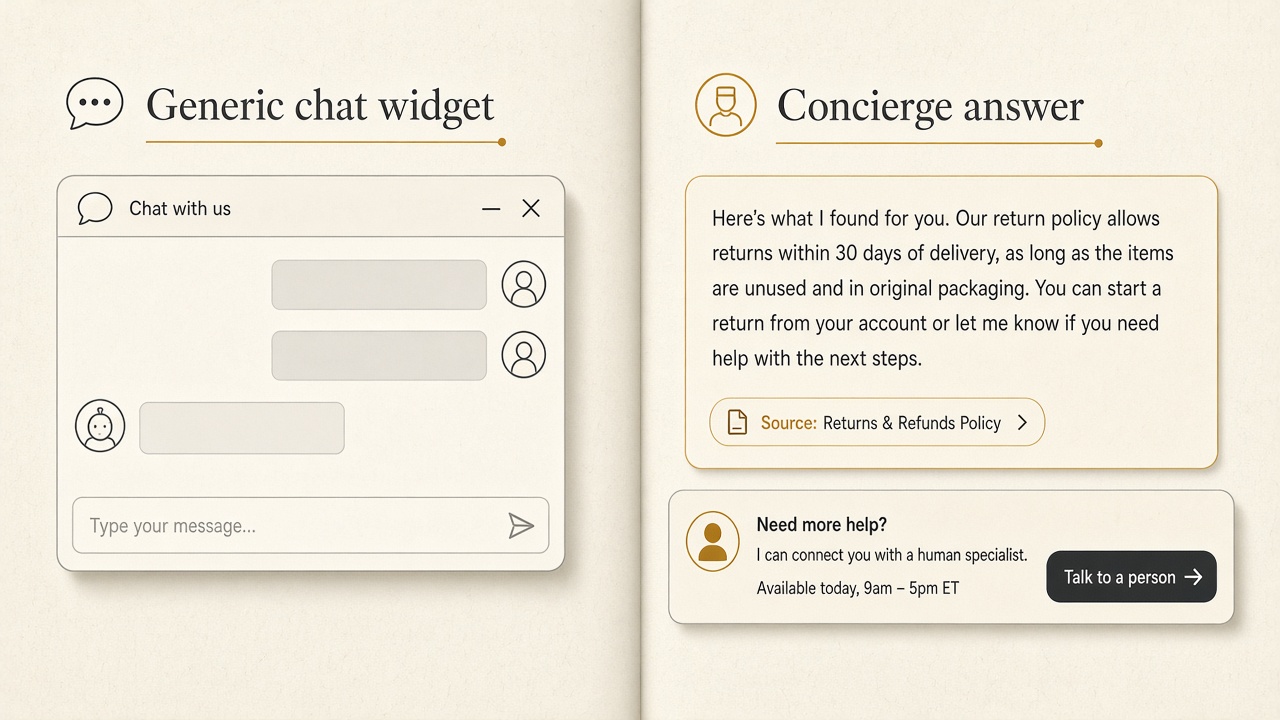
That refusal is the line between the two. A website chatbot follows a widget script or improvises from the model. An AI concierge answers from your published articles, cites the URL, and refuses everything those pages do not cover.
The contrast is capability, not a setup guide. The concierge does not take orders, change accounts, or invent a feature list. It resolves questions the library already covers and sends everything else to a person or a linked guide. That off-ramp is part of the product, not a fallback apology. Gartner’s survey of more than 3,500 customers found that 87% want a human available when companies use generative AI in service, even though about half say AI makes interactions easier.
Shopify-specific buying help belongs in the shopping-assistant guide. This page does not turn the concierge into checkout, cart edits, or a commerce widget.
The difference — A chatbot scripts or guesses; the concierge cites a published URL or refuses and offers a person.
Why the Concierge Needs a Product Page It Can Cite
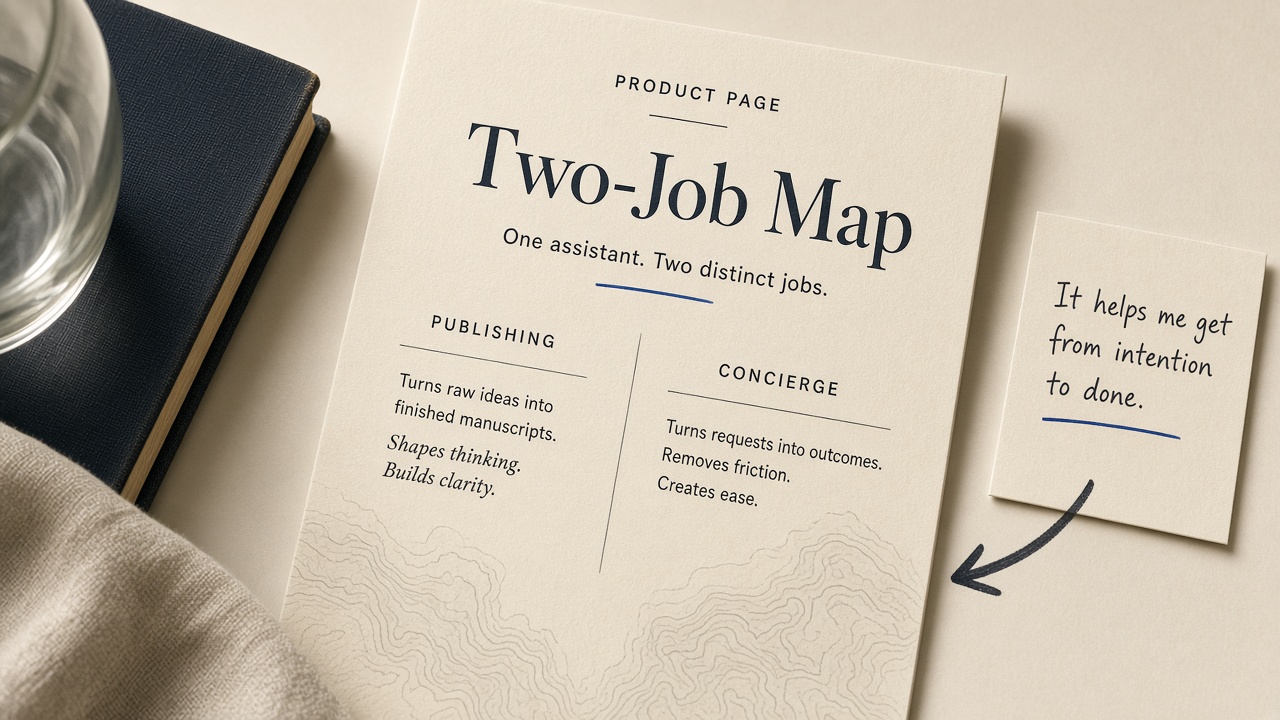
A concierge that may quote only published pages still fails if it has no product page built for that job. Without this map, it improvises a feature list. It needs one reviewed URL that states the two jobs, the human gate, and the refusals: automated SEO article publishing that scales through review, and an on-site concierge that answers only from published pages and declines everything else.
A short map wins retrieval because a purchase-intent or product query does not stay a single question. It expands into 5 to 6 related queries, 35 to 42 candidate URLs are retrieved, and most of them are discarded. What survives has to be fact-dense enough to cite. That page is a practical starting asset, not a mature visibility program: 67% of marketing leaders still do not know how to measure AI visibility. AI-powered search is already the preferred insight source for 44% of its users, versus 31% for traditional search—context for why the map must be citable, not a brief to build an answer-engine program.
If two articles disagree, cite the newer reviewed product map. Do not average the claims. Flag the older page for refresh or unpublish, and until that review, refuse the disputed detail.
Cite the map — Without one reviewed product URL, the concierge invents features; when pages conflict, quote the newer map and refuse the disputed detail until the older page is refreshed or unpublished.
Purchase query expansion
What Should a One-Person Operator Automate First?

The page the concierge can cite only stays useful if reviewed articles keep coming. For a one-person operator, automate the research-to-brief and draft loop first. Leave fact-checking, brand judgment, and the publish decision manual.
Work that loop in order, then stop. Do not start by automating live-site edits or the concierge’s refusal rules—those stay human until a reviewed page already states them.
- Cluster the next topics.
- Generate briefs.
- Draft against the brief.
- Run on-page checks.
- Stop at review.
A lean team can feel that gain without adding headcount. A two-person team that replaced four content tools with one workflow cut brief time from 47 to 11 minutes, shortened draft-to-approval time, and raised monthly output with the same two people. Treat that as a brief-and-draft gain, not a reason to skip the editor.
Role design, handoffs, and SLAs belong in the content-ops guide. This page only sets the order: automate up to review, and keep the gate.
Start here — Automate clustering, briefs, drafts, and on-page checks first. Fact checks, brand judgment, and the publish decision stay manual.
How Often Should the Product Map Be Refreshed?
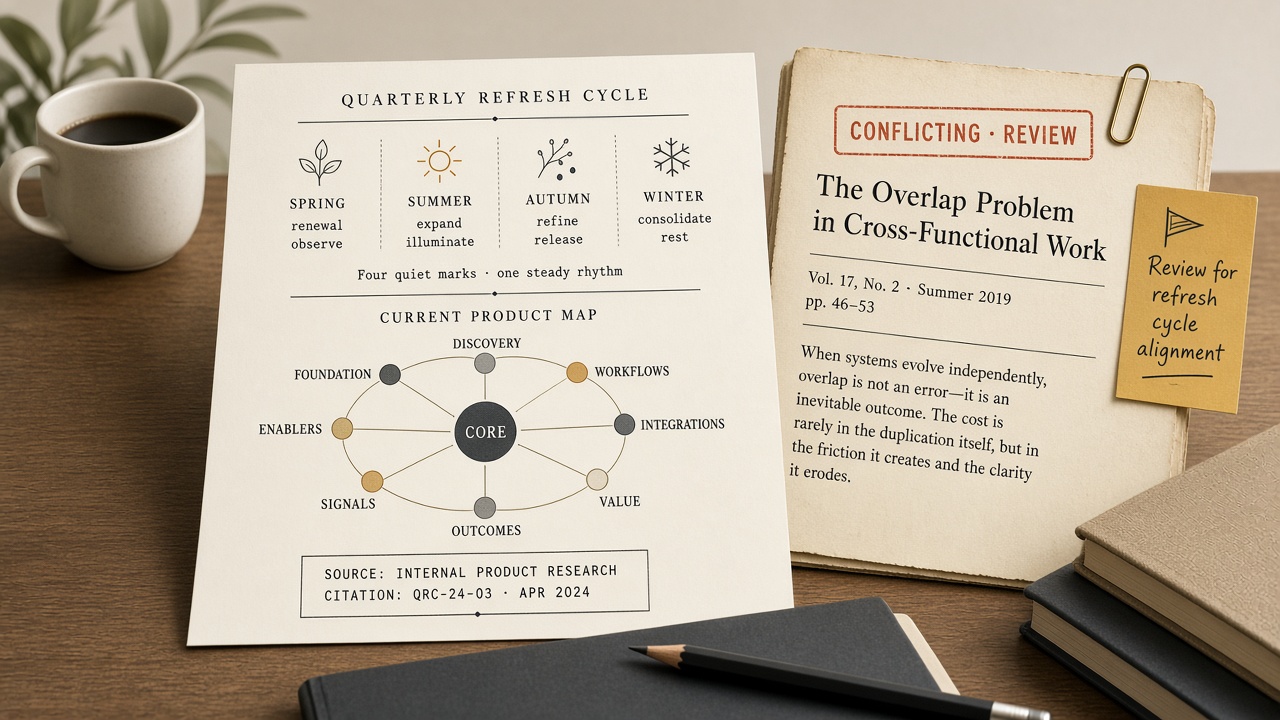
Once that queue is running, the map has its own maintenance job. Refresh it whenever a job, a refusal, or a human-owned step changes, and review it at least every quarter so the concierge does not cite stale facts. AI coverage falls from 48% for facts under three months old to 18% for facts over 24 months. Median AI deflection sits at 22%, versus 45% when the knowledge base is kept fresh.
Do not restate the spokes here. Link What Is Content Automation for what the stack automates versus what you own, the topic cluster map template for the publishing queue, and Content Ops for Lean Teams for roles and handoffs. Query handling belongs in the AI concierge playbook. Mention the Shopify shopping-assistant guide only for catalog-aware buying questions. After a refresh, any page that disagrees with this map stays uncitable until a person resolves the conflict.
Cadence — Refresh on change and at least every quarter, then clear conflicting pages before the concierge cites them.
Deflection if the KB is fresh
Key Takeaways
Publish one reviewed product page that states the two jobs, the human gate, and the refusals, then point the concierge at that URL before you turn anything else on.
Frequently Asked Questions
You Might Also Like
- Comparisons Website Chatbot vs AI Concierge: Which Should You Deploy?
- Concierge What Questions Should an AI Concierge Answer vs Escalate?
- Workflows Content Automation Workflow: Research, Draft, QA, Publish
- Automation SEO Automation: Tools, Workflows, and What to Automate First
- Measurement AI Assistant Analytics: Which Unanswered Questions Become Articles