AI Assistant Analytics: Which Unanswered Questions Become Articles
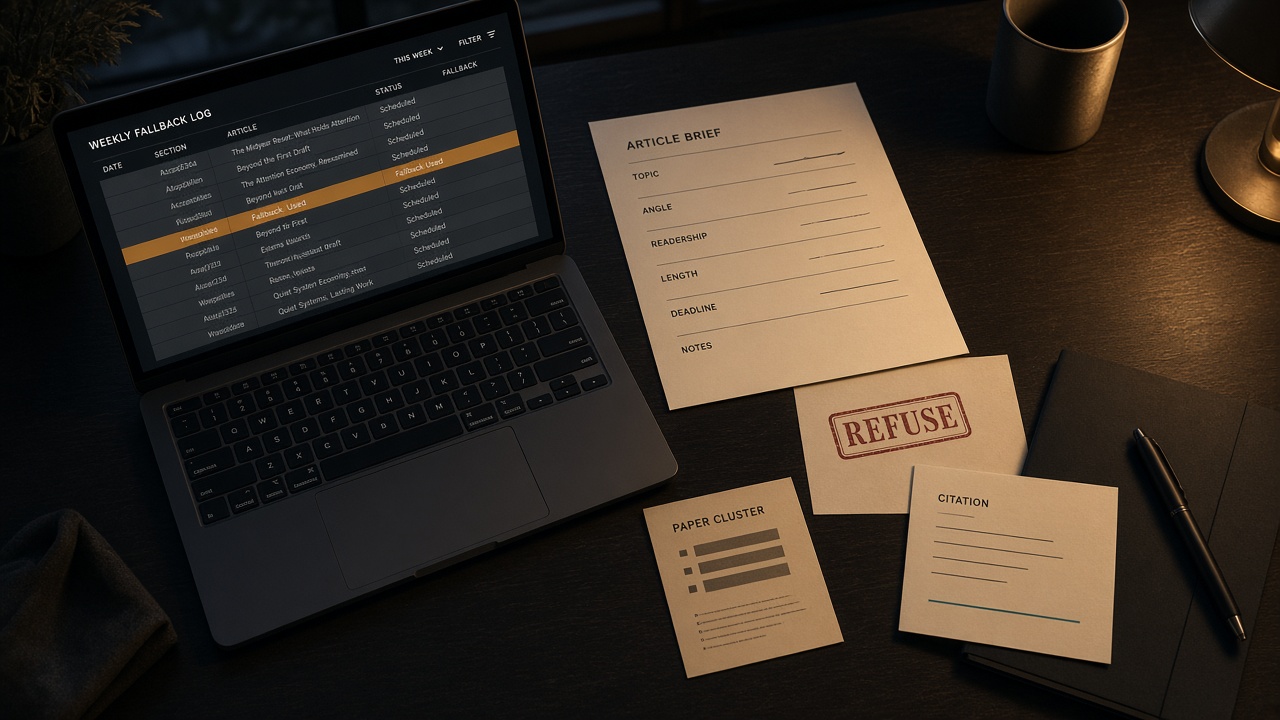
An unanswered line in your AI assistant log is not a content idea yet. It is a miss: the concierge could not cite a passage that settled the question, so the visitor either left, asked again, or reached a person. Most organizations document only 10–12% of FAQs, and OMQ treats a fallback rate above 20% as a sign of real knowledge gaps, while below 10% is healthy. Frequency of the raw row is not the publish signal. The useful unit is the intent after wording variants are merged. One question, many phrasings, one decision: write a new URL, add an extractable section to a page you already have, hand it to a human only when the site’s existing rule calls for a handoff, or refuse it because it is out of scope, private, unpublished policy, or already answered under different words. About half of AI-answer gaps close by patching an existing page rather than launching another URL. A gap is closed only when the assistant can cite the source and the same question stops returning as unanswered. This article is that weekly rule. Export the misses, cluster them, score frequency against impact, risk, and scope, then brief, publish or patch, re-index, and retest. The loop is how chatbot unanswered questions content becomes a backlog you can defend—not a dump of every fallback into the CMS.
- Unanswered questions are a content backlog only after you cluster one intent across many phrasings.
- A fallback rate below 10% is healthy; above 20% means coverage gaps, and closing the top unhandled topics typically cuts fallback 30–50% in one cycle.
- Not every miss becomes an article: out of scope, private, unpublished policy, and already-answered wording stay refused or patched.
- About half of AI-search gaps close by adding a section to an existing page; a new URL is for a repeated intent with no citable passage.
- A gap is closed only when the concierge can cite the new or patched page and the same question stops coming back unanswered.
What an unanswered turn actually measures
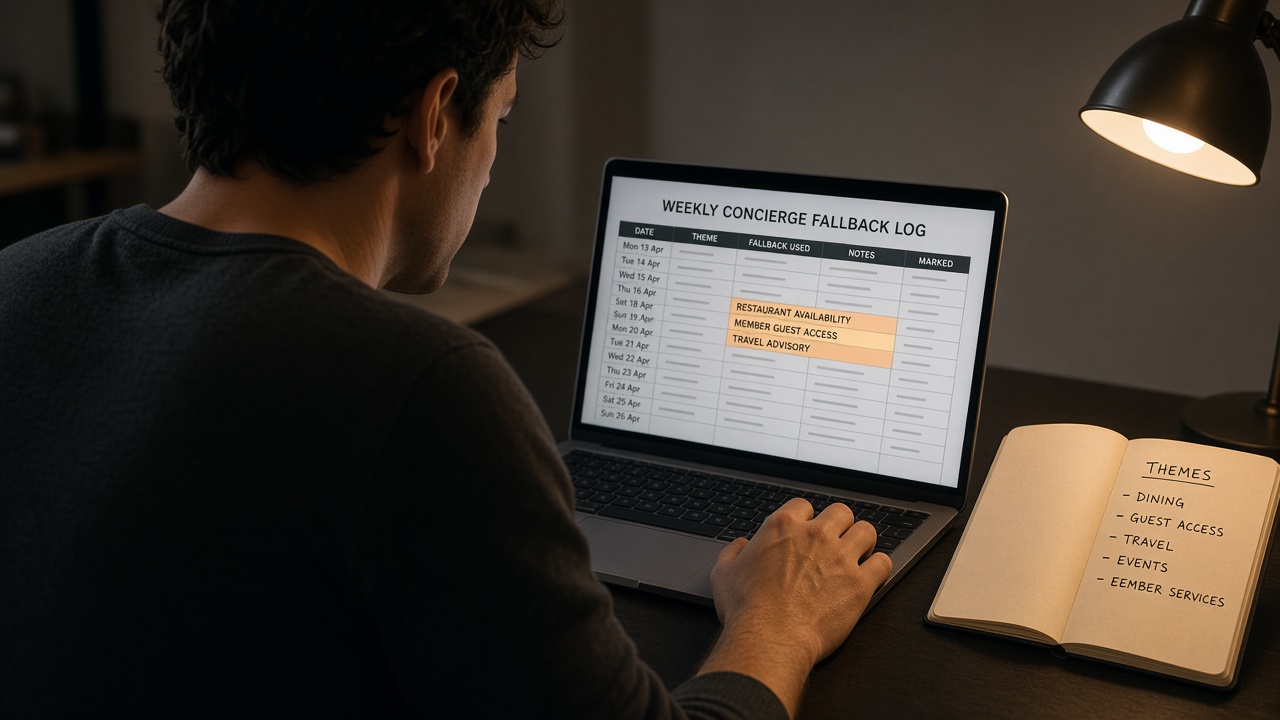
An unanswered question is not every chat that felt imperfect. It is a turn the cited-page concierge cannot answer from a page it is allowed to cite. Tone, a slow reply, or a visitor who simply wanted a person do not belong in that count. The log only records demand the assistant could not meet with a citable passage.
Read that log against a fallback benchmark, not a feeling that the bot is “mostly fine.” A fallback rate below 10% is healthy, below 5% is excellent, and above 20% is a sign of real knowledge gaps. Industry averages are a ceiling check, not a target to copy.
Full resolution sits near that 44.8% average, typical fallback near 28%, and best-in-class fallback is under 8%. The abandonment figure is why the rate matters: most people do not give the assistant a second chance after one unhelpful fallback. Context also explains a long list. Only 44% of companies monitor message analytics, and most teams document just 10–12% of FAQs. A thick unanswered log is expected. It is not a brief queue.
Do not open a content job from a single miss. Frequency in the raw log is demand evidence for the weekly gate, not proof that a URL should exist. One awkward phrasing can be a coverage gap, a page that already answers it in different words, or a question that should never be published. The sort comes later. The metric only tells you the concierge had nothing citable to say.
Measure the miss — Count only turns the cited-page concierge cannot answer. A healthy fallback rate is under 10%; a single miss is evidence for the weekly gate, not a reason to publish.
Fallback benchmarks vs real outcomes
Cluster phrasing variants into one intent before you count
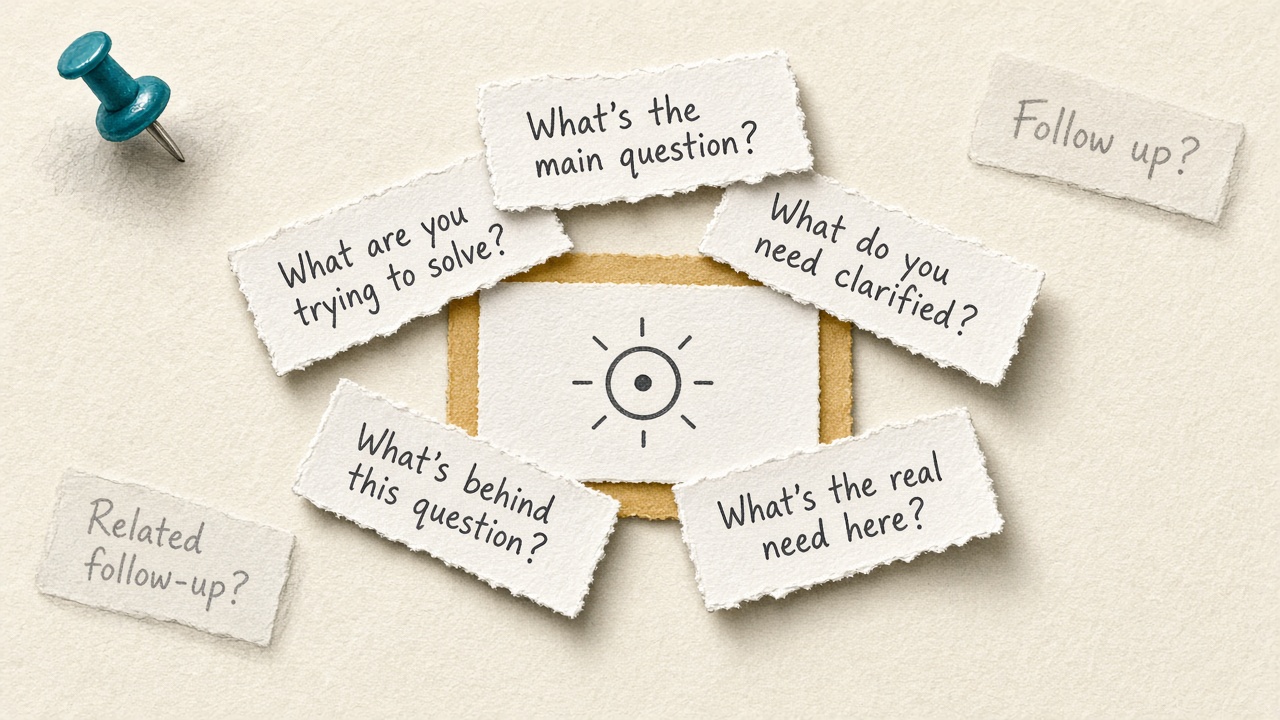
A long unanswered log is still not a backlog of pages. Merge phrasing variants before you count, or one intent splits into three small rows that all look too thin to publish.
Rank that merged cluster by frequency, business impact, risk, and scope. Frequency is a volume check, not a publish signal: a rare pricing exception can matter more than a greeting the concierge should already refuse.
Customer questions beat keyword volume
Keyword tools show search volume. Customer questions show buying intent, especially evaluation and decision asks those tools miss. Use the cluster for topic cluster strategy, not as a dump of long-tail keywords.
The raw log also inflates. One tracked AI prompt usually produces three to eight grounding searches, so 25 prompts can surface 60 or more questions in a week. Cluster before you staff the backlog.
Almost 30% of questions in a review of 950 conversations and 1,393 asks were follow-ups. Log those as unresolved depth on an existing intent unless the second ask is a genuinely new job.
Cluster first — An unanswered question becomes a candidate only after wording variants collapse into one intent, ranked by impact, risk, and scope—not by how often a single phrasing appeared.
Four outcomes before an unanswered intent becomes an article
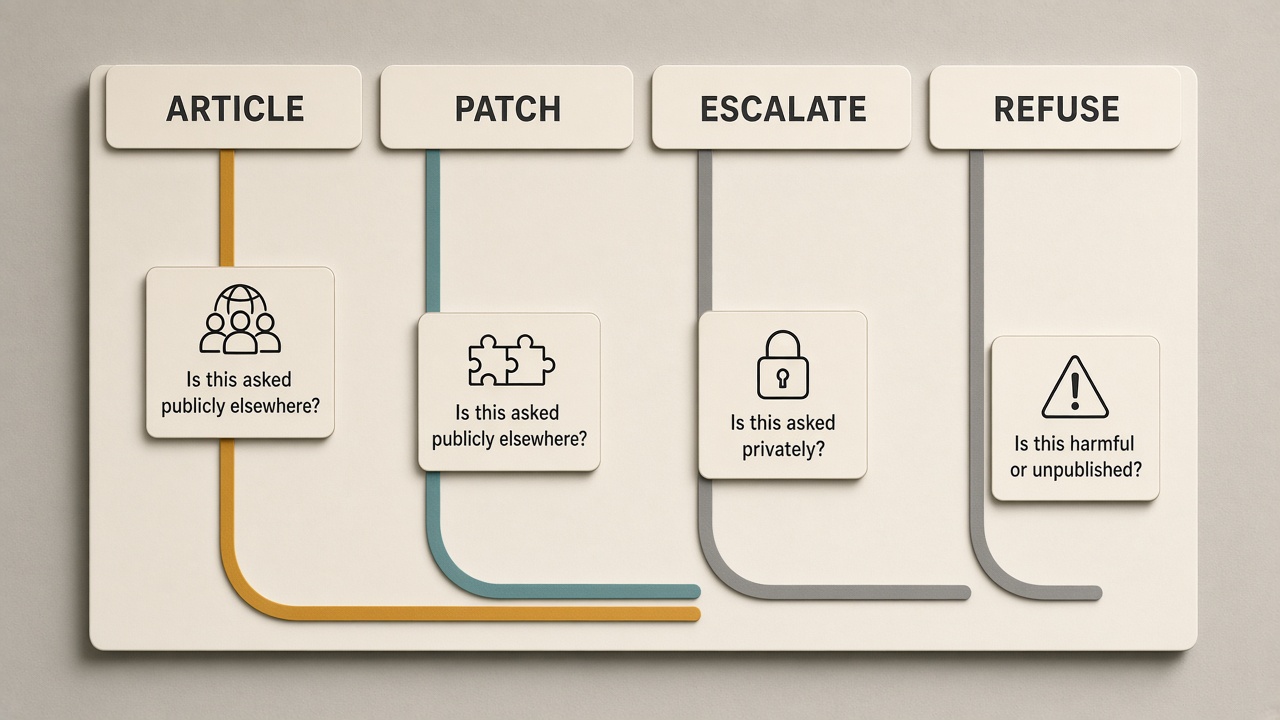
A clustered intent is still not a publish decision. Frequency, impact, and a clean scope only show the miss is real. The weekly sort then fails closed: one outcome, and only one, for that intent.
This is the publish gate, not a tool tour. Every clustered intent lands in new article, section patch, human handoff, or refuse. Rows that do not clear the gate never enter a brief. Not every unanswered row should become content.
Leaving a real in-scope gap open has a cost: 63% of customers will switch brands after a single poor support experience, and 81% try to solve the problem themselves before contacting support. That justifies closing questions you can cite. It does not justify publishing private, unpublished, or off-scope asks. A closed AI-search gap can take two to six weeks to show up in answers, so do not judge the gate on same-day AI visibility. The intent is closed when that same question stops coming back unanswered.
Fail closed — One clustered intent gets one outcome: a new citable page, a section patch, a human handoff, or a refusal. Only the first two are content work, and only when the ask is public, in scope, and not already answered.
Write the brief only after a new URL is earned
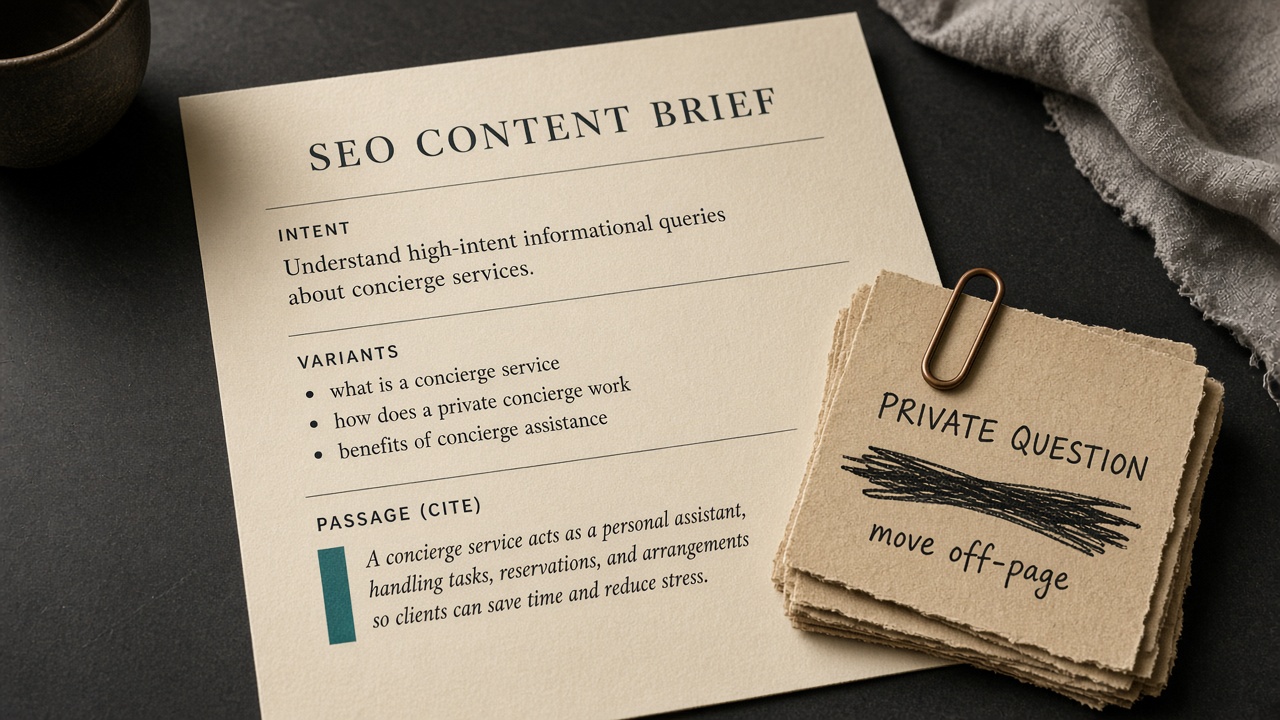
Once the weekly sort has already named a new URL, that is the only moment an SEO content brief should leave the queue. It holds one clustered intent, the phrasing variants that belong to it, the reader job, the citable claim the page must make, and an explicit list of what stays unpublished — private detail, unpublished policy, and anything already answered under different wording.
Draft it from resolved cases and pages the concierge already cites, not a blank page. AI-assisted documentation built that way is associated with about a 25% lift in agent efficiency. Then work the top unhandled topics first: adding the top 10 typically cuts fallback 30–50% in one cycle. That is content automation of a ranked backlog, not auto-publishing every miss.
Connect the brief to resolution economics only if the concierge can actually answer afterward. Bot-handled turns often cost $0.10–$0.50 against $6–$12 for a human, and at 10,000 conversations a month that gap exceeds $57,000 — only when those turns resolve. Treat systematic coverage as the outcome to aim for, not a promise: teams that close gaps have reported 93% first-contact resolution, ticket deflection up to 69%, and AI-assisted coverage up to 90% versus the 10–12% documented by hand. The finished brief is the handoff to the next cited page, not a second setup guide for the concierge.
Brief last — A brief is written only for a repeated public intent the gate has already sent to a new URL, drafted from real resolutions, and sequenced so the top gaps close first.
Monthly cost at 10k chats
A gap closes only when the concierge cites the page
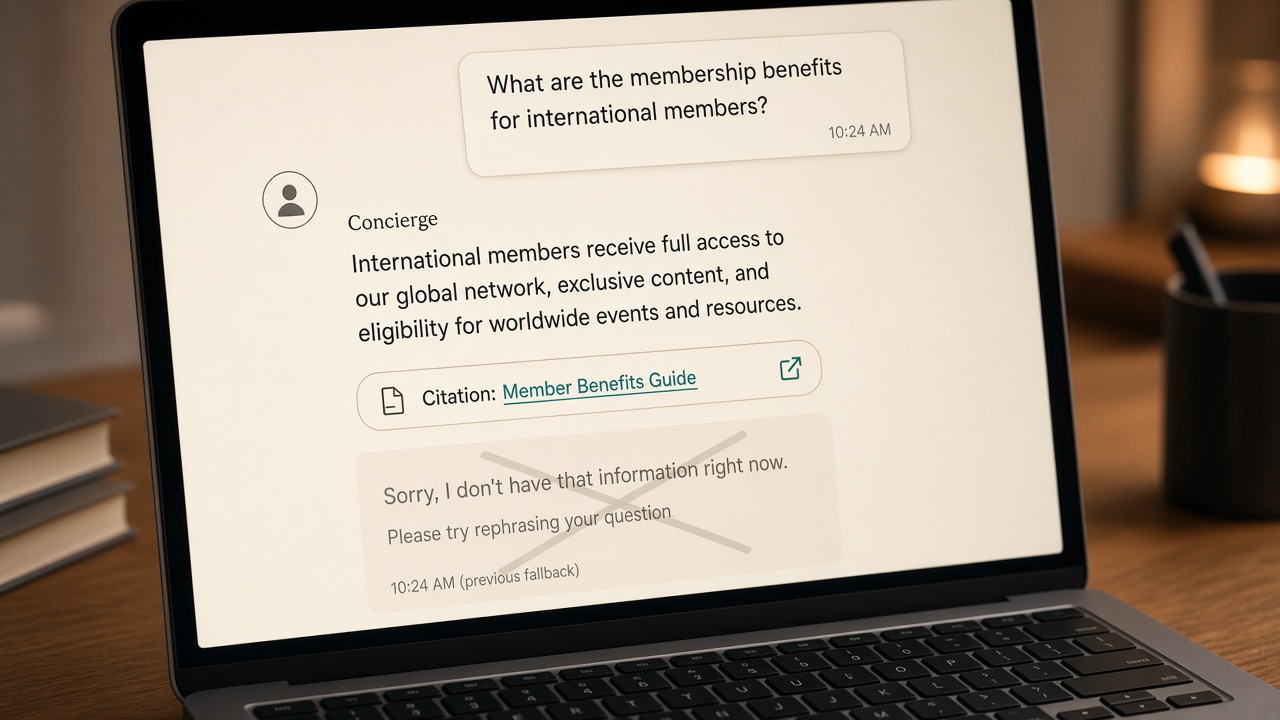
A brief and a live URL do not close the row. The loop counts as a close only after the knowledge base holds the new passage and unanswered volume for that intent falls—not merely because the upstream export already ran.
Run a before-and-after test on the original question and its variants only after the authoritative source is indexed. A chatbot-only duplicate of the same text does not count. Do not mark the row done at publish. It is closed only when that question stops returning as unanswered and the concierge cites the new passage.
Hold anything the site’s article-intake rule will not index. If it is not a citable published section, it stays out of the knowledge base. Conversation-sourced articles are the proof pattern: in a DoorDash-style test, high-traffic escalation clusters fell from 78% in the control group to 43% in treatment after new articles drawn from real conversations. Measure that citation test on your own index first, and give answer engines the lag already built into the gate before you call an external miss a failure.
Closed means cited — A row is done only when the same question stops coming back unanswered and the concierge cites the indexed passage—not when the URL goes live.
Key Takeaways
Run this week’s unanswered export through the cluster-and-gate loop, and publish or patch only the intents the concierge can cite.
Frequently Asked Questions
You Might Also Like
- Concierge What Questions Should an AI Concierge Answer vs Escalate?
- Workflows Programmatic SEO or Autoblogging? Route the Cluster Before You Brief
- Automation Fail-Closed SEO Briefs: The Publish Gate Autoblogging Needs
- Concierge How to Train a Site Assistant on Your Own Articles
- AI Search AI Overview Optimization: How to Structure Pages Google Can Quote