How Often Should You Publish SEO Articles? A Cadence That Holds Quality

How often to publish blog posts for SEO is not a ranking dial. Google has said that adding or removing a lot of content mainly to make a site look fresh will not help rankings, and that producing lots of pages across many topics — or using extensive automation to do it — is a warning sign of search-engine-first content. A fuller calendar does not make a thin page more useful.
What holds up is a rate you can review. For most lean teams that means a small, repeatable output inside a few topic clusters, with calendar time reserved for updates as well as new URLs. Older customer research still shows a volume-to-leads correlation, yet encyclopedic output can also sprawl: HubSpot's own organic traffic later fell sharply after years of very high publishing volume. A multi-month pause can still grow total visits from pages already live, while indexation can improve when a team cuts a pace it cannot brief and edit.
This piece sizes the slot to review hours, locks refresh time before new URLs crowd it out, and treats a failed quality bar as a reason to leave the date empty. Automation, including AI, is fine as a drafting aid. Using it mainly to manipulate rankings is a spam-policy violation, not a cadence strategy.
- Google does not reward a publishing rate, and mass output to look fresh will not help rankings.
- Ship the maximum rate your team can still review at a defined quality bar, often 2–4 substantial posts a month for a lean team.
- Reserve slots for updates; do not let new posts crowd out refreshes past about a 4:1 mix.
- Raise the cadence only after briefs, internal links, and first-pass acceptance stay strong — otherwise hold the date.
- Automation that exists mainly to manipulate rankings violates Google spam policies.
Is Publishing Frequency a Google Ranking Factor?

Publishing frequency is not a Google ranking factor. Adding or removing lots of pages mainly to look fresh will not help rankings, and Google has denied frequency as a direct signal. A survey of 808 marketers still found weekly publishers 2.5 times more likely to report strong results than those publishing monthly or less. Read that as a correlation with consistency and resources, not a dial to turn.
Producing lots of pages across many topics, or using extensive automation to do it, is a warning sign of search-engine-first content. Automation used mainly to manipulate rankings violates spam policies; the quality gate ahead is what decides whether volume holds. HubSpot customer research of 13,500 blogs tied 16 or more posts a month to 4.5 times more leads than 0–4. The same publisher’s blog later fell from 13.5 million to 2.8 million monthly visits after encyclopedic volume and topic sprawl. Sixteen or more posts a month can coincide with leads when a staffed team can review them, and it can still fail. Do not copy the multiplier if you cannot staff the review.
Not a dial — Frequency is not a ranking dial. High volume only lines up with results when a staffed team can still defend every post.
How Often Should You Publish Blog Posts for SEO?

Once a calendar rate is off the ranking-factor list, the operating answer is a floor, not a prize. For lean SEO, aim for a steady two to four substantial posts a month. A 12-month publishing log treats that as the minimum that keeps crawl freshness — a practical freshness floor, not a growth plan.
After about 50 posts, the same log suggests three to eight a month to hold momentum. Stay at the low end unless review capacity is already proven.
Across 77 blogs, a steady six to twenty posts a month had a median organic growth rate of 153%, edging heavy publishers at 21–100 a month (138.6%). Steady beats maximal. Do not treat 6–20 as a target for a solo operator.
One strong post a week is enough once briefs and QA are repeatable. An extra post that has not been reviewed is not an improvement on a smaller defended set. If a week’s draft misses the bar, skip the slot.
The cadence — Ship two to four defended posts a month — or one a week once QA is repeatable — and skip any slot the draft cannot clear.
How Many Blog Posts per Month Does a Small Team Need?

A small team needs only as many posts as its writer hours and reviewer hours can finish at the quality bar. For most lean stacks that is 2–4 a month, not the ranges a staffed content team publishes.
Staffing follows the same limit. One full-time writer plus an editor supports about two posts a week. Move toward four a week only with a 6–8 week approved-brief backlog and a median brief-to-publish under 10 days. With budget and a real review bench, one HubSpot author targets 5–10 mid- and bottom-funnel articles a month — a resourced ceiling, not the default.
Capacity — The monthly slot count is reviewer hours divided by hours per post, not a frequency you hope will rank.
Should a New Site Publish More Often Than an Established One?

That review limit answers whether a new site should publish more often than an established one: only inside a few clusters, and only if review keeps up. HubSpot’s current guidance for a blog under a year is 6–8 posts a month around a few promising clusters; complex research niches should stay at 2–4. Capacity overrides that range. If the reviewer cannot clear the extra slots, do not sprint.
An established site should not match a launch sprint. Older URLs already earn, and new URLs that sprawl outside the cluster dilute them. Clusters change the rate: finish a pillar and a handful of supporting answers, then slow new URLs in that cluster. Search Engine Land’s case is that one to four strong articles per topic beat 50 thin ones. A Userpilot case found deleting nearly 25% of content preceded the site’s highest-trafficked month — a warning against filling clusters, not a deletion how-to.
Cluster first — A new site can publish faster only inside a few clusters the reviewer can still defend; an established site should finish each cluster, then slow new URLs rather than copy a launch sprint.
What Happens If You Stop Publishing for a Few Months?
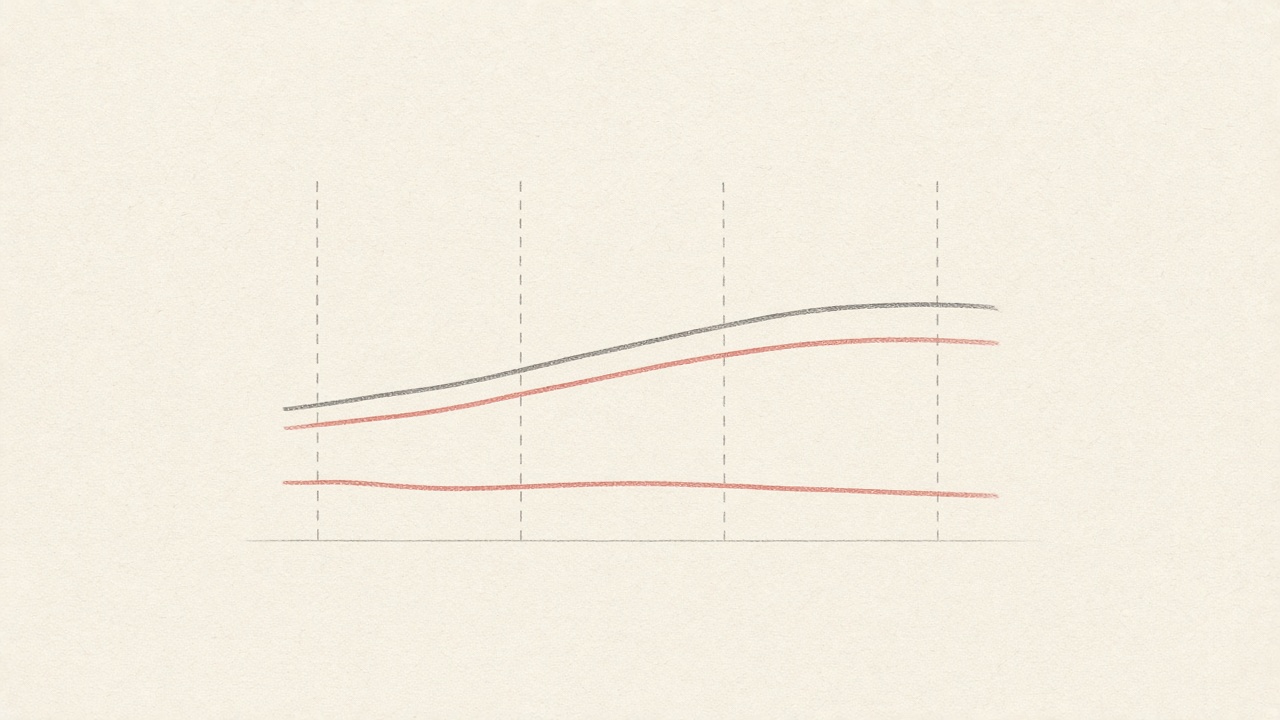
That slower pace raises the obvious fear: a few months without new posts does not automatically erase the library. On one B2B blog, four months with zero new posts still raised average daily visits from 92 to 119, a 29% gain, while organic visits slipped from 846 to 727.
Read both lines. Compounding pages can lift total traffic; organic can soften without new URLs. A pause is survivable. It is not a growth plan, and 2–4 posts a month remains the practical floor once you restart.
There is no universal week-count from first publish to rankings, so do not invent a 90-day promise. Judge the cadence by whether published URLs earn impressions and queries, not by how full the calendar looks.
Survivable, not a plan — A pause can leave total traffic intact while organic softens. Restart at a reviewed 2–4 posts a month, and judge the cadence by impressions on published URLs, not by calendar fullness.
How Many New Posts Versus Refreshes Should the Calendar Hold?

A pause that leaves the library standing is a reminder that the calendar is not only a new-URL machine. Reserve slots for refreshes. At two posts a week, a 1:1 new-to-update mix is a workable lean default. At four a week, 3:1 can work. If new-to-update stays above about 4:1 for two sprints, cut cadence.
The mix matters because the library is the traffic engine. HubSpot writers spent 50–80% of their time updating existing posts, and 76% of monthly blog views came from posts older than a month.
For a lean team with four slots a month, copy two new and two refreshes. If capacity is two, one new and one refresh. A title tweak is not a refresh: the slot still has to clear the same quality gate, with new substance.
Slot rule — Hold calendar slots for refreshes as well as new posts — 1:1 at two a week, 3:1 at four — and cut cadence if new-to-update stays above about 4:1 for two sprints.
When to Slow Publishing Instead of Hiring or Automating Drafts

Those refresh dates only hold if review can still defend them. Slow the calendar when review is failing, not when a benchmark says you are behind. Hiring or automating more drafts before the accept rate is stable multiplies rewrites.
Across three SaaS startups with DA 12–28, cutting from eight posts a week to four and tightening briefs raised 14-day p90 indexation from 62% to 83% over eight weeks and cut rewrites 31%.
Hold or cut the slot unless first-pass acceptance stays consistently strong, internal links are cleared, and an approved-brief backlog already exists. Otherwise leave the date empty. What a draft tool may do belongs in the content-automation and AI-article-writer articles; the call here is fewer slots, not more machines.
Hold the date — Slow cadence when review fails. Extra drafts before a stable accept rate only multiply rewrites, so an undefended date should stay empty.
What Quality Gate Blocks a Scheduled Publish — and Do AI Overviews Speed It Up?

The gate is fail-closed: miss the bar and the date stays empty. A scheduled slot is not a promise to the CMS.
Block the page when it exists mainly to look fresh, covers a topic this site does not actually help with, or was generated at scale to chase rankings. Google treats lots of content across many topics, and extensive automation used that way, as search-engine-first. Using automation, including AI, mainly to manipulate rankings violates spam policies.
Before the button, the opening should answer the query, the piece should be specific to this site’s experience, sources should be real, internal links should be placed, and a human reviewer should have accepted it on the first or second pass. The fuller publish contract is in the automated-blog quality-guardrails article.
AI Overviews are not a reason to publish faster, and there is no measured Overview frequency formula to follow. Finish fewer complete cluster answers rather than shipping more partial URLs.
Fail closed — Leave the date empty unless a reviewer can defend the page; AI Overviews are a reason to finish fewer answers, not to publish faster.
Key Takeaways
Set next month’s slots from reviewer hours and a fail-closed quality gate, then ask Flowcrews to help you hold that cadence without filling empty dates.
Frequently Asked Questions
You Might Also Like
- Workflows Content Refresh Strategy: How to Update Pages So Rankings Do Not Decay
- Workflows SEO Content Calendar: How Lean Teams Schedule Briefs Without a Bottleneck
- Strategy How to Scale Content Marketing Without Diluting Quality
- Automation Automated Blog Posts: Quality Guardrails That Prevent Thin Content
- Automation Fail-Closed SEO Briefs: The Publish Gate Autoblogging Needs