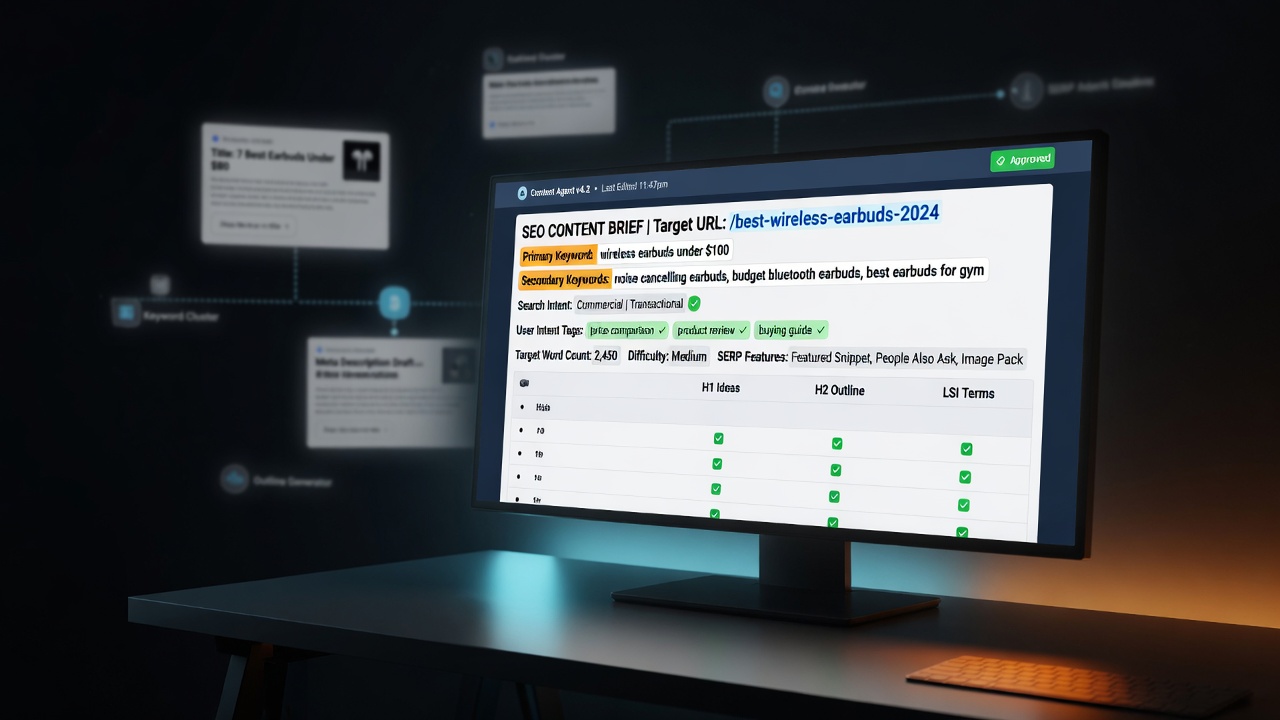
Best Generative Engine Optimization Tools for AI Autoblogging in 2026

Generative engine optimization is no longer a side experiment next to traditional SEO. Readers and buyers increasingly get answers inside ChatGPT, Perplexity, Gemini, Claude, and AI Overviews—often without clicking through. That shift makes citation intelligence the raw material of modern visibility: who gets named, how brands are framed, and which sources AI systems trust enough to reuse.
For teams running AI autoblogging, a ranked list of “GEO tools” is not enough. Monitoring share-of-answer without a path into briefs, structured data, refreshes, and on-page assistance leaves the same gap that already hurts classic content ops—insight that never reaches the publish button. Over 60% of searches now conclude without a referral to an external website, AI citations can swing 40–60% month-over-month, and AI-generated citations already influence up to 32% of sales-qualified leads at some enterprises. Gartner’s projected 25% decline in traditional search volume only sharpens the point: you need systems that both see how engines answer and write authority back into your content stack.
This guide focuses on that closed loop. We treat GEO tooling as infrastructure for AI-assisted publishing—citation and query-fanout data that feeds outlines, schema and entity automation that machines can parse, refresh workflows that fight volatility, and in-article AI that helps readers navigate and convert. Whether you pair monitors with a platform like Flows or evaluate fuller AEO suites, the standard is the same: tools should make every publish cycle smarter about how generative engines actually cite, not merely prettier dashboards of rankings you no longer fully control.
The Autoblogging Blind Spot: Rankings Without Answer-Engine Feedback
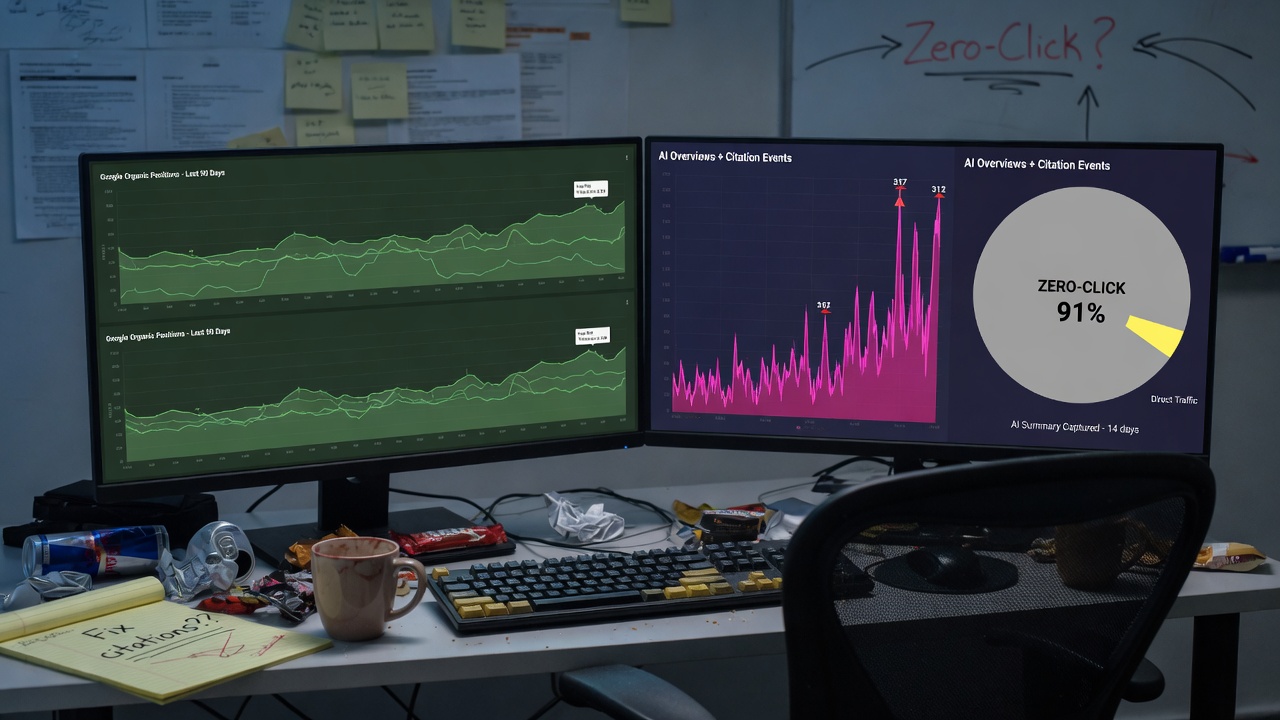
The right GEO tools should make the difference between pages that merely rank and pages that get cited when an AI engine answers the query. That gap is the autoblogging blind spot most teams still ignore.
AI answer surfaces increasingly resolve intent without a click. Over 60% of searches now conclude without a referral to an external website because generative engines deliver the answer on the spot. Autoblogs that only chase blue-link SEO are optimizing for a shrinking slice of demand while the high-intent path—being the source an engine actually cites—goes unmeasured and unrewarded.
Volatility makes the problem worse. AI citations can fluctuate by 40–60% month-over-month—far harder swings than classic organic rankings. One-shot bulk generation looks efficient until last month’s “winning” articles quietly vanish from answer sets. At the same time, Gartner predicts a 25% decline in traditional search volume as users shift toward direct AI answers. For automated publishers that changes the definition of success: share of answer and high-intent AI referrals now matter as much as, or more than, raw session volume.
The root issue is not a shortage of content generators. It is missing instrumentation. Without continuous citation and query-fanout feedback, autoblogging systems keep producing pages for an audience that is increasingly satisfied inside the answer engine. The fix is not more volume; it is a closed loop that turns volatile AI visibility data into briefs, schema, entity signals, and refreshes so published content earns and keeps its place in the answer.
Missing instrumentation, not missing content tools — Autoblogs fail at AI visibility when they chase rankings alone; over 60% of searches end without a click, citations swing 40–60% monthly, and search volume is projected to drop 25%, so the real gap is feedback that turns answer-engine data into the next publish cycle.
Closed-Loop GEO: The Feedback Layer Autoblogging Actually Needs
That closed loop is the real differentiator. Closed-loop GEO is not another dashboard of vanity AI-rank scores. It is an operating system in which live citation and entity data automatically triggers new briefs, content refreshes, schema updates, and changes to the prompts that power in-article assistants. When share of answer slips or a competitor suddenly owns a query cluster, the system does not wait for a quarterly audit—it feeds the signal straight back into the publishing pipeline so the next draft, the next structured-data job, and the next assistant grounding already reflect the shift.
The architectural move underneath is from passive tracking to read/write tooling. Older monitors simply reported where a brand appeared. Modern GEO platforms reverse-engineer how answer engines parse a site—its entities, source stacks, freshness signals, and authority graph—then help rewrite those same signals so the brand becomes easier for the model to cite. In short, modern tools don’t just track rankings; they analyze how AI agents “read” your site to help you “write” the source code of brand authority. That read/write capability is what turns raw visibility data into durable answer-engine presence rather than a one-time snapshot.
What the loop actually ingests
A useful closed loop starts with a precise set of inputs that describe how AI systems currently see the brand and its competitors:
- Share-of-answer across ChatGPT, Perplexity, Gemini, and AI Overviews
- Cited competitors and the exact passages or URLs they supply
- Query fanout—the related intents the engine expands from a single user question
- Sentiment and framing of the brand inside generated answers
- Entity coverage and gaps relative to the knowledge graph the model prefers
- Freshness decay on pages that once earned citations but are aging out
What the loop must produce
Those inputs only matter if they leave the monitoring layer and become concrete publishing instructions. The outputs that close the loop for autoblogging look like this:
- Outline constraints and must-include entities that force the next brief to match what engines currently reward
- Source stacks—primary research, Wikidata-aligned facts, and third-party mentions the model already trusts
- FAQ blocks and answer-ready passages shaped for extraction
- Structured-data jobs that keep schema, sameAs links, and review markup current
- Grounding updates for any in-article AI chat so the assistant speaks from the same authority signals the public engines see
When inputs and outputs stay connected, every publish cycle becomes a response to real citation volatility instead of another batch of pages hoping to rank. The tools worth evaluating are the ones that make this hand-off automatic rather than leaving the analyst to copy numbers into a separate content calendar.
Closed-loop GEO — treats citation, entity, and fanout data as live triggers for briefs, schema, refreshes, and assistant grounding, not as static rank reports, so autoblogging systems keep earning share of answer instead of only producing more pages.Listen, Diagnose, Rewrite, Publish: Mapping GEO Tools to the Autoblogging Pipeline

Those automatic hand-offs only work when each tool owns a clear job. Rank GEO products by beauty-contest scorecards and you end up with overlapping dashboards and the same manual copy-paste problem the loop was meant to kill. Organize instead by the four stages every autoblogging system actually runs—listen, diagnose, rewrite, publish—and the shortlist becomes obvious.
Listen: multi-engine citation capture for topic selection
The listen layer surfaces what answer engines are actually saying right now. Front-end citation capture across ChatGPT, Claude, Perplexity, Gemini, and AI Overviews tells an autoblog which entities, questions, and competitor pages are winning share of answer this week. Profound, for example, captures real user-facing data from front-end interactions across 10+ AI engines including ChatGPT, Claude, Perplexity, Google AI Overviews, Gemini and others. That raw visibility feed becomes the input for topic selection: pages the engines already cite get refreshed first; gaps become new brief candidates.
Diagnose and rewrite: from monitors to optimization depth
Pure monitors (affordable citation trackers) stop at the report. They are excellent early sensors—cheap, fast, good enough to prove volatility—but they leave the analyst to turn numbers into outlines. Optimization-first and hybrid suites (the Semrush- and Ahrefs-style platforms now shipping AI-visibility modules) add the diagnose step: query fanout, entity coverage gaps, sentiment drift, and freshness decay scored against your existing content library. The rewrite layer then turns those scores into constrained briefs, FAQ blocks, and schema jobs the autoblogging engine can consume without human re-keying.
Agent workflows sit one level deeper. Profound Agents are autonomous, multi-step systems that handle the full AEO workflow—from research to content generation to optimization and publishing—using modular nodes. Treat them as optional automation depth, not mandatory enterprise bloat. Teams already inside a classic SEO stack can keep the hybrid suite for diagnosis and let a lighter agent only own the publish hand-off; pure-play autoblogging operations can lean on the full agent chain once the listen signal is trusted.
The practical difference shows up when you line the two approaches side by side:
On one side sits a pure monitor that emails a weekly citation delta; on the other sits a mapped pipeline where the same delta automatically opens a brief, updates entity schema, and pushes a grounded assistant prompt into the live article. The slider is not about price—it is about whether the tool stops at observation or continues into the write and publish stages your autoblog already owns.
Publish: integration surfaces that close the loop
Whatever stack you choose, the decisive surfaces are the ones that let an autoblogging platform ingest the signal without a spreadsheet middleman: CSV/JSON exports, documented APIs, CMS webhooks, and brief-ready gap reports that already contain outline constraints, source stacks, and schema payloads. When those connectors exist, every listen event can trigger a diagnose job, every diagnose job can spawn a rewrite, and every rewrite can land as a published refresh or a new in-article assistant grounding—all inside the same continuous cycle.
Pipeline mapping over rankings — Choose GEO tools by the job they own (listen → diagnose → rewrite → publish) and by the exports, APIs, and CMS hooks that let an autoblog consume their output automatically; multi-engine front-end capture and optional agent depth then become modular upgrades instead of all-or-nothing purchases.Turning Citation Gaps into Briefs That Autoblogging Can Actually Run
Citation gaps can trigger a rewrite brief that already knows which headings to force, which questions to answer, and which passages the engines are quoting today. That hand-off is the difference between a GEO dashboard you glance at and a GEO system that changes the next generation run.
Citation losers and query-fanout clusters should land inside the brief template as structural instructions, not as a separate report. When an engine stops citing your page on a high-intent prompt cluster, the gap report needs to emit concrete outline constraints: the missing H2s that competitors own, the FAQ blocks that map to the fanout questions AI actually expands, and explicit evidence requirements (primary sources, original data points, or named entity definitions the model expects). Those become fields the autoblogging publisher can enforce—title variants, section order, required citations—rather than soft suggestions a human has to re-type.
Score refresh candidates on quoted passages, not keyword difficulty alone
Classic difficulty scores still matter for discovery, but they are a weak priority signal for answer-engine share. The stronger score ranks competitor passages the models are already lifting: the exact paragraphs, lists, and definitions that appear inside ChatGPT, Perplexity, Gemini, or AI Overview answers. A refresh candidate should rise when your entity coverage is thin on those quoted spans, when freshness flags show your last useful update is stale relative to newly cited URLs, or when prompt variants reveal the engine now prefers a different framing. That scoring logic keeps the rewrite queue focused on reclaiming citations instead of polishing pages that already rank but never get named.
Must-have handoffs into Flows-style publishers
For the loop to stay closed, the diagnose layer has to ship machine-readable payloads a publisher can ingest without a spreadsheet middleman. At minimum that means CSV or API deliveries of missing entities and their preferred labels, the cited competitor URLs the engines currently prefer, the prompt variants that triggered the gap, and content freshness flags tied to each URL or section. Brief-ready packages should also carry outline constraints, source stacks, and schema payloads so a Flows-style autoblogging run can generate, refresh, and publish in one pass—including the grounding material an in-article assistant will later use. If the tool only offers screenshots or PDF scorecards, it is monitoring theater.
Vanity dashboards that never alter the next generation run are the failure mode to avoid. Share-of-answer charts are useful only when a drop automatically queues a constrained brief, a schema job, or a targeted refresh. Anything that stops at awareness leaves autoblogging stuck producing volume while answer engines keep citing someone else.
Actionable hand-offs beat pretty charts — Citation losers and fanout questions must arrive as outline constraints, quoted-passage priorities, missing entities, cited URLs, prompt variants, and freshness flags that a publisher can run without manual re-entry; otherwise GEO stays a report, not a loop.Schema, Entities, and Machine-Readable Layers Autoblogs Can Maintain

Those queued schema jobs only matter if the markup stays accurate as the site grows. Autoblogging multiplies pages faster than any manual audit can keep up, so the durable pattern is to treat schema automation as generate-validate-maintain infrastructure rather than a one-off inject. Schema automation is the process of automatically generating, validating, and maintaining structured data across your digital ecosystem—exactly the loop programmatic and AI-written templates need so every new URL remains machine-readable the moment it goes live.
On-page GEO platforms make that loop practical at template scale. AthenaHQ focuses on automated on-page GEO, applying schema markup and entity tagging to improve machine readability across large content sets. Instead of hand-coding JSON-LD per article, the system binds entity IDs, article types, FAQs, and authorship signals to the same brief payloads that already drive outlines and source stacks. The result is consistent entity coverage even when the writing model changes or the CMS regenerates a cluster overnight.
Enterprise freshness patterns autoblogs can scale down
Large catalogs already prove the pattern works under pressure. Walmart uses automated structured data generation with the help of generative AI for its expansive product catalog so attributes stay updated in near real time. Autoblogging teams do not need that full commerce stack; they need the same principle in lighter form—pipelines that re-emit schema whenever a refresh job changes a claim, a statistic, or a product mention, then validate the output before publish. Freshness decay on the structured layer is as damaging as stale prose: answer engines and retrieval systems both lose trust when attributes lag the visible copy.
A low-cost companion step is publishing an llms.txt file. It is currently adopted by only about 10% of domains, which makes it an easy future-proofing move for AI crawlers that choose to respect it. Treat it as a polite map, not a ranking lever. It will never substitute for citable, entity-clear content; engines still reward passages they can ground and pages whose entities resolve cleanly in the broader knowledge graph.
The same structured signals serve two audiences at once. Externally they help answer engines parse who you are, what you claim, and which sources back those claims. Internally they ground site AI chat—the assistant rendered inside the article—so retrieval stays on-brand, entity-consistent, and monetization-safe. When schema, entity tags, and refresh jobs stay in sync, the closed loop extends from citation data all the way to the reader’s in-page conversation.
Schema automation — Treat generate-validate-maintain pipelines and entity tagging as core autoblog infrastructure so every page stays machine-readable for both external answer engines and internal AI chat; llms.txt is useful future-proofing, not a substitute for citable content.From AI Citations to In-Article Assistants—and the Revenue They Drive
That same conversation layer is where citations stop being vanity signals and start showing up in the pipeline. AI-generated citations influence up to 32% of sales-qualified leads at some enterprises, and the conversion rate of AI-referred visitors can be 4.4× higher than traditional search traffic. Those figures turn GEO from a monitoring expense into infrastructure that protects and grows revenue: every citation win or loss now has a clear path to leads and closed deals.
The practical bridge is the data already flowing through the closed loop. GEO tools surface the FAQs, entities, and source stacks that answer engines actually quote. The same payloads ground the in-article assistant so retrieval stays entity-consistent and on-brand. When a reader asks a follow-up inside the piece, the chat draws from the freshly refreshed evidence rather than generic model knowledge—raising helpfulness, extending time-on-page, and keeping monetization offers contextually safe.
A simple metric set that keeps the loop honest
Four measures are enough to connect citation work to business outcomes without drowning the team in dashboards:
- Share-of-answer across the engines that matter for your category
- Citation sentiment—whether the model frames your brand positively, neutrally, or with caveats
- Assistant deflection and engagement—questions resolved in-page, chat depth, and bounce reduction
- Assisted conversions—leads or purchases touched by AI-referred sessions or the in-article chat
Monetization is simply the third beneficiary of the identical feedback loop that already serves Google and generative engines. Citation gaps trigger the next brief; entity and FAQ refreshes improve both external visibility and assistant grounding; higher-quality conversations convert at a premium. Once those links are instrumented, GEO spend stops looking like an experimental line item and starts reading as revenue infrastructure that scales with every autoblogging cycle.
Revenue closes the loop — AI citations already drive up to 32% of SQLs and 4.4× higher conversion rates; grounding the in-article assistant with the same GEO FAQs and entities turns visibility into measurable leads and keeps monetization on-brand.Stack Blueprints: Match GEO Tools to Autoblogging Volume
That infrastructure only pays off when the tools you adopt match the volume you actually publish and the people (or agents) who will act on every alert. Buying every monitor on the market creates noise; buying the next closed-loop capability you cannot run by hand creates compounding share of answer. The practical way to choose is by scale.
Three stacks that grow with output
Starter — listen first. Begin with lightweight citation monitors and free graders. You need multi-engine visibility, simple share-of-answer tracking, and clean CSV or spreadsheet exports you can drop into a brief template. Pricing posture sits at free or low monthly cost. The goal is instrumentation, not automation: surface who is cited, which entities are missing, and which prompts swing hardest so your next autoblogging cycle is not flying blind.
Growth — close the rewrite loop. Layer a monitor-plus-optimize suite that turns gaps into brief-ready outlines, FAQ blocks, and schema jobs, then pushes those payloads through CMS hooks or API into your publisher. Look for engines covered, export quality that already resembles an editorial brief, and entity tagging you do not have to rebuild by hand. Mid-tier pricing is normal here; you are paying to remove copy-paste between diagnosis and draft.
Scale — agents and hybrids. At high volume, hybrid platforms and agent workflows that run research-to-publish across engines become the efficiency play. Enterprise tiers buy breadth (full front-end capture, continuous refresh queues, grounded assistant updates) and the operational surface area to keep schema, entities, and source stacks current without a dedicated GEO ops team living in dashboards.
Selection criteria that actually matter
Score every option on the same short list: engines covered, export and API quality, whether outputs arrive brief-ready, depth of schema and entity automation, CMS or workflow fit, and—most overlooked—who on your team will act on alerts every week. A beautiful monitor that nobody opens is just another vanity report. Prefer the tool that hands the next writer (human or agent) a constrained outline, missing entities, and a freshness flag over one that only charts citations.
Resist stacking overlapping monitors. Once you can already see citation losers and fanout questions, the next dollar should buy the loop step you still perform manually—brief generation, schema maintenance, CMS refresh, or assistant grounding—not a second dashboard that tells you the same story.
A cadence that keeps the loop honest
Tools only close the loop when someone runs a predictable rhythm against them. Use this lightweight operating cadence so volatility becomes fuel instead of noise:
When the stack, the criteria, and the cadence line up, every autoblogging cycle feeds the next one. Citation data becomes briefs, briefs become fresher machine-readable pages, pages earn durable share of answer, and in-article assistants convert the attention that never needed a click. That is the full loop—and the only GEO investment that scales with the content you already plan to publish.
Buy the next loop step, not another monitor — match tools to volume (starter listen → growth optimize + CMS hooks → scale agents/hybrids), insist on brief-ready exports and weekly owners, and run a simple weekly–biweekly–monthly cadence so GEO spend compounds as revenue infrastructure.
Key Takeaways
Audit your current autoblogging stack against the closed loop, then add the one GEO capability—brief export, schema automation, or assistant grounding—that you still cannot run without manual effort.
Frequently Asked Questions
GEO is the practice of earning mentions, citations, and favorable framing inside AI answer engines—ChatGPT, Perplexity, Gemini, AI Overviews, and similar systems—by strengthening entity clarity, source authority, structured data, and content that models can reuse. It complements classic SEO rather than replacing technical and content fundamentals.
Rank trackers miss how generative engines assemble answers and which sources they cite. GEO tools surface share-of-answer, citation volatility, and content gaps so briefs, refreshes, and schema work target the systems readers actually use—critical when over 60% of searches end without a site visit and citations can move 40–60% month-over-month.
Prioritize multi-engine citation tracking, gap analysis that feeds writing briefs, schema and entity automation, freshness or refresh workflows, and integrations into CMS or autoblogging pipelines. Read/write designs that help you improve how AI agents interpret your site beat dashboards that only report visibility after the fact.
Schema automation generates, validates, and maintains structured data so machines can reliably parse entities, products, and claims. That machine readability supports both search and generative engines; enterprise examples include large catalogs kept current with generative assistance so attributes stay accurate in near real time.
Yes when you can earn and retain citations. AI-generated citations influence up to 32% of sales-qualified leads at some enterprises, and AI-referred visitors can convert at 4.4x the rate of traditional search traffic—making citation quality and entity trust high-leverage, not vanity metrics.
llms.txt is still early—adopted by only about 10% of domains—but it is a low-cost future-proofing signal for AI crawlers alongside strong schema, clear entities, and authoritative source presence. Treat it as a complement to, not a substitute for, citation-informed content and technical clarity.
You Might Also Like