SEO Strategies
Top SEO Agents Compared in 2026

In 2026, the distinction between assistive AI and autonomous SEO agents has become the defining factor for digital growth. We have officially moved past the era where AI simply helps you write a blog post; today, the most effective teams are deploying agents that handle the heavy lifting of research, strategy, and even the final click of the 'publish' button. These agents don't just wait for your prompts—they monitor the landscape, spot opportunities, and execute workflows while you sleep.
The landscape is crowded, but the winners are separated by their automation depth. While some tools remain stuck in the 'assistant' phase, providing data for humans to interpret, the new breed of SEO agents manages the entire six-stage pipeline: research, strategy, content creation, optimization, publishing, and performance tracking. This shift isn't just about saving time; it's about the speed of execution in a market where search engines and AI models like ChatGPT and Perplexity update their indexes in real-time.
Choosing the right agent requires looking under the hood at how they handle AI visibility (GEO) and whether they can truly operate without constant oversight. Furthermore, as search becomes more interactive, the best agents are those that help you engage readers once they land on your page. In this guide, we compare the top-performing agents of the year to help you decide which one can best scale your organic presence. Let's start by breaking down the core capabilities that separate a simple tool from a true autonomous agent.
TL;DR
- 2026 marks the transition from manual AI prompting to autonomous agents that manage the full SEO lifecycle independently.
- Top-tier agents now cover all six pipeline stages, including automated publishing and real-time performance tracking.
- Modern SEO requires a focus on Generative Engine Optimization (GEO) to ensure visibility in AI chatbots and traditional search.
- The most effective agents integrate reader engagement tools, such as AI chat, to bridge the gap between traffic and conversion.
Anatomy of a Modern SEO Agent: The 2026 Standard
To understand the current landscape, we have to look past simple keyword research. A true agent doesn't just give you data; it executes on it. In 2026, the industry has shifted from "assistive" software—where you do the heavy lifting—to fully autonomous systems that handle 70% to 90% of the entire SEO workflow. These agents operate as digital employees, managing the minutiae so you can focus on high-level growth.
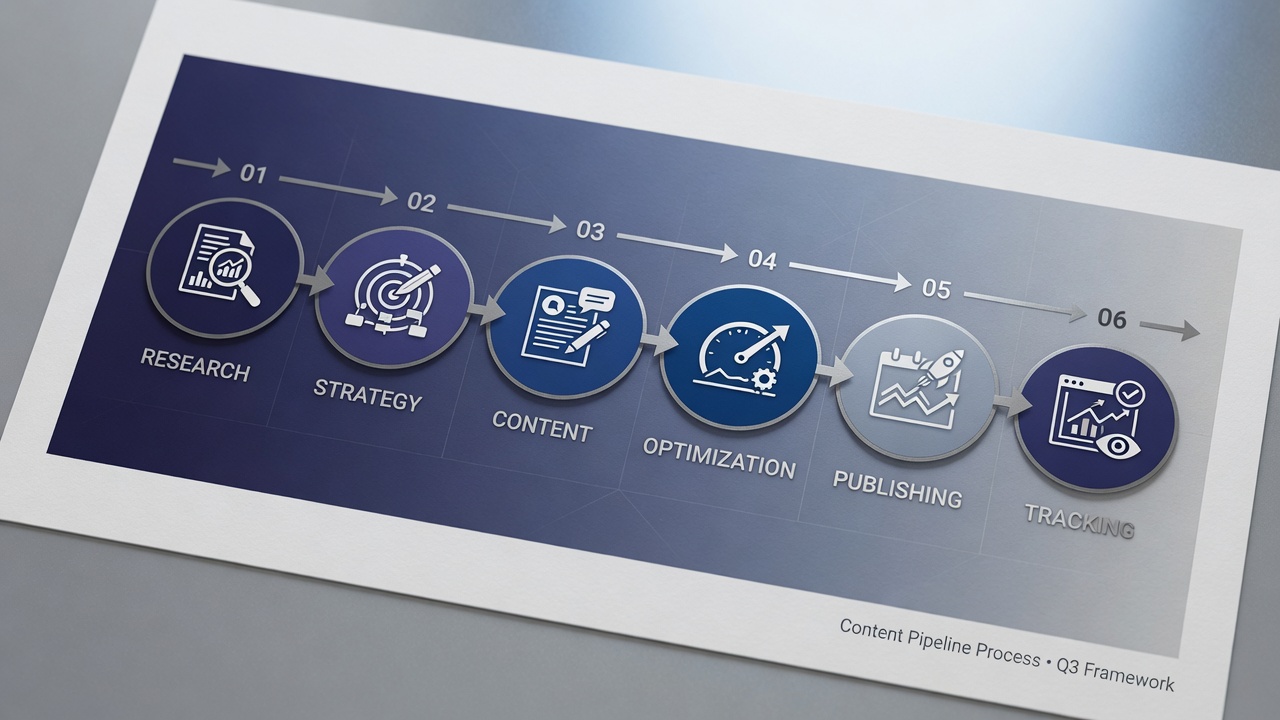
The Six Pillars of Autonomous SEO
- Research: Identifying high-intent opportunities and semantic clusters.
- Strategy: Mapping out a long-term content calendar based on topical authority.
- Content: Producing human-grade, factually accurate drafts.
- Optimization: Ensuring technical and semantic excellence for both humans and LLMs.
- Publishing: Directly pushing content to your CMS without manual intervention.
- Tracking: Monitoring rankings and AI visibility in real-time.
This evolution means your focus shifts from manually writing meta descriptions to overseeing a high-level strategy. Crucially, these agents are no longer just fighting for page one on Google; they are optimizing for AI visibility—ensuring your brand is the primary source cited by generative engines like ChatGPT and Perplexity. By automating the technical and creative hurdles, these tools allow for a scale of production that was previously impossible. Understanding these pillars is just the beginning; knowing how to weigh these capabilities against your specific business goals is where the real strategy begins.
Evaluating the Efficiency: What Makes an Agent Truly Autonomous?
To find the right fit, you have to look past the marketing jargon and see how many links in the SEO chain the agent actually handles. In 2026, the gold standard is an agent that manages the entire lifecycle without you needing to play project manager. For small teams or solo founders, this level of autonomy is the difference between a tool that helps you work and a tool that effectively acts as a full-time hire.
The Six-Stage Pipeline Benchmark
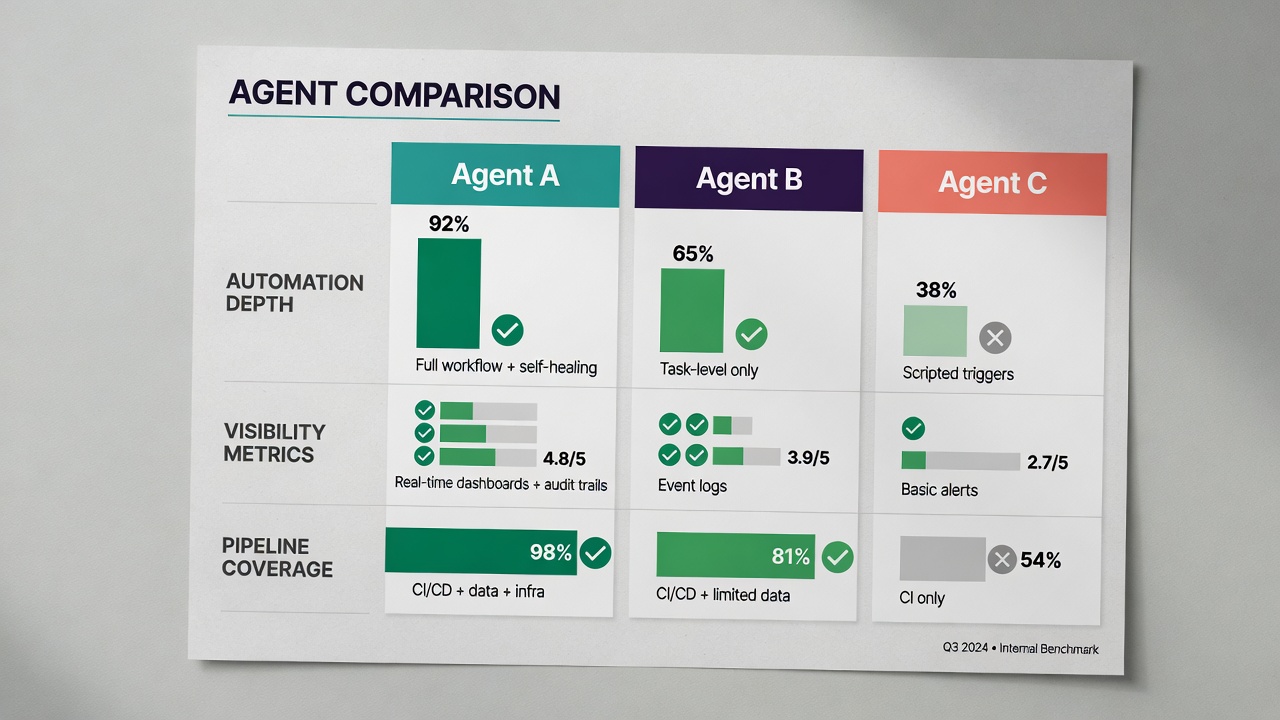
When comparing agents, use these six stages as your checklist. If an agent skips more than two, you aren't looking at an autonomous agent; you're looking at an assistive tool.
- Deep Research: Analyzing search intent and competitor gaps beyond simple keywords.
- Strategic Planning: Building a long-term content calendar that establishes topical authority.
- Content Creation: Generating high-quality, human-like copy that aligns with brand voice.
- Technical Optimization: Handling on-page elements and, crucially, AI visibility for generative engines.
- Direct Publishing: Pushing content straight to your CMS (like WordPress or Shopify) without manual copy-pasting.
- Performance Tracking: Monitoring rankings and automatically suggesting updates based on real-time data.
While legacy platforms like Semrush and Surfer SEO remain powerful for data, they often require a human to manually move through at least half of these stages. In contrast, emerging autonomous agents like NoimosAI or Frase are designed to bridge these gaps, offering a feedback loop that updates content as search algorithms—and AI models like ChatGPT—evolve. This shift toward Generative Engine Optimization (GEO) ensures your content isn't just found on Google, but cited as a primary source by AI assistants. Navigating these options requires a closer look at who currently leads the pack in total pipeline coverage.
The 2026 Leaderboard: Mapping Pipeline Coverage Across Top Tools

To understand which agents actually deliver on the promise of high-level automation, we have to look at how many steps of the SEO workflow they actually own. In 2026, Frase has emerged as a clear frontrunner by covering all six stages of the pipeline—from initial keyword research and strategy through to live publishing and post-launch tracking. This end-to-end capability is what defines a true autonomous agent versus a traditional software suite.
Traditional heavyweights like Semrush, Ahrefs, and Surfer SEO remain powerful, but they are increasingly classified as "assistive" rather than "autonomous." While they excel at data-rich research and strategic suggestions, they typically only cover about three of the six stages. In most workflows involving these tools, you still find yourself doing the heavy lifting of drafting, manual publishing, and manually connecting the dots between strategy and execution.
How the Top Contenders Stack Up
- Frase: Leads the market with 6/6 stage automation, handling research, strategy, content generation, optimization, direct CMS publishing, and performance tracking.
- Semrush & Ahrefs: Strong in research, strategy, and tracking (3/6 stages) but require significant human intervention for content creation and publishing.
- Surfer SEO: Excels in research, strategy, and on-page optimization (3/6 stages) but lacks autonomous publishing and closed-loop tracking.
- NoimosAI & Mega’s SEO Agent: Emerging autonomous players that focus on full workflows without constant human prompting.
The distinction is critical for small teams or agencies looking to scale. An autonomous agent like NoimosAI doesn't just wait for your next prompt; it monitors SERP shifts and updates your existing content without being asked. This self-sufficiency separates a tool you "use" from an agent that "works" for you, ensuring your site stays relevant in both Google and AI-driven search environments. However, getting the content live is only half the battle; once a reader lands on your page, the next frontier is keeping them there through real-time interaction.
SEO Workflow Stages Covered (out of 6)
Beyond the Publish Button: Engaging Readers with Integrated AI Chat

The final piece of the 2026 SEO puzzle isn't just about being found; it’s about what happens once a visitor arrives. While traditional tools focus on the race to rank, the most advanced autonomous agents now bridge the gap between static text and active engagement. By embedding an AI chat directly into your published articles, you transform a passive reading experience into a two-way dialogue that keeps users on the page longer.
Why Real-Time Interaction is the New SEO Metric
When a reader encounters a complex topic or a specific data point, their natural instinct is to seek clarification. In the past, this meant leaving your site to ask a third-party chatbot. Today, integrated agents solve this by providing instant, context-aware answers based specifically on the article they are currently reading. This keeps the 'authority' within your domain and prevents lead leakage.
- Instant Clarification: Readers can ask for simplified versions of complex paragraphs without navigating away.
- Intent-Driven Navigation: The AI can suggest the next logical article or product based on the user's specific questions.
- Data-Backed Personalization: The chat learns from reader interactions, allowing the agent to refine future content strategies based on what people actually ask.
This creates a seamless workflow where the SEO agent doesn't just stop at the 'publish' button. Once the content is live, the interaction layer takes over, handling reader intent and driving monetization through personalized calls to action. By closing the loop between visibility and interaction, you ensure that your SEO efforts translate directly into a loyal, engaged audience rather than just a spike in a traffic chart.
Key Takeaways
Start automating your content lifecycle and engaging your readers today by exploring what Flows can do for your search strategy.
Frequently asked
An SEO agent is an autonomous AI system designed to handle end-to-end tasks like keyword research, content drafting, and publishing with minimal human intervention.
Standard tools provide data and suggestions for a human to act on, whereas SEO agents execute the work directly within your CMS and tracking platforms.
GEO is the process of optimizing content so it is accurately cited and recommended by AI engines like ChatGPT, Claude, and Perplexity.
Yes, many 2026 agents monitor site health and indexing, automatically suggesting or applying fixes to maintain search visibility.
While agents handle up to 90% of the workload, human editorial review remains essential for brand voice consistency and final strategic alignment.