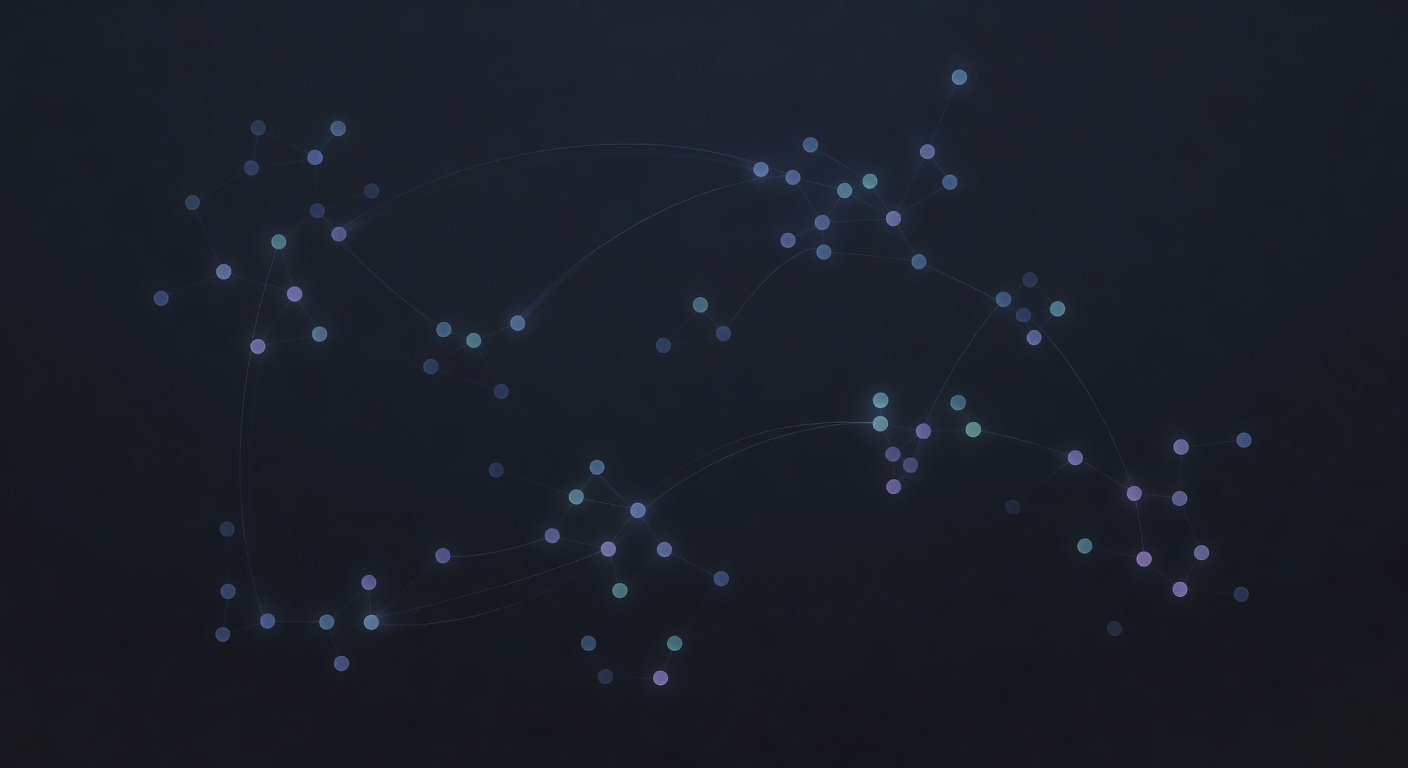
The New Rules of Topical Authority in the Age of AI Search
In 2026, the old SEO playbook is effectively a relic. We no longer just optimize for keywords; we optimize for understanding. As AI-powered search engines move from indexing pages to mapping entire knowledge domains, the concept of topical authority has undergone a radical transformation. It is no longer about how many times you mention a phrase, but how deeply you occupy a semantic space.
In this landscape, building a self-reinforcing network of information is the only way to ensure your brand is the one AI models cite. We are moving beyond the siloed blog post into a world of interconnected content ecosystems, and leveraging tools like Flows is becoming the standard for keeping pace with these shifting algorithms.
The New Logic of Authority: How AI Maps Your Expertise

For years, topical authority was treated like a checklist: write a long post, sprinkle in some keywords, and hope for a few backlinks. But if you look at how Google’s AI Overviews or Perplexity synthesize information today, that old playbook is falling apart. AI search engines don't just 'read' your page for matches; they place your content into a massive, multidimensional map of entities—real-world people, organizations, and concepts. They aren't looking for the most optimized page; they are looking for the most reliable source.
From Keyword Density to Entity Relationships
Modern AI systems like Gemini and ChatGPT Search evaluate authority through the lens of entity understanding. They analyze how your content connects different ideas within a niche. For example, if you are writing about renewable energy, the AI expects to see deep relationships established between solar efficiency, grid storage, and regulatory frameworks. If your content stays on the surface, it is effectively invisible to the AI's synthesis engine.
This is where depth becomes a competitive moat. Research suggests that shallow content—typically covering fewer than three subtopics—is ignored in roughly 85% of AI responses. To stay relevant, you need to own the entire knowledge domain. Using a platform like Flows helps teams bridge these gaps by identifying and creating the interconnected content needed to build that measurable authority at a pace that keeps up with AI's evolving knowledge graphs.
The Rise of Multi-Platform Validation
It is no longer enough to be an expert in a vacuum. AI search engines now look for external validation across diverse platforms to confirm you are a trusted voice. This 'off-page' authority is weighted differently than it used to be:
- Active discussions and mentions in communities like Reddit or specialized industry forums.
- Professional insights and citations shared on platforms like LinkedIn or via academic papers.
- Consistent presence across news outlets and high-authority publications that verify your entity's standing.
According to the Graphite 2025 study, this type of external validation influences AI citation decisions nearly 2.8 times more than traditional backlinks. It marks a fundamental shift from 'who links to me' to 'who recognizes me as a topical leader.' By using Flows to maintain a high cadence of expert-level content, brands can ensure they have the depth required to earn these high-value citations and remain the primary source for AI-generated answers.
| Metric | Traditional SEO Authority | AI-Era Topical Authority |
|---|---|---|
| Primary Goal | Page-level keyword ranking | Entity-level domain ownership |
| Evaluation Tool | Backlink profiles & density | Knowledge graphs & semantic clusters |
| Content Focus | Isolated pillar pages | Interconnected content ecosystems |
| Success Signal | Click-through rate (CTR) | AI citation & synthesis frequency |
Entity-based depth — AI search favors sources that demonstrate comprehensive subtopic coverage and external validation over those simply chasing keyword-optimized rankings.
Beyond the Pillar: Why AI Prefers Semantic Networks

For years, the gold standard of SEO was the hub-and-spoke model. You wrote one massive pillar page and surrounded it with smaller cluster articles that linked back to the center. It was linear, predictable, and easy for humans to organize. But AI search engines like Perplexity and Google’s AI Overviews don't think in linear paths; they think in webs. They are looking for a semantic network where every piece of content strengthens the context and relationships of everything else on the site.
This shift is fundamental. Instead of just optimizing a single page for a high-volume keyword, you are now tasked with optimizing an entire knowledge domain. If your site covers a topic like 'Sustainable Investing' but fails to address 'ESG reporting standards' or 'carbon credit verification,' the AI perceives a logical gap in your authority. It is no longer about having the best page; it is about having the most complete map of the topic.
Mapping the Gaps Manual Research Misses
Manual keyword research is notoriously limited because it relies on what people are already searching for. However, AI evaluates authority by looking for what *should* be there based on the entities involved. Research from the Graphite white paper indicates that entity mapping—the process of identifying related people, organizations, and concepts—reveals an average of 35% more content gaps than traditional manual research.
Building these complex networks manually is a massive undertaking that traditionally took four to six months to see results. This is where automation becomes a necessity. Using a platform like Flows, teams can condense that timeline into a two-week sprint by identifying these entity relationships and suggesting the exact subtopics needed to achieve 100% domain coverage.
Linking Like a Brain, Not a Directory
In the age of AI, internal linking has evolved from passing 'link juice' to providing a conceptual roadmap. Your internal links should mirror how ideas are connected in real-time. To build a resilient semantic network, consider these structural shifts:
- Prioritize links between entities that share a direct conceptual relationship rather than just linking back to a category page.
- Ensure every subtopic links to multiple related nodes to create a 'mesh' rather than a simple spoke.
- Update internal links dynamically as new content is added to keep the knowledge graph fresh for AI crawlers.
By creating these logical interconnections, you essentially hand-feed the AI the context it needs to cite you as a primary source. When your site behaves like a dynamic semantic network, you move beyond mere rankings and achieve true topical ownership that is difficult for competitors to replicate.
Semantic Connectivity — Modern topical authority requires moving from static clusters to dynamic networks that map every entity relationship in your niche to ensure total domain coverage for AI search engines.
Building Knowledge Ecosystems at Scale: How Automation Redefines Authority

Building topical authority used to be a marathon. In the traditional SEO landscape, you would spend months researching keywords, drafting individual articles, and manually interlinking them, hoping the search environment wouldn't shift before you finished the cluster. However, in the age of AI search, that timeline is no longer viable. AI systems like Perplexity and Google’s AI Overviews map knowledge domains in real-time, meaning your content needs to exist as a dense, interconnected web the moment a topic begins to trend. If you aren't providing a comprehensive answer across all subtopics, the AI will simply look elsewhere for its summary data.
This is where modern automation changes the game. By using Flows, marketing teams are shifting from a linear production model to a dynamic ecosystem approach. What used to take four to six months of manual labor to build a competitive topical cluster can now be accomplished in just two to four weeks. This isn't just about churning out text; it is about constructing a semantic structure that AI models can actually navigate and trust, ensuring your brand remains a primary source in generative results.
The Mechanics of Semantic Connectivity
- Achieving 95% or higher entity optimization to ensure AI models recognize the specific relationships between your subjects and broader industry concepts.
- Automating internal linking structures that average 12 to 18 relevant connections per piece, creating a resilient network that defines clear topical boundaries.
- Using automated mapping to identify and fill the 35% of content gaps typically missed by manual research, ensuring 100% domain coverage.
While speed and scale are critical, topical authority in 2026 isn't a purely automated process. To satisfy increasingly strict E-E-A-T requirements, a hybrid model is essential. Successful strategies typically involve applying human expertise to about 25% of the content. This human touch—focused on high-level oversight, fact-checking, and injecting unique brand perspectives—ensures that the automated foundation remains grounded in real-world authority. This balance is what allows a site to maintain its integrity while scaling at the pace required by modern search engines.
Maintaining a Living Content Network
A static site is essentially invisible to AI models that prioritize freshness and evolving knowledge. To maintain your standing, your network must expand as new subtopics and questions emerge. Modern workflows now support the continuous addition of 8 to 15 new subtopics every month, coupled with bi-monthly updates to existing pages to reflect the latest data. According to recent industry observations, this iterative approach leads to roughly 40% faster visibility gains in AI-driven search results compared to traditional, static SEO methods. By treating your content as a living ecosystem rather than a collection of posts, you create a competitive moat that is difficult for competitors to bridge.
Automated Ecosystems — Transitioning to an automated workflow reduces topical cluster creation from months to weeks, achieving the high semantic connectivity and entity density required for dominant AI search visibility.
Beyond the Page: Signaling Authority to AI Models
AI-powered search engines like Perplexity and Google’s AI Overviews don't just read words; they map complex relationships between ideas. To gain true topical authority, your content must be structured so these systems can easily extract 'entities'—the specific people, places, and concepts that define your niche. This involves more than just clear writing; it requires a technical framework that mirrors how a machine processes and categorizes information in its internal knowledge graph.
Structuring for Machine Extraction
To help AI parse your site, you should use schema markup and entity-based internal linking. This creates a roadmap for crawlers, showing them exactly how one topic relates to another. By using Flows, you can automate this semantic connectivity, ensuring that 95% of your entities are optimized without manual tagging. This structural clarity allows AI to synthesize your content into its generative answers more reliably.
While on-page structure is vital, AI also looks for external validation. It cross-references your claims against other trusted corners of the internet to ensure you aren't just a lone voice in the digital wilderness.
The Power of External Validation
Authority is no longer self-declared; it is externally validated. AI systems prioritize sources that are mentioned across diverse platforms like Reddit, YouTube, and industry publications. In fact, research suggests that external validation from five or more diverse platforms can influence AI citations nearly 2.8 times more than traditional backlinks alone.
- Reddit and Forums: Active discussions about your brand or expertise signal real-world relevance and community trust.
- YouTube: Video content provides a different data format for AI to verify your topical ownership across media types.
- Industry Journals: Citations in niche publications act as peer-reviewed stamps of approval that AI models weight heavily.
| Signal Type | Impact on AI Visibility |
|---|---|
| Proprietary Case Studies | 3x Increase |
| 5+ External Platforms | 2.8x Citation Lift |
| Entity-Based Linking | 95% Optimization Rate |
This ecosystem approach is essential because AI systems crave original data that hasn't been recycled. A Graphite study found that case studies featuring proprietary datasets see a 3x increase in AI visibility compared to recycled information. When you embed original research across your network, you provide the 'proof' that AI models need to cite you as a primary source. Using Flows to maintain a consistent publishing cadence ensures your site stays aligned with the real-time updates of AI knowledge domains.
Beyond structure, the 'who' behind the content matters. AI models identify author credentials and expertise. Embedding detailed bios and verified credentials within your content clusters helps AI verify that the information is coming from a reliable human source, acting as a final seal of approval for systems prioritizing E-E-A-T.
Multi-platform validation — AI authority is built through a combination of machine-readable site structure, proprietary data, and consistent mentions across external platforms like Reddit and YouTube.
Authority Signals Impact on AI Visibility
Beyond Rankings: Tracking Your Authority in the Generative Era

The traditional SEO dashboard is quickly becoming a relic of a simpler time. In the age of generative search, checking your rank for a specific keyword is like checking the weather in a different city—it provides data, but not the kind you can actually use to navigate. As search engines evolve into answer engines, the metrics for success have shifted from isolated positions to overall entity visibility. A study by Graphite highlighted this shift, finding that websites with high topical authority see approximately 57% faster traffic gains than those relying on traditional keyword-centric strategies.
The Rise of Entity Visibility and Citation Share
Success is now measured by how often your brand is synthesized into AI-generated responses. This 'citation share' represents the new gold standard for digital presence. If an AI model like Google’s AI Overviews or Perplexity consistently pulls from your content to answer a user's query, you have achieved a level of authority that a standard blue link cannot match. This requires a move toward 'cluster performance,' where the strength of your entire content network determines your visibility rather than the optimization of a single page.
McKinsey reports suggest that the revenue impact of AI search will be transformative by 2028, underscoring why brands need to align with these discovery patterns today. Using platforms like Flows can help bridge this gap by automating the creation of interconnected content that AI systems find easy to map and cite. By building a dense web of related subtopics, you increase the likelihood that AI models recognize your site as a primary source for an entire knowledge domain.
Iterative Feedback and Semantic Mapping
Maintaining authority isn't a one-time task; it requires iterative feedback loops. By monitoring which parts of your semantic map are being ignored by AI summaries, you can identify content gaps or weak internal links. Flows enables teams to rapidly adjust their strategy, adding new subtopics or refreshing old ones to ensure the semantic relevance score remains high. This constant refinement ensures that your content network grows in lockstep with how AI systems understand and categorize information in real time.
AI Visibility over Rankings — Success is now defined by entity citation frequency and comprehensive cluster coverage, which drives traffic up to 57% faster than traditional keyword targeting.
Key Takeaways
Semantic Networks: Modern SEO requires building deep connections between related topics to prove expertise to AI models.
Entity-Based Optimization: Focus on becoming a recognized entity within your niche rather than just ranking for specific search terms.
AI Citations: The new gold standard for success is being cited directly within generative AI search summaries.
Flows Integration: Use automated workflows to maintain content freshness and ensure all subtopics are covered comprehensively.
Beyond Rankings: Shift your focus from traditional SERP positions to holistic visibility across multiple AI-driven platforms.
Start mapping your semantic network today to secure your place in the next generation of AI search results.
Frequently Asked Questions
It is the measure of how comprehensively a website covers a specific subject area, evaluated by AI through semantic relationships and entity mapping.
They analyze how well your content answers complex queries and whether your site provides a complete ecosystem of information on a topic.
AI models understand intent and context, meaning they look for the underlying meaning and depth of information rather than just matching specific words.
Flows automates the creation and interlinking of content clusters, ensuring your semantic network is logical, comprehensive, and easy for AI to crawl.
You Might Also Like