
AI Agents: The Next Frontier in Automation
The landscape of ai automation is shifting from static scripts to intelligent agents that can think, plan, and execute. While traditional automation follows a rigid if-this-then-that logic, ai agents represent a new era where software understands context and works toward a goal autonomously. At Flows, we see this evolution as the bridge between simple task completion and true digital autonomy. These agents do not just wait for instructions; they analyze ai workflows, identify the best path forward, and adjust their strategy in real-time. Whether it is managing complex schedules or orchestrating cross-departmental projects, these tools are becoming the backbone of modern enterprise productivity.
Beyond Bots: What Makes an AI Agent Truly Intelligent?

For years, automation meant following a strict script. If a button moved or a file format changed, the system often failed. AI agents change that paradigm. They represent the next phase of ai automation, moving beyond software that simply follows instructions to autonomous entities capable of perception and reasoning. Unlike their predecessors, these agents can interpret their surroundings and make choices based on the goals they are assigned.
The Shift from RPA to Autonomous Action
Traditional Robotic Process Automation (RPA) is excellent for repetitive, static tasks like data entry. However, intelligent agents bring a level of cognitive flexibility that RPA lacks. In dynamic environments, an agent uses memory and goal-directed action to navigate obstacles. Instead of needing a pre-defined map for every single step, you give an agent a final destination, and it plans the most efficient route itself based on the context it perceives.
This transformation turns AI from a passive tool into a virtual co-worker. At Flows, we see these agents as the backbone of modern ai workflows. They don't just wait for a prompt; they can execute multi-step tasks across different platforms, learning from past interactions to improve future performance and making real-time adjustments without human intervention. This enables:
- Reasoning: Analyzing complex data to make informed decisions rather than following rigid logic.
- Planning: Breaking down a high-level goal into actionable, sequential steps autonomously.
- Memory: Recalling previous context and interactions to maintain consistency over long-term tasks.
How AI Agents Think, Learn, and Collaborate

Unlike standard software that follows a rigid script, **ai agents** operate with a level of autonomy that makes them feel less like tools and more like virtual co-workers. At Flows, we see this shift as the core of modern **ai automation**, where the system doesn't just wait for instructions but actively reasons through a goal. By perceiving their environment and making real-time decisions, these agents bridge the gap between simple processing and true problem-solving.
Breaking Down the Logic
The secret to this autonomy lies in **chain-of-thought reasoning**. Instead of jumping straight to an output, **intelligent agents** break complex tasks into smaller, logical steps. This internal dialogue allows them to identify potential errors before they happen. By integrating tools and APIs directly into this reasoning process, they can execute actions across different platforms, ensuring that complex **ai workflows** remain reliable even when the environment changes.
Memory and Teamwork
To truly excel, agents utilize memory and reflection mechanisms that allow them to learn from every interaction. They don't just 'forget' after a task is finished; they analyze their own performance, identifying what worked and what didn't to improve future results. Furthermore, the most advanced systems involve multi-agent collaboration, where specialized agents work together—much like a human department—to solve problems that are too big for a single entity. This move from passive tools to active participants is what defines the next generation of digital labor.
The Power of Autonomy — AI agents transform automation by using logical reasoning, self-reflection, and collaborative teamwork to handle complex tasks without constant human oversight.
From Theory to Practice: Real-World Impacts of AI Agents
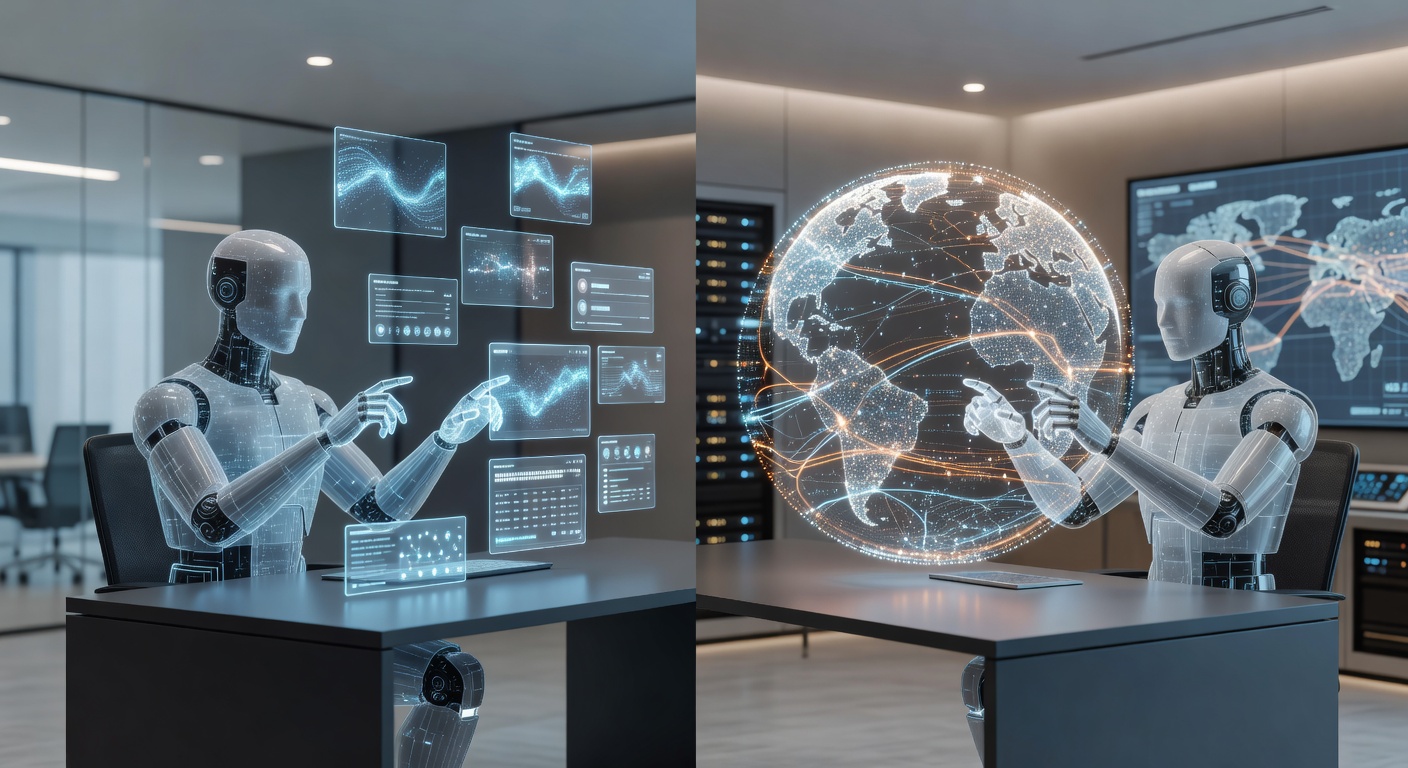
Transitioning from simple automation to autonomous action is where the real value lies for modern enterprises. Today, ai agents are no longer just experimental concepts discussed in research papers; they are being woven into the fabric of global industries to handle complex, multi-step tasks that previously required constant human oversight and manual intervention.
Drastic Reductions in Operating Costs
The shift toward ai automation is already showing up on the balance sheet, as early adopters report staggering results across various departments. In customer service, for instance, the deployment of intelligent agents has led to a 10x reduction in costs by resolving queries instantly without human intervention, allowing teams to focus on more complex client needs.
- Content Creation: Costs have plummeted by as much as 95% as agents handle the heavy lifting of drafting, formatting, and optimization.
- Operational Efficiency: Many firms report a 4x improvement in overall speed by automating repetitive administrative and data cycles.
- Resource Allocation: Companies are redirecting human talent toward high-level strategy rather than manual entry tasks.
Sector-Specific Deployments and Workflows
Different industries utilize ai workflows tailored to their specific hurdles. In logistics, agents manage supply chain disruptions in real-time, while in finance, they monitor millions of transactions for fraud. At Flows, we see these systems acting as virtual co-workers that bridge the gap between disparate software tools, ensuring data moves seamlessly across an entire organization without manual exports.
The Power of Multi-Agent Systems
One of the most exciting trends is the transition toward multi-agent systems. Instead of one agent trying to do everything, businesses deploy a network of specialized intelligent agents that communicate with each other. One agent might gather raw data, another performs the analysis, and a third executes the final action. This collaborative approach ensures higher accuracy and significantly faster delivery than any single-tool setup.
Measurable impact — AI agents are delivering massive ROI, including 10x cost savings in support and 4x efficiency gains, by evolving from simple tools into collaborative multi-agent ecosystems.
AI Agent Cost & Efficiency Gains
The Economic Ripple Effect: Adoption and Productivity Gains

The transition from experimental AI to operational ai agents is moving faster than many anticipated. We are witnessing a shift where businesses no longer ask if they should automate, but how deeply they can integrate intelligent agents into their core operations. This isn't just about replacing simple tasks; it’s about reshaping the fundamental architecture of work.
Measuring the Shift in Modern Workflows
Current data backs up this rapid evolution. A recent report from PwC highlights that 79% of organizations have already adopted AI-powered agents within their systems. More importantly, 66% of those organizations are already seeing significant productivity gains. These aren't just marginal improvements; they represent a fundamental boost in how teams handle complex ai workflows.
At Flows, we’ve observed that the most successful implementations occur when ai automation is treated as a collaborative layer rather than a siloed tool. By allowing agents to manage multi-step processes autonomously, companies are reclaiming thousands of hours previously lost to manual coordination and administrative friction.
The Multi-Trillion Dollar Future
Looking toward the end of the decade, the scale of this impact is projected to be massive. McKinsey reports that AI-powered agents could generate approximately $2.9 trillion in economic value for the United States by 2030. This forecast suggests that we are only at the beginning of a decade-long transformation where autonomous systems become a primary engine of global economic growth.
Economic Transformation — AI agents are driving a massive shift in productivity, with nearly 80% of organizations already adopting the technology to unlock trillions in future value.
AI Agent Adoption & Productivity
Bringing AI Agents into the Fold: A Roadmap for Implementation

Transitioning from passive software to active ai agents requires more than a simple update; it requires a strategic shift in how work is organized. Currently, 29% of enterprises have already integrated agentic AI into their operations, while another 44% plan to implement these systems within the next year. This trend underscores a move toward ai automation that doesn't just suggest answers but actively executes tasks to drive business value.
Start Small and Scale Fast
The most effective way to introduce intelligent agents is through targeted pilot programs. Rather than overhauling an entire department, focus on specific, high-impact ai workflows—such as automated data entry or initial customer inquiry triage. At Flows, we have found that starting with a "human-in-the-loop" model allows teams to build trust in the system's autonomous capabilities while maintaining essential oversight.
However, the path to full-scale deployment isn't without its obstacles. Organizations often face two primary technical hurdles during the early stages:
- Reliability: Ensuring the agent consistently follows logic and business rules without "hallucinating" or making errors.
- Orchestration: Managing the complex interactions between multiple agents and existing software stacks.
Beyond the technology, alignment with worker preferences is crucial. Employees are generally more receptive to AI when it is positioned as a supportive partner that handles repetitive "drudge work." When integration with workflows is handled thoughtfully, it doesn't just boost productivity—it empowers staff to focus on the creative and strategic tasks that only humans can perform.
Strategic integration — Successful AI agent adoption relies on starting with small, reliable pilots and ensuring the technology acts as a collaborator to human workers rather than a replacement.
Key Takeaways
Autonomous Execution: AI agents move beyond simple triggers to perform complex reasoning and task management.
Workflow Integration: Seamlessly connecting agents with existing tools creates a more cohesive and efficient digital environment.
Scalability: Multi-agent systems allow businesses to handle a higher volume of sophisticated tasks without increasing headcount.
Human-AI Collaboration: The most effective implementations use agents to handle repetitive logic while humans focus on high-level strategy.
Future Readiness: Adopting intelligent agents now prepares organizations for a landscape where AI is a proactive partner rather than a passive tool.
Start exploring how autonomous agents can transform your daily operations by testing a pilot workflow today.
Frequently Asked Questions
An AI agent is a software program that uses artificial intelligence to perceive its environment, reason about how to achieve a specific goal, and take actions autonomously.
They automate multi-step processes that previously required human decision-making, allowing employees to focus on creative and strategic initiatives.
Yes, multi-agent systems allow different specialized agents to collaborate, sharing information and solving complex problems together.
Modern platforms like Flows are designed to bridge the gap, making it easier to connect intelligent agents with your current software stack and workflows.